Ah, Milos, Greece! A picturesque island where the Aegean Sea kisses the golden coastline and the sun seems a touch more radiant. Welcome to MilosAdvisor’s Ultimate Guide to Milos Island. Whether you’re chasing a sun-kissed holiday, exploring hidden beaches like Sarakiniko and Kleftiko, or indulging in delicious local cuisine, Milos promises adventures to spark your wanderlust. Boat tours, Milos tours, hot springs, and enchanting coves await!
Dive into our guide for the absolute best things to do, the best beaches to soak up rays, and all the charming corners of Milos ready to steal your heart. Yamas!
Discover Milos, Greece, with MilosAdvisor! Explore the ultimate guide to Milos Island, from iconic Sarakiniko Beach to hidden gems like Kleftiko Caves. Dive into top things to do, stunning beaches, and must-see attractions. Uncover the best time to visit Milos, where to stay, and exciting activities like Milos boat tours, catamaran excursions, and hiking adventures. Whether you’re on a romantic Milos honeymoon or a family adventure, our Milos travel guide offers insights for every traveler.
Plan your dream Milos holiday with us!
Brief Overview
Ah, Milos, the island where the Aegean Sea high-fives the sun! Dive into our MilosAdvisor guide, navigating through surreal beaches like Sarakiniko and mystical Kleftiko caves. Whether it’s a heart-thumping jeep safari or a chill beach day, Milos flips the relaxation and adventure coin. With culinary delights that’ll make you shout “Opa!” after every bite, here’s where Greece flaunts its sun-kissed charms. Cruise by boat or hop on a fluttery scooter to explore hidden gems that’ll leave even Zeus green with envy. In a nutshell, Milos isn’t just a trip; it’s a passion project. Yamas!
Key Highlights
- Explore Milos, a stunning Greek island, with our guide featuring Sarakiniko Beach and the magical Kleftiko Caves.
- Discover thrilling Milos adventures: from sailing tours to cozy boutique hotels, offering experiences for every budget and style.
- Dive into Milos’ culinary delights with food tours and authentic Greek cuisine that capture the island’s essence.
- Adventure awaits as you explore Milos beyond beaches; with historical sites, hiking tours, and photography opportunities.
- Visit during optimal times like May or September to enjoy fewer crowds while exploring the island’s unique charms.
Explore Milos: A Stunning Greek Island Getaway
Ready for an adventure? Dive into the breathtaking charm of Milos, a captivating Greek island that promises a sea of discovery.
This Milos travel guide will lead you through the mesmerizing landscape and vibrant cultures unique to Milos Greece. As one of the Cyclades’ most enchanting destinations, Milos island offers scenic landscapes, from the iconic lunar-like Sarakiniko Beach to awe-inspiring sunset views. Regions shimmer with turquoise waters and pristine sands, ideal for relaxation.
You won’t just be touring a Greek island; you’ll be embarking on an experience, thanks to the island’s fascinating blend of history and nature. While you explore Milos, relish in the warmth of hospitable locals who make your journey unforgettable. Feeling adventurous? Immerse yourself in hidden caves, or sail across sapphire seas. Let your Milos travel guide unveil a new world. Who knew travel could be this much fun?

Why Milos Greece Should be Your Next Destination
Ready to set sail for an unforgettable adventure? Well, it’s time to explore Milos, the jewel of Greece you didn’t know you needed! Picture this: stunning, sun-kissed beaches that will spoil you with Instagram-perfect moments, dramatic landscapes that make every view breathtaking, and quaint villages full of Greek charm and soulful smiles.
Kick off your Greek island tour with Milos – where the magic of exploration awaits around every corner. Whether you’re lounging on the dazzling sands or diving into the refreshing blue waters, the beaches here cater to every dream. Be adventurous and take a scenic boat tour to unveil hidden gems and secret coves. So, why Milos, Greece?
Because it’s the perfect blend of relaxation and adventure, one that beckons you to discover, explore, and thrive. Trust me, Milos should definitely be your next destination!
Essential Milos Travel Guide: What to Know Before You Go
Welcome to your essential Milos travel guide! Before you set sail for this picturesque island, there are a few things you should know. Firstly, the best way to immerse yourself in all that Milos has to offer is to explore every nook and cranny. Whether you’re traveling by ferry or going for a laid-back beach day, you’re in for a treat! Milos boasts an amazing variety of activities that cater to every traveler. You can easily mix relaxation with adventure, thanks to the island’s diverse offerings.
Be prepared for some jaw-dropping sights, fascinating geological formations, and yes, countless beaches that will leave you wanting more.
Spoiler alert: the island’s charm is utterly irresistible. If you’re contemplating your next travel escapade, make Milos your go-to destination, because there’s truly no place like it in the Cyclades.
So, pack your bags and get ready to experience Milos like never before!To ensure you make the most of your Milos experience, consider these must-do activities and essential tips:
- – Discover the unique landscapes of Sarakiniko Beach, known for its moon-like terrain.
- – Explore the Catacombs of Milos, offering a glimpse into the island’s early Christian history.
- – Take a boat tour around the island to uncover hidden caves and secluded beaches.
- – Visit the ancient city of Phylakopi to explore archaeological remnants of past civilizations.
- – Enjoy a sunset dinner at a local taverna in the charming village of Pollonia.
- – Snorkel in the crystal-clear waters of Kleftiko Bay, famous for its stunning rock formations.
- – Rent an ATV or scooter to explore the lesser-known spots off the beaten path at your own pace.
- – Taste local specialties like pitarakia (savory pies) and karpouzopita (watermelon pie) for a true culinary experience.
Embrace these experiences to fully capture the magic of Milos.
Visit Milos: Must-See Attractions
Milos island, a gem in the Cyclades, invites all travelers seeking an adventure as dazzling as the sun-drenched Aegean beaches.
No visit to Milos is complete without meandering through the picturesque town of Plaka Milos, where every cobblestone street tells a story and the sunsets paint sky-high masterpieces. Nestled by the sea, Adamas Milos is the island’s bustling port town, ideal for grabbing a bite and planning your day around the island.
Over in Pollonia Milos, you’ll find blissful beaches perfect for both sunbathers and snorkeling enthusiasts. And when you’re ready to uncover Milos’s secrets, our MilosAdvisor experts will guide you through the island’s nooks and crannies. Whether it’s history, adventure, or relaxation you’re after, Milos has it all, it’s a stone’s throw from paradise. Pack your bags, because Milos promises memories that’ll stick better than sand to wet feet!
Discover the Iconic Sarakiniko Beach
Fancy a lunar landscape without leaving Earth? Welcome to Sarakiniko Beach, a dazzling gem on the island of Milos, Greece!
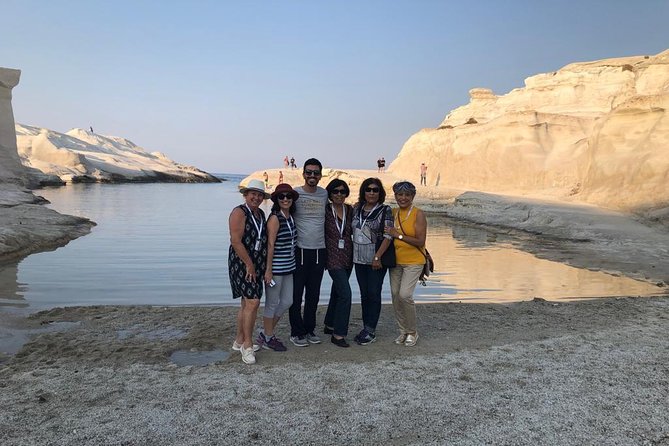
This jaw-dropping beach features surreal white volcanic rocks sculpted by time and sea, creating an eye-popping contrast against the deep blue of the Aegean. Sarakiniko Beach isn’t just a regular beach in Milos; it’s a geological wonder that feels like stepping onto a different planet.
Capture Instagram-worthy moments or simply bask in the unique beauty that sets this beach apart from the rest. Swim in crystal-clear waters, stroll along the striking coastline, and discover why this iconic spot is a must-visit when in Milos. No stress, just sea, and serenity, a perfect combo for a relaxing day under the Greek sun. Visit Milos and let Sarakiniko Beach be the highlight of your Greek island adventure!
Exploring the Enchanting Kleftiko Caves
Ahoy, adventurers! If you’re dreaming of mystical caves and turquoise waters, then look no further than the Kleftiko Caves on the magical island of Milos, Greece. Nestled like a hidden treasure, this spot is perfect for those yearning to explore. Imagine sailing across the Aegean Sea with the breeze in your hair, and discovering enigmatic rock formations that echo tales of pirates and legends. The Kleftiko Caves are a wonderland for snorkelers and sun-seekers alike, where every twist and turn reveals nature’s artistry.

Dive into the azure waters, explore the array of caves, and let your inner explorer run wild! Don’t forget your camera to capture these mesmerizing moments. With the island’s unrivaled beauty, exploring Milos will leave you with a treasure chest full of unforgettable memories. Are you ready to explore paradise?
Where to Stay in Milos for Every Budget
Wondering where to stay in Milos without blowing your budget? Fret not, fellow traveler! Whether you’re a backpacker on a budget or seeking luxurious digs, Milos, Greece has something for everyone.
There’s a plethora of charming hotels to choose from, letting you soak up the island’s natural beauty without breaking the bank. For the ultimate authentic experience, pick a cozy hotel run by local hosts who can offer insider travel tips. If splurging is more your style, indulge in top-notch accommodations that promise panoramic views of Milos’ azure waters. Your dream stay is a reality, even if it means you’ll sleep like a sun-kissed log after exploring all day.
Milos hotels aren’t just places to stay; they’re part of the adventure, making your stay in this dazzling corner of Greece one for the books!
Luxury Retreats and Charming Boutique Hotels
Imagine waking up on the stunning island of Milos, Greece, where the shimmering Aegean Sea is waiting right outside your window.
The island’s luxurious retreats and charming boutique hotels promise an unforgettable stay. Whether you choose a high-end resort or a cozy hideaway, Milos has it all. Picture yourself sipping coffee on a private terrace at boutique hotels, where every detail is as perfect as your morning view. These accommodations offer more than just comfort; they immerse you in the island’s rich culture and warmth.
For a taste of elegance, luxury hotels provide exquisite rooms, gourmet dining, and spa treatments that rejuvenate your senses after a day of exploration. As you explore, remember to savor the unique charm of each hotel, making your stay on Milos more than just a visit – an experience of a lifetime.
Budget-Friendly Accommodations on the Island
Looking for a budget-friendly stay on the beautiful island of Milos? Look no further! Milos offers a variety of charming accommodations that’ll not only save your euros but also make you feel like you’ve hit the jackpot. Whether you’re a solo traveler, couple, or part of a group, the island understands the art of mixing affordability with unbeatable hospitality. From modest guesthouses to cozy beachfront apartments with killer views, Milos is the perfect backdrop for a thrifty escape. Each option provides a unique taste of local living while ensuring you don’t need to break the bank to enjoy this stunning slice of Greece. Need tips on the best places? Our MilosAdvisor experts have got you covered. So pack your bags and get ready to explore Milos without emptying your wallet. Let’s make your dream getaway a reality!
Best Beaches in Milos: A Beach Lover’s Paradise
When you think of a beach lover’s dream, Milos Greece tops the list. This Cycladic gem boasts some of the best beaches in Milos, offering a stunning display of crystal-clear sea waters and unique landscapes. If you haven’t visited Sarakiniko Beach, its white lunar-like beauty will make you feel like you’ve landed on another planet. The mesmerizing sandy stretches of Papafragas and Firiplaka are nothing short of paradisiacal.
Whether you’re drawn to the vibrant islands vibe or the tranquil hidden coves, Milos has it all. From adventure enthusiasts aiming to snorkel around Kleftiko Caves to those who just want to bask in the sun on a cozy beach, Milos caters to every whim. With its accessible beaches and unmatched natural beauty, Milos remains an unspoiled retreat for every kind of sea-seeker.
Hidden Gems and Popular Spots for Sun Seekers
If you’re dreaming of sun-drenched beaches, Milos in Greece is the place to be! It’s like someone took the concept of an island paradise and turned it up to eleven. Sun seekers can dive into this Greek island and explore sandy nirvanas like the iconic Sarakiniko and the mysterious Kleftiko Caves.
But don’t stop there;
Milos has many hidden gems waiting to be discovered. Imagine stumbling upon a secluded cove with crystal-clear waters that look like they belong in a postcard. That’s Milos for you! Whether you’re lounging on the popular white cliffs of Tsigrado or exploring secret hideaways only locals know, these beaches will make you swoon.
So pack your beach towel and sunscreen, because explore you must! Milos is more than just a vacation spot; it’s a sun-drenched dream waiting to be explored.
Unique Experiences and Tours on the Island
Ready to explore Milos like never before? This unique Greek island offers tours that’ll make your heart skip a beat! From the moment you set foot on Milos, adventure beckons with countless options: scuba diving, sailing tours, or jeep safaris across the rugged terrain.
Each tour promises a fresh perspective on the island’s breathtaking beauty. Whether you’re sailing along the striking coastline, or hiking through secluded paths, there’s a thrilling experience waiting for every kind of traveler. Want a peek into local life?
Join a cultural tour and embrace the heart and soul of this enchanting island, or take a food tour to indulge in Milos’ culinary delights. So pack your bags, unleash your inner explorer, and discover why Milos is a sparkling gem in the Greek island travel scene!
From Sailing Tours to Hiking Adventures
Embark on a journey from exhilarating sailing tours to heart-pumping hiking adventures on the stunning island of Milos. Whether you’re a maritime lover or an avid trekker, Milos offers awe-inspiring experiences in spades. Eager to explore the crystal-clear waters? Set sail on a catamaran and glide past surreal landscapes, visiting hidden beach gems along the way.
If you prefer foot-powered exploration, the hiking trails of Milos won’t disappoint. They guide you through rugged terrain, offering breathtaking vistas and a peek into the island’s natural wonders.
Dive into the island’s rich history and experience the unique blend of activities that only Milos can offer. Your adventurous spirit will thank you! Remember, every corner of this Greek paradise is an opportunity to create unforgettable memories. So grab your gear, and dive right into the endless adventures Milos promises. Trust us, you’ll wonder why you didn’t plan this island getaway sooner!
Unforgettable Milos Photography Tours
Fancy yourself a budding photographer, or do you just love capturing breathtaking views on your phone?
The Milos photography tours are just the ticket! From the dazzling white cliffs of Sarakiniko to the mystical allure of the Kleftiko caves, you’ll have a front-row seat to some of Milos’ most iconic sights.
Tours like these aren’t just about snapping pics – they’re about embracing the beauty of Milos, creating memories and stories along the way. As you explore the nooks and crannies of this spectacular island, each tour guide ensures you uncover the best spots for every shot. After all, Milos is more than just sun-soaked beaches; it’s a paradise for your camera lens. Ready for your Milos photography journey? Pack up your gear, and let’s go!
You won’t want to leave this vibrant island’s views out of your photo gallery!
| Tour Type | Key Activities | Highlights |
| Sailing Cruise | Snorkeling, Swimming | Explore hidden coves and pristine beaches |
| Historical Tour | Archaeological Site Visits | Discover the rich history and mythology of Milos |
| Hiking Adventure | Trails, Nature Exploration | Experience breathtaking landscapes and panoramic views |
| Gastronomy Experience | Wine Tasting, Local Cuisine Sampling | Indulge in authentic flavors and culinary traditions |
This table showcases the diverse range of experiences available on Milos, from thrilling adventures to cultural encounters, highlighting the island’s appeal as a premier travel destination.
Culinary Delights of Milos: What and Where to Eat
Welcome to Milos, Greece, where the culinary scene is a delightful exploration of flavors and aromas.
Whether you’re a foodie or just eager to indulge in local cuisine, Milos offers numerous dining options that’ll tantalize your taste buds. From seaside tavernas serving fresh seafood to cozy inland eateries offering traditional Greek dishes, you’re set for a gastronomic adventure. Start your day with a classic Greek breakfast of yogurt and honey, and don’t forget to try the island’s famous cheese pies.
Travel through the winding streets of Milos and stumble upon hidden gems serving delicious meze. Pair your meals with a glass of local wine, perfect for relaxing evenings on this stunning island. If that’s not tempting enough, explore culinary tours that let you sample the best of Milos, ensuring a trip that’s as flavorful as it is scenic. Bon appétit!

| Culinary Experience | Location | Highlights | Specialties |
| Seaside Dining | Adamas | Waterfront views | Fresh seafood |
| Traditional Tavern | Plaka | Authentic ambiance | Lamb kleftiko |
| Modern Cuisine | Pollonia | Innovative dishes | Octopus carpaccio |
| Rustic Eatery | Triovasalos | Cozy atmosphere | Homemade pies |
| Bakery Delights | Trypiti | Artisanal bread | Pitarakia (cheese pies) |
This table encapsulates the enchanting culinary experiences of Milos, illustrating its rich, flavorful offerings and diverse dining landscapes.
Best Restaurants for Authentic Greek Cuisine
If you’re visiting Milos, Greece, indulging in Greek cuisine is an absolute must-do.
This charming island is home to an array of delightful tavernas serving authentic Greek dishes that will have you singing “Opa!” at every bite. From the freshest seafood you can imagine to feta that could make you weep tears of joy, the best restaurants on Milos offer a delectable taste of Greece’s culinary treasures.
Whether you’re sampling grilled octopus by the sea or savoring moussaka in a cozy hillside inn, each bite tells a story of the island’s rich heritage. As you explore Milos, be sure to stop at family-run gems where recipes have been handed down for generations, embodying the timeless flavors of Greece.
So, grab your fork, loosen your belt, and get ready to explore the culinary delights that await you on this delightful Greek island.
| Culinary Highlights | Dining Experiences | Local Specialties |
|
· Seafood Platters · Traditional Greek Mezze · Locally-sourced Lamb Dishes |
· Beachfront Dining at Sirocco · Cozy Tavernas in Plaka · Sunset Dinners in Pollonia |
· Pitarakia (Fried Cheese Pies) · Ladenia (Flatbread with Tomatoes and Onions) · Bouyiourdi (Spicy Feta Cheese Dip) |
|
· Freshly Caught Octopus · Grilled Fish Specialties · Cretan Influence in Dishes |
· Farm-to-Table Meals at Medusa · Al Fresco Dining in Adamas · Culinary Tours in Local Villages |
· Koufeto (Almond-Honey Preserve) · Savoro (Fried Fish with Vinegar and Rosemary) · Revithada (Slow-cooked Chickpeas) |
This table captures the essence of Milos’s vibrant culinary scene, offering a snapshot of the delicious experiences awaiting visitors.
Exploring Local Flavors with Milos Food Tours
Thinking of visiting Milos, Greece, and wondering what makes your taste buds dance the local sirtaki?
Our Milos food tours offer the ultimate chance to explore the finest Greek flavors while you soak in island beauty. Imagine biting into a freshly baked spanakopita or sipping on the infamous Greek ouzo as cool waves serenade your soul.
These tours aren’t your average dinner plans; they’re an explosion of authentic flavors and culture that only Milos can serve up. Whether you’re a seasoned gourmand or a curious traveler, our tours allow you to explore a variety of delicious options.
From traditional Greek tavernas to hidden culinary gems, we’ve got your foodie dreams covered. Join us, and prepare for a flavorful journey across Milos, where every meal tells a story and every bite transports you to Greek gastronomical heaven!
Things to Do in Milos: Beyond the Beaches
Ahoy, adventurers! While Milos may be famed for its stunning beaches, there are countless things to do on this captivating island that go beyond its sandy shores.
No trip to Milos, a true gem of Greece, is complete without exploring the fascinating Papafragas caves or indulging in a relaxing Milos hot springs tour.
Sip on local wines during a delightful Milos wine tasting tour, where every glass is a toast to this enchanting island. If you’re feeling more active, embark on a vigorous hiking tour, exploring Milos’ rugged landscapes and panoramic views.
For the creative souls, a Milos photography tour promises snapshots that’ll make your Instagram followers green with envy. So, if you’re itching to travel and explore beyond the ordinary, dive into the authentic experiences Milos has to offer – it’s more than just a beach getaway!
Historical and Cultural Sites Worth Visiting
Milos, a stunning island in Greece, isn’t just about breathtaking beaches. The island is rich in historical and cultural gems worth visiting. Dive into the past with a trip to the ancient theater of Milos, where performances once captivated locals and travelers alike.
Don’t miss the fascinating Milos Mining Museum, showcasing the island’s vibrant mining legacy that dates back to the Bronze Age.
The Ecclesiastical Museum, housed in the old Church of the Holy Trinity, offers insight into Milos’ religious heritage and cultural evolution. Wander through the catacombs, one of the most significant Christian burial sites in Greece. Discover more about the island’s history at the Milos Archaeological Museum, which presents a captivating collection of artifacts. These splendid sites demonstrate that Milos, while a gorgeous island, also boasts a rich tapestry of history and culture waiting to be explored.
Adventure Activities to Experience in Milos
Milos is the secret haven every traveler dreams of exploring! Adventure is calling, and Milos is all ears!
This spellbinding Greek island offers adrenaline-fueled activities to quench any explorer’s thirst for excitement.
Dive into the crystal-clear waters on a Milos snorkeling experience or traverse the rugged cliffs with an exhilarating jeep safari. If that’s not enough, grab a paddle and explore secret sea caves on a kayak tour, or take a quaint sailing trip around the island for an unforgettable connection with nature. For those craving more thrill, kite surfing against the backdrop of breathtaking seascapes is a true bucket-list must-do!
You’ll undoubtedly realize that this island is not just a destination; it’s a dynamic playground brimming with irresistible adventures. With so many activities to choose from, Milos guarantees an unforgettable and adventurous travel experience!
| Activity/Site | Description | Location/Area | Key Attraction/Highlight |
| Sarakiniko Beach | Dramatic white volcanic rock scenery, ideal for photography. | Northern Milos | Unique moon-like landscape |
| Catacombs of Milos | Ancient Christian burial site dating back to the 1st century AD. | Tripiti | Historical religious significance |
| Plaka Castle | Historic Venetian castle offering panoramic views. | Plaka | Sunset vistas over the Aegean |
| The Archaeological Museum of Milos | Home to artifacts portraying the island’s rich history. | Plaka | Replica of the Venus de Milo |
| Kleftiko Caves | Sea caves and cliffs accessible by boat, once a pirate hideout. | Southwest Coast | Snorkeling amidst stunning rock formations |
This table encapsulates the multifaceted adventure and cultural tapestry awaiting travelers in Milos, transforming it into a holistic journey beyond its famous beaches.
Comparing Milos: Greece’s Hidden Gem vs. Other Islands
When it comes to comparing Milos with other Greek islands, you’ll soon discover why this gem is a favorite among those who love to travel and explore.
While Santorini draws crowds with its dramatic sunsets, Milos stands out for its otherworldly landscapes like the iconic Sarakiniko Beach and the mysterious Kleftiko Caves.
If you’re seeking a balance between authentic Greek charm and picturesque vistas, Milos delivers in spades.
The island offers a laid-back atmosphere, perfect for travelers wanting to unwind and soak up the rich culture. While other islands might beckon with their nightlife, Milos seduces with its peaceful beaches and hidden treasures waiting to be explored. It’s easy to see why Milos, Greece, is quickly becoming a must-visit destination for those looking to dive into the heart of the Cyclades and experience something truly unique.
| Island Feature | Milos | Santorini | Summary |
| Landscape | Volcanic landscapes with colorful rock formations and secluded beaches. | Dramatic cliffs with iconic caldera views. | Both islands offer unique geological features, Milos with tranquil beach settings and Santorini with breathtaking vistas. |
| Crowds | Less crowded, offering a peaceful experience. | Popular and often bustling with tourists. | Milos provides a more serene atmosphere compared to the energetic tourist influx in Santorini. |
| Villages | Charming, traditional fishing villages. | Picturesque whitewashed towns like Oia and Fira. | Milos offers a glimpse into traditional village life, while Santorini is famous for its iconic architecture. |
| Activities | Ideal for exploration, with sailing and hiking. | Known for luxury experiences and vibrant nightlife. | Milos caters to adventure and nature enthusiasts, whereas Santorini is suited for luxury seekers. |
| Cultural Heritage | Rich in history with ancient ruins and archaeological sites. | Known for historic landmarks and unique museums. | Both islands have a rich cultural history, with Milos offering quieter historical exploration. |
This table highlights the distinctive charm of Milos compared to the bustling allure of Santorini, encapsulating what makes each island unique.
Milos vs. Santorini: What Sets Them Apart
Picture this: a showdown between two of Greece’s most dazzling islands, Milos and Santorini! Ever wondered what truly sets them apart?
While Santorini prides itself on its iconic caldera views, dramatic sunsets, and bustling crowds, Milos showcases a laid-back vibe with quirky, colorful villages and otherworldly rock formations. It’s a paradise for beach lovers and adventurers alike. If you’re into exploring remote beaches and discovering hidden gems, Milos promises an authentic Greek travel experience.
Meanwhile, Santorini attracts those who seek a cosmopolitan island feel but don’t mind sharing it with a few (or a lot) of their closest tourist friends.
So, whether it’s the tranquil charm of Milos or the glamorous allure of Santorini, you’ll find each island offers its unique flair and treasures. Dive into both worlds and discover which resonates most with your island dreams!
Comparing Milos and Santorini
- Milos offers serene, less-crowded beaches perfect for relaxation.
- Santorini features iconic cliffside villages and breathtaking caldera views.
- Milos charms with its diverse, quirky landscapes and colorful fishing villages.
- Santorini is renowned for luxurious resorts and vibrant nightlife.
- Milos provides a more authentic and peaceful Greek island experience.
- Santorini’s bustling, cosmopolitan atmosphere is ideal for those seeking an energetic vibe.
- Milos is a haven for nature lovers and adventure seekers.
Whether you desire scenic serenity or energetic elegance, each island promises a unique and memorable Greek adventure.
Why Milos Offers a Unique Greek Island Experience
Milos, one of Greece’s most enchanting treasures, offers a unique Greek island experience like no other. Imagine stepping into a natural masterpiece where vibrant colors and stunning landscapes converge, creating an island that’s as captivating as it is distinctive.
Unlike your typical Greek island, Milos is adorned with surreal beaches, such as the moon-like landscape of Sarakiniko, that seem drawn from an artist’s wildest dreams. But it’s not just about the beaches, it’s the island’s soul – the quaint villages, rich history, and flavorsome cuisine that complete this unique tapestry. Discover Milos’ unmatched wonders at the Kleftiko Caves, where the interplay of sunlight and sea forms a kaleidoscope of blue hues.
Whether you’re embarking on a leisurely boat tour or savoring delightful Greek cuisine, Milos ensures your island experience will leave you spellbound and yearning to return.
| Island | Major Attractions | Atmosphere | Experience | Unique Features |
| Milos | Beaches, Catacombs, Kleftiko Caves | Laid-back, Serene | Authentic, Undiscovered | Colorful rock formations, Pristine waters |
| Santorini | Caldera Views, Oia Sunset, Ancient Ruins | Vibrant, Romantic | Luxury, Tourism-driven | Iconic white-washed buildings, Volcanic landscape |
| Mykonos | Beaches, Nightlife, Windmills | Energetic, Cosmopolitan | Party-centric, Trendy | Buzzing nightlife, Chic clubs |
| Crete | Palace of Knossos, Elafonissi Beach | Vast, Diverse | Historic, Adventurous | Rich mythology, Varied landscapes |
This table captures the essence of what makes Milos stand out among the Greek islands, emphasizing its unique blend of natural beauty and cultural richness.
Practical Travel Tips for Visiting Milos
Ready to conquer Milos? Great choice! You’re in for an epic adventure on one of Greece’s most enchanting islands. First things first, travel with an open heart and a willing camera.
Trust us, your social features will love it. Now, don’t fret, we’ve got you covered with some practical tips! To fully enjoy Milos island, consider renting a scooter.
It’s fun, and you’ll find that it’s the easier way to travel around this gorgeous paradise. Always keep cash handy; although credit cards are welcome, small family-run shops prefer the good old Euros.
Did we mention sunscreen? Love your skin and lather up to protect it while you explore. For foodies, go local. Enjoy the island’s traditional concoctions and discover why Greek cuisine is treasured worldwide. So, pack your bags, follow these travel tips, and enjoy Milos at its finest!
How to Get Around the Island Efficiently
Effortlessly exploring the charming Milos island requires a few nifty travel tips! With a mixture of magic and practicality, getting around this Greek paradise has never been easier.
Public transport is your ticket to exploring some of Milos’ best spots without breaking the bank. Buses are available, connecting you to key locations from sun-drenched beaches to cozy tavernas. Feeling adventurous? Rent a car or a scooter for the ultimate freedom to explore the island’s hidden wonders, and perhaps discover your own secret beach!
Another efficient way is hiring bicycles, offering a fun, eco-friendly way to island hop on two wheels. Island taxis are a great backup if you’re in a rush or fancy arriving in style. With these handy tips, plan your Milos travel like a pro, ensuring that every moment on this splendid island is unforgettable!
| Travel Tips | Transportation Options | Best Time to Visit | Additional Notes |
| Book accommodations in advance during peak season. | Car rentals are recommended for exploring remote beaches. | Late spring and early autumn offer pleasant weather and fewer crowds. | Consider exploring lesser-known attractions for a unique experience. |
| Pack light due to mild island climate. | Public buses are available but may have limited routes. | July to September are peak tourist months with vibrant local events. | Engage with local tours for cultural insights. |
| Stay hydrated and use sunscreen to protect against strong sun. | Mopeds or ATVs can be an adventurous way to explore. | Avoid late July and August if seeking tranquility. | Research local dining spots to enjoy authentic cuisine. |
This table provides a concise guide for travelers to Milos, encapsulating essential tips and timing for an enriching island experience.
When is the Best Time to Visit Milos?
Choosing the optimal time to travel to Milos, a mesmerizing island in the heart of Greece, is crucial for maximizing your experience.
Generally, the best time to visit Milos is during the shoulder seasons of late spring (May) and early fall (September). This way, you’ll enjoy pleasantly warm weather and fewer crowds, perfect for exploring the island’s stunning beaches and charming villages. During this period, the azure Aegean Sea is just the right temperature for swimming, making it an ideal getaway for beach lovers.
Summer months do bring delightful sunshine, but prepare for more tourist traffic. If you’re a fan of celebrating with locals, don’t miss out on Greek Easter during spring, a vibrant cultural highlight.
Milos transforms into a serene escape as summer wanes, offering visitors a genuine taste of island life without the hustle and bustle.
Plan Your Milos Adventure: Create Your Perfect Itinerary
Planning a Milos adventure? Don’t stress, we’ve got you covered with tips to craft the perfect travel itinerary tailored just for you.
First, dive into the island’s magical beaches. Who can resist the allure of Sarakiniko or the legendary Kleftiko caves? Next, spice up your itinerary with some adventure activities like guided hiking or thrilling sailing tours. You’re probably thinking, “How do I squeeze all this into one trip without my sandals spontaneously combusting?”
That’s why crafting a flexible itinerary is key. Of course, no itinerary is complete without indulging in Milos’ culinary delights, hello, local feta cheese! With our expert tips, you’ll be zig-zagging around the island like a seasoned local. Remember, planning this Milos travel adventure is all about balance, between sunning on sandy shores and soaking up the island’s vibrant culture.
Sample Itineraries for a 3-Day or 5-Day Stay
Planning that dreamy stay in Milos, Greece? Well, pack those sunglasses because we’ve got the ultimate
Milos travel itinerary, whether you’ve only got 3 days or you’re lucky enough to enjoy a 5-day stay!
Start with Kleftiko caves on day one, where Neptune himself vacations.
Day two? Let’s just say Sarakiniko Beach is a moonwalk on Earth – yes, it’s that surreal!
In a 5-day itinerary, throw in a leisurely visit to the colorful fishing village of Klima.
What about food? Mouthwatering seafood at a quaint Greek taverna is a must.
And if you’re in the mood for something active, a hike to the ancient catacombs is in order. With these Milos experiences, you’ll be bragging about your Greek island adventures long after you’ve returned back home. Don’t forget, Milos might eventually steal the wanderlust crown from Santorini!
Tips for an Unforgettable Milos Trip
Heading to Milos, the dazzling jewel of the Cyclades? Don’t miss my top tips for an unforgettable Milos travel adventure!
First, ditch the formal pants and pack lighter than a cat on a hot Greek tin roof. Trust me, with Milos’ best beaches, you’ll barely leave the sand. Want a truly unforgettable jaunt?
Rent a bold buggy or moped, and explore scenic routes, remember, gas stations on islands are rarer than platypus sightings. Hug every curve and admire those ocean views! If you’re craving culture, dive into the local cuisine; Milos is a culinary hotspot. Make reservations early and feast on seafood that’ll make you question your allegiance to other islands. Finally, consider visiting in May or September when Milos is less crowded, but still just as charming. Your ultimate guide to this island awaits, so get packing and travel smart!
So there you have it, folks, the ultimate guide to Milos, where the beaches are gold, the waters are blue, and your holiday dreams come true! Whether you’re exploring the mesmerizing Sarakiniko beach, diving into the historic Kleftiko caves, or simply embracing the island vibes, Milos promises an unforgettable adventure.
Don’t miss the hidden beaches or the magic of a Milos boat tour. Wrap up your day at a local taverna and discover why Milos nightlife adds that perfect sparkle to your Greek island adventure. Opa!
How did a volcano shape Milos Greece?
Milos Greece owes its form to a volcano that was active from 2 to 3 million years ago until 90,000 years ago. The eruptions left lava domes, a deep central bay, white layered rock, dark obsidian, and hot vents that still release gas from deep underground.
The volcano of Milos Greece is part of the South Aegean Volcanic Arc. This chain of volcanoes formed as the African plate slid beneath the Eurasian plate. It stretches about 450 kilometres, from the Isthmus of Corinth to the Bodrum peninsula on the Turkish mainland. Its volcanoes include Sousaki, Aegina, Methana, Milos, Santorini, Kolumbo and Nisyros. In the past 100 years only Santorini, Kolumbo and Nisyros have erupted or shown signs of unrest. Milos is a stratovolcano with no eruption in historical times, yet Milos Greece is still considered a dormant volcano.
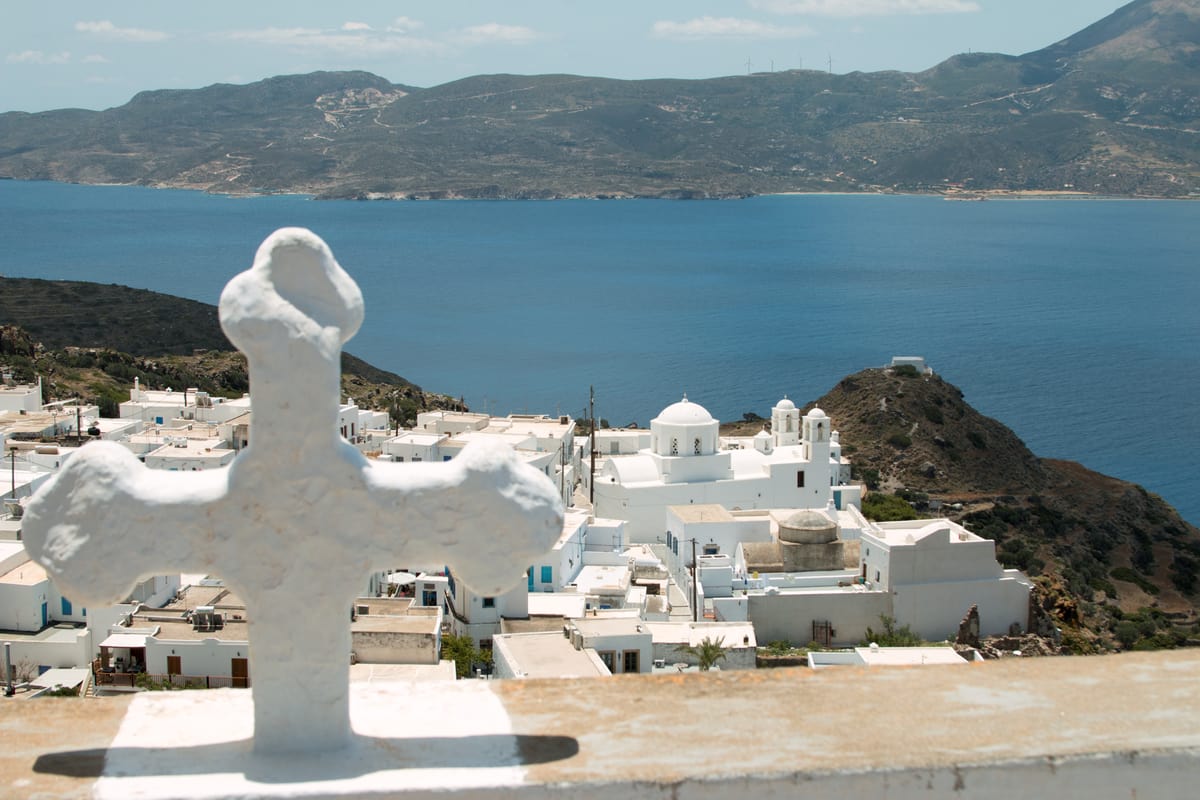
The large bay in the middle of Milos Greece is the hollow of the main crater. It cuts in from the northwest and splits the island into two near-equal halves. Its depth falls from 130 to 55 metres. A strip of land no more than 2.2 kilometres wide links the eastern and western halves. The result is a horseshoe outline and one of the largest natural harbours in Greece. Adamas, the port town, lies on this bay, and Plaka, the chief town, sits on the plateau above the harbour of Milos Greece.
The rocks of Milos Greece show how the volcano built the land. Tuff, trachyte and obsidian are ordinary rocks here, and volcanic rock covers the greater part of the island. Lava that hardened before it spread formed domes, mainly of andesite, such as the Kastro hill above Plaka and Profitis Ilias, the highest peak at 748 metres. Milos Greece also has two extinct volcanoes, Fyriplaka and Trachilas. At Sarakiniko the volcanic rock is white and laid down in repeated layers, and fossils have been found inside it. Sedimentary and metamorphic rocks occur as well.
Heat from below still reaches the surface of Milos Greece. Active solfataras and fumaroles at Agia Kyriaki, Paleochori, Pyromenes and Adamas reach up to 100 degrees Celsius and release gases from deep inside the earth. Sulphur is abundant around these vents, and offshore vents send gas up through the sea as bubbles. Hot springs in Milos Greece reach 55 degrees Celsius, and those on the eastern shore of the harbour are sulphurous. A cave on the south coast still holds strong volcanic heat, and steam has been found 1,100 metres underground.
- Volcanic chain: Milos Greece shares its arc with Santorini, Methana and Nisyros.
- Lava domes: The Kastro hill and Profitis Ilias are domes of hardened lava.
- Hot baths: The Lakkos baths sit in a natural cave near the port of Adamas.
Obsidian links the volcano of Milos Greece to its human story. It is a natural glass that forms when lava cools so fast that crystals have little time to grow. The stone is dark, hard and brittle and breaks with very sharp edges. Milos and Gyali were the ancient Aegean sources, and X-ray fluorescence now shows whether a piece found in Greece came from Milos, Nisyros or Gyali. In Milos Greece, the main obsidian quarries lay at Nychia and Demenegaki.
What is the history of Milos Greece from Phylakopi to today?
Milos Greece has a past that runs from obsidian voyages and the Bronze Age town of Phylakopi to the Athenian siege of 416 BC, Roman and early Christian times, Venetian and Ottoman rule, the War of Independence of 1821, and entry into the Greek state in 1830.
Long before farming began, boats came to Milos Greece for obsidian. The volcanic glass was traded as early as 15,000 years ago and shaped into sharp stone tools. Crews beached their boats in a cove, cut pieces from the quarries and sailed away, so the trade did not create a permanent village. By the 6th millennium BC, Melian obsidian had reached Knossos on Crete and Nea Nikomedeia in Macedonia. Milos Greece was the obsidian source for the cultures in and around Greece. The trade faded when bronze replaced stone in weapons.
Phylakopi, on the north coast of Milos Greece, ranks among the leading Bronze Age settlements of the Aegean. It was occupied from the middle of the 3rd millennium BC until the 12th century BC, and its first settlers were tuna fishermen. The British School at Athens excavated it from 1896 to 1899, and Colin Renfrew led new work in the 1970s. Finds include a flying-fish fresco from the Pillar Room, the Lady of Phylakopi figurine, and a Mycenaean megaron. Melian bird jugs from this town reached Knossos, and the site is open to the public.
During the Peloponnesian War, Milos Greece was the only significant Aegean island that Athens did not control. Its people were Dorians, like the Spartans, but they stayed neutral in the war. In the summer of 416 BC, Athens landed at least 3,400 men from 38 ships and demanded tribute and alliance. The Melians refused the ultimatum. The city held out against direct attack, so the Athenians cut off its supplies until it surrendered that winter. The men were executed, the women and children were sold as slaves, and 500 Athenian settlers moved in.
The siege of Milos Greece lives on through the Melian Dialogue. The Athenian historian Thucydides set it in Book 5 of his History of the Peloponnesian War, chapters 84 to 116. He was in exile at the time and did not witness the talks, so the text is his own version. In it, the Athenian envoys offer no moral case and say that “the strong do what they can and the weak suffer what they must”. It remains a classic study in political realism. In 405 BC the Spartan general Lysander brought the survivors home.
- Roman rule: Melos came under Roman influence after Rome forced Philip V out of Greece in 197 BC.
- Early Christian era: Three catacombs dug into volcanic ground formed a communal cemetery 185 metres long in total.
- Venetian rule: After the Fourth Crusade, Marco Sanudo took Milos into his Duchy of Naxos.
- Ottoman rule: The Ottomans took over the duchy in 1566, and Russia held the island for three years from 1771.
Modern Milos Greece took shape after 1821, when it was one of the first islands to join the War of Independence and the first naval battle of that war was fought off its coast. Cretan refugees founded the port town of Adamas, and the London Protocol of 1830 placed the island in the new Greek state. The population of Milos Greece peaked at 6,562 in 1928, and the 2021 census counted 5,193. A fuller timeline appears in the history of Milos.
Where was the Venus de Milo found in Milos Greece?
Milos Greece is where a farmer found the Venus de Milo on 8 April 1820. The spot lies on the slope of ancient Melos, between Trypiti and the landing place at Klima. A French diplomat bought the statue, and the Louvre has shown it since 1821.
The find took place while Milos Greece was still part of the Ottoman Empire. Olivier Voutier, a French sailor with an interest in archaeology, watched the farmer at work and urged him to keep digging. Together they lifted two large pieces of the statue and a third, smaller piece. A hand holding an apple, part of an arm and two herms lay alongside.
Dumont d’Urville, a French naval officer, reached the island soon after the find and wrote an account of it. His ship then sailed to Constantinople, where he told the Comte de Marcellus, assistant to the French ambassador. Marcellus travelled to Milos Greece to buy the statue. By the time he arrived, the farmer had received another offer and the marble was already on a ship. The French stepped in, and Marcellus completed the purchase.
The statue from Milos Greece was taken to France, and Louis XVIII had it placed in the Louvre in 1821. On the advice of Quatremère de Quincy, the museum left it largely unrestored and showed it as found. The figure is carved from Parian marble and stands over 2 metres tall, with both arms missing. It has left France only once, for a show in Tokyo and Kyoto in 1964.
The findspot lies within ancient Melos, on the slope of Milos Greece that runs from Trypiti down to Klima, the first port of the island. A Roman theatre stands on this hillside, with seven sections of marble seats overlooking the bay. Parts of the town walls, a market wall and a temple of the Hellenistic and Roman period survive nearby. The British School at Athens excavated a building with a mosaic here in 1896.
- Dating: Scholars place the statue from Milos Greece in the 2nd century BC.
- Findspot: D’Urville described a quadrangular niche at the site.
- Inscription: A now-lost stone recorded a dedication by Bakchios, son of Satios, the assistant gymnasiarch.
A modern copy of the statue now stands in the first room of the Archaeological Museum of Milos in Plaka, a gift from the Louvre. The same room holds obsidian tools from the Neolithic to the early Bronze Age. The theatre, the wall remains and the findspot all lie on the same slope between Trypiti and Klima in Milos Greece.
Which fishing villages of Milos Greece have syrmata?
Milos Greece has syrmata in Klima, Mandrakia, Firopotamos, Fourkovouni and Areti, small fishing ports set in coves. Syrmata are boat houses dug into soft rock or natural cavities by the sea. Fishermen kept boats in them over winter and in bad weather.
The local name syrmata translates as wires. In Klima the houses have two storeys. The ground floor held the boat through the winter, while the family of the fisherman lived on the floor above. Doors and windows carry bright paint. Seven settlements count as the main traditional fishing ports of Milos Greece: Klima, Mandrakia, Firopotamos, Areti, Agios Konstantinos, Fourkovouni and Empourios.
Klima sits at the entrance of the bay, below the village of Trypiti, 6 kilometres from the port of Adamas. The settlement has held traditional status since 1978. The 2021 census counted 8 residents. A cave church of Agia Paraskevi stands in the village, and the beach, together with nearby Schinopi, is suitable for swimming. Today a number of the syrmata serve as rooms for visitors to Milos Greece.
Mandrakia lies on the north coast of Milos Greece, 4 kilometres north of Adamas. Its small harbour is lined with syrmata that store boats and fishing gear and also serve as temporary homes. The church of Zoodochos Pigi stands above them. Firopotamos, 3 kilometres north of Plaka, wraps around a small bay. Owners keep boats in its syrmata in winter and live in them in summer.
Fourkovouni stands on the cape of the same name at the entrance of the bay. It lies 4 kilometres northwest of Plaka and was designated a traditional settlement in 1988. The 2021 census recorded no residents there. Areti sits at the eastern entrance of the same bay, close to Fourkovouni, 7.5 kilometres northwest of Plaka. The municipal tourism site of Milos Greece describes it as a tiny fishing village with a small beach and coloured syrmata.
- Mandrakia: A beach of about 150 metres has dark grey pebbles and tamarisks.
- Firopotamos: An abandoned loading ladder and Agios Nikolaos church stand beyond the houses.
- Fourkovouni: The village lies 8 kilometres northwest of Adamas.
Syrmata began as shelters for boats in winter and bad weather, then turned into houses for fishermen and summer homes. The settlements show a rare type of island architecture. Mandrakia counted 13 residents and Firopotamos 2 in the 2021 census, and owners of the boat houses in Milos Greece still use them as summer homes.

What minerals made Milos Greece a mining island?
Milos Greece built its mining past on obsidian, sulphur, barite, kaolin, bentonite and perlite. Obsidian supplied stone tools in the Neolithic. Sulphur and barite were mined in the past, and bentonite, perlite, pozzolana and small amounts of kaolin are still extracted and sold worldwide.
Obsidian is a volcanic glass that forms when lava cools fast, and it breaks with very sharp edges. Milos Greece was the source of obsidian for the cultures living in and around Greece during the Neolithic. Already in the 6th millennium BC, Melian obsidian reached sites from Knossos on Crete to Nea Nikomedeia in Macedonia. The old quarries lay mainly at Nychia and Demenegaki.
Pliny the Elder described Milos Greece as the richest source of sulphur in the ancient world. Sulphur extraction lasted until the middle of the 20th century, and barite, a barium sulphate mineral, was mined until 2000. The old sulphur mines, known as Theiorycheia, stand in the cove of Paliorema on the east coast, where sulphur exports ran until 1956. Wagons still sit on their rails beside rusty tools and spare parts in the warehouse.
Kaolin came out of galleries on the slopes of the Lagada ravine. Iron oxides give the kaolin of Milos Greece a less white tone. In antiquity, Melian earth, made chiefly of kaolin, served artists as a white pigment, and the painter Apelles used it as one of his four basic colours. Bentonite is an absorbent clay that swells and takes up water, growing up to eight times in volume. Drilling mud and groundwater sealants rely on this property.
Perlite is a volcanic glass with a high water content, formed when obsidian absorbs water. Heated to 850–900 °C, it softens and expands to 7–16 times its original volume, turning bright white. Builders add it to lightweight plasters, concrete and mortars, and growers use it as a soil conditioner. The perlite reserves of Milos Greece, at Tsigrado and Trachilas, exceed 1 billion tonnes. World production is led by China, Turkey and Greece.
- Sulphur Mines: The Ministry of Culture has designated the complex a historic site.
- Millstones: Quarries in Milos Greece supplied millstones until the early 20th century.
- Pozzolana: Extraction has continued from historic times to the present.
The Milos Mining Museum in Adamas was created in 1998 by S&B Industrial Minerals SA to honour the mining history and geological heritage of the island. The ground floor covers the social, economic and technical side of mining. The first floor presents the minerals of Milos Greece from the Neolithic to the present and their uses in daily life, and a screening room shares stories of old miners.
How do people live on Milos Greece today?
Milos Greece had 5,193 residents at the 2021 census. Life centres on the port of Adamas and the hill villages of Plaka, Trypiti and Triovasalos, with Pollonia on the northeast coast. Mining, tourism, farming and fishing support the island economy.
The population of Milos Greece peaked at 6,562 people in 1928. It fell to 4,977 by 2011 and rose again to 5,193 at the 2021 census. These figures cover the whole municipality, which also includes the uninhabited islets of Antimilos and Akradies. The combined land area is 160.147 square kilometres. Milos Greece forms one municipality, and its seat is Plaka.
The hill villages of Milos Greece stand on high ground above Adamas. Plaka sits at 220 metres and has been a traditional settlement since 1978. Cars cannot enter its narrow lanes, and the town holds the Archaeological Museum and the bulk of the public services. Triovasalos and Pera Triovasalos formed one village until 1908. Today the pair serves as the commercial and daily core of Milos Greece, with banks, public offices, cafés, shops and small businesses.
Adamas is the harbour town of Milos Greece, with 1,268 residents in 2021. Cretan refugees founded it, and their descendants are known as Milokritiki. It is the cultural, commercial and tourist centre of the island. Pollonia, the second port of Milos Greece, sits on the northeast tip and had 268 residents. Local fishing boats unload fish, octopus and lobster at its pier each morning. Trypiti, a traditional settlement since 1978, keeps restored windmills that now serve as lodgings.
Mining and tourism carry the economy of Milos Greece. Bentonite, perlite, pozzolana and small amounts of kaolin come from open-pit mines and are sold worldwide. Summer visitors have arrived in growing numbers over recent decades. Grapes, cotton and barley are the main crops. Milos Greece lies on the first high-temperature geothermal field found in the country. A 2 MW pilot plant opened in 1986 and covered all island power for two years, but local opposition over a hydrogen sulphide smell ended the effort in 1989.
- Milos Greece districts: The five local districts are Milos, Adamas, Triovasalos, Pera Triovasalos and Trypiti.
- Milos Greece capital: Plaka took the official name Milos in 1912.
- Milos Greece customs: Triovasalos burns an effigy of Judas at Easter.
Daily life in Milos Greece moves between the harbour and the plateau above it. An ascent leads from Adamas to Plaka, Triovasalos and Trypiti. Zefyria, the former capital, is a separate settlement, and fishing boats keep Pollonia tied to the sea. More on each settlement of Milos Greece, from Klima to Pollonia, appears in the villages of Milos.
Which churches does Milos Greece have?
Milos Greece has seven parishes, based in Plaka, Plakes, Triovasalos, Pera Triovasalos, Trypiti, Adamas and Zefyria. Its churches include Panagia Thalassitra in the Kastro, Panagia Korfiatissa in Plaka, Agia Triada in Adamas and the monastery of Agios Ioannis Siderianos in the southwest.
The Kastro of Milos Greece holds two churches of the Virgin. Mesa Panagia, also called Panagia Skiniotissa, sits at the top. The older chapel was blown up during the German occupation, and residents rebuilt it after 1944. Lower down stands Panagia Thalassitra, patron of sailors in Milos Greece. In 1839 a larger church replaced a single nave and took in the Frankish church of Panagia Eleousa as its south aisle. The coat of arms of the Crispi dukes of Naxos marks its west door.
Panagia Korfiatissa, the church of the Nativity of the Virgin, is the metropolitan church of Milos Greece. It stands on steep rocks at the western end of Plaka, at a spot called Halara. Its courtyard, known as Marbles, is paved with marble tombstones from the old town. The church follows a Byzantine-Cycladic style and is a listed ancient monument. Inside are relics from abandoned churches of Milos Greece, a gilded wood-carved iconostasis and a gilded epitaph of 1600 brought from Smyrna.
Agia Triada, the Holy Trinity, stands close to the port of Adamas in Milos Greece. It is a cross-roofed, three-aisled basilica with a dome. Only one other church of this type exists, at Levidi in Arcadia. It began as the monastery of Panagia Theofani, and Cretan refugees bought it in 1839 for their village. Two mosaics of 1937 by the local artist Giagos Kavroudakis decorate the courtyard. The Ecclesiastical Museum of Milos Greece has filled the church since 2000.
- Milos Greece icons: Works by Emmanuel and Antonios Skordilis are on show in the museum.
- Milos Greece mosaics: One shows a dragon in the shape of Milos.
- Milos Greece village churches: Agios Nikolaos in Trypiti dates from 1888.
The monastery of Agios Ioannis Siderianos stands at Halakas, on the southwest side of Milos Greece. Documents mention it from 1582. Tradition says pirates attacked on the feast of the saint, and the faithful locked themselves inside and begged him to make the door iron. The pirates failed to open it, and the monastery took its name from this miracle. During World War II, a British shell lodged in the church wall without exploding, and it remains there.
What wildlife lives on Milos Greece?
Milos Greece is home to the Milos viper, an endangered snake of the southwest Cyclades. The Mediterranean monk seal uses its southwest coast, a rare wild goat lives on nearby Antimilos, and almost all of the western half of the island is a Natura 2000 site.
The Milos viper (Macrovipera schweizeri) is a venomous snake of the family Viperidae, also called the Cyclades blunt-nosed viper. Besides Milos Greece, it is recorded on Sifnos, Kimolos and Polyaigos. Adults reach 50 to 70 cm on average, with a maximum of 98.5 cm. The name honours the Swiss herpetologist Hans Schweizer. Local medical centres on Milos Greece report an average of four bites a year, with no recorded deaths.
Milos Greece has no native rodents, and the diet of the viper reflects this. Adults feed on passerine birds, while young snakes under 35 cm hunt Milos wall lizards and European copper skinks. On autumn nights the snakes of Milos Greece climb into trees to forage. The IUCN lists the viper as endangered, with fewer than 4000 adults in the wild in 2022. Feral cats, illegal collection and persecution keep its numbers falling.
The southwest coast of Milos Greece is a habitat of the Mediterranean monk seal (Monachus monachus), believed to be the rarest pinniped in the world. Along coasts such as that of Milos Greece, pregnant females give birth in sea caves that people cannot reach. The Aegean, with 250 to 300 seals in Greece, is one of only two key sites left for the species.
Almost all of the uninhabited west of Milos Greece is a Natura 2000 site, home to over 800 taxa, 35 of them endemic to Greece. A grove of old cypresses with horizontal branches forms a rare habitat there. Protected birds include Eleonora’s falcon, a rare migratory falcon. Greece has also placed Polyaigos, east of Milos Greece, in Natura 2000 as a Special Protection Area for the same falcon.
- Milos Greece lizards: Milos wall lizards also live on Kimolos and Antimilos.
- Milos Greece wetlands: Achivadolimni is the largest natural wetland in the Cyclades.
- Milos Greece seals: Sea caves on Polyaigos shelter monk seals.
The wild goat of Antimilos is a rare form of the common goat, known as Capra aegagrus pictus. It resembles the Cretan kri-kri (Capra aegagrus creticus) but is not the same animal. Antimilos is a Natura 2000 Site of Community Importance, and its last goats face cross-breeding and a lack of water. The Milos viper and Eleonora’s falcon also live on the islet, as on Milos Greece.
Which islands can be reached from Milos Greece?
Milos Greece links to Kimolos by a daily ferry from the northern port of Pollonia, and private boats from Kimolos visit uninhabited Polyaigos. Piraeus ferries run direct or stop at Sifnos, Serifos and Kythnos, summer routes reach Folegandros, and Antimilos needs a permit.
Kimolos lies northeast of Milos Greece, across a channel 1 km wide. Pollonia, the smaller port of Milos Greece, serves mainly the link between the two islands, and an open-type ferry makes the crossing more than once a day. Kimolos covers 36 square km and had 810 residents at the 2021 census. Its main village, Chorio, stands on a hill in the southeast, and its port is Psathi.
In the Middle Ages Kimolos was known as Argentiera, after the silver-coloured rocks of its southern coast. These rocks supplied Kimolian Earth, a trade good that made the island a major trade hub. Skiadi, a huge mushroom-shaped stone carved by wind-blown dust, stands in a small inland valley. The Miloterranean geo-routes of Milos Greece include Route 5 on Kimolos, about 17 km long with a 1.5 km side path to Skiadi.
Polyaigos lies about 6 km east of Milos Greece and belongs to the municipality of Kimolos. Its name refers to goats, its only residents. With about 18 square km of land, it is the largest uninhabited island in the Aegean. The Greek Orthodox church owns a large share of it and rents land to herders from Milos Greece and Kimolos. Private boats from Kimolos take visitors to the island.
Antimilos lies 21 km northwest of Milos Greece and is part of the same municipality. It is an uninhabited volcanic mass of trachyte that rises to 671 m, and its crater is still clear. Locals call it Erimomilos, or Desert Milos. In ancient times it was known as Ephyra, and also as Ephora, meaning “watchtower”. A visit to the islet from Milos Greece needs a permit from the Cyclades hunting directorate.
- Milos Greece to Piraeus: Ferries run direct or via Kythnos, Serifos and Sifnos.
- Milos Greece in summer: Routes add Folegandros, Sikinos, Ios and Santorini.
- Milos Greece and Kimolos: Kimolos is a stop on inter-Cycladic lines.
From Pollonia the connection is made with Kimolos and with Glaronissia. Boat options from this village of Milos Greece are set out under cruises from Pollonia. The main port of the island is Adamas, whose marina offers fuel, water and electricity. Coves such as Provatas and Paliochori also suit mooring, depending on the wind direction.
Milos Guide FAQs
What makes Milos, Greece a unique travel destination?
Milos offers an enchanting blend of stunning beaches, unique geological formations, and vibrant culture. Known for places like Sarakiniko Beach with its lunar-like landscapes, and the Kleftiko Caves, Milos promises an adventure both on land and sea, making it not just a trip but an experience.
When is the best time to visit Milos for fewer crowds?
The optimal time to travel to Milos is during the shoulder seasons of May and September. During these months, the weather is pleasantly warm, the sea is inviting for swims, and the crowds are smaller compared to the peak summer months.
Are there adventurous activities to do on Milos?
Absolutely! Milos offers a wide array of adventures, from sailing tours and jeep safaris to exploring hidden caves and snorkeling in crystal-clear waters. It’s an island that delivers thrills at every turn for the adventurous spirit.
What unique food experiences can one have in Milos?
Milos tantalizes taste buds with its traditional Greek cuisine. Savor dishes in seaside tavernas, such as fresh seafood or local cheese pies, and indulge in food tours that introduce you to the island’s delicious cheeses and fragrant local wines.
What are some tips for getting around Milos?
Getting around Milos is a breeze if you rent a scooter or a car, allowing you to explore at your own pace. The public buses are a budget-friendly option connecting key locations, while taxis can be handy for quicker trips. Just remember to keep some cash on hand for these rides.