Aragosta Cafe Bar, Adamas
Cafe Bar I Akri, Adamas
Cafe Bar Plori, Adamas
Yankos Cafe, Adamas
Egoist Cafe, Adamas
Milors cafe, Adamas
Adamas is the harbour town of Milos and the main port of the island, the first view for travellers who arrive by sea. Around the water, coffee and drinks in Adamas fill the quay from early morning until late at night. This page follows the cafés and bars of the port, beside the Milos pages for the island.
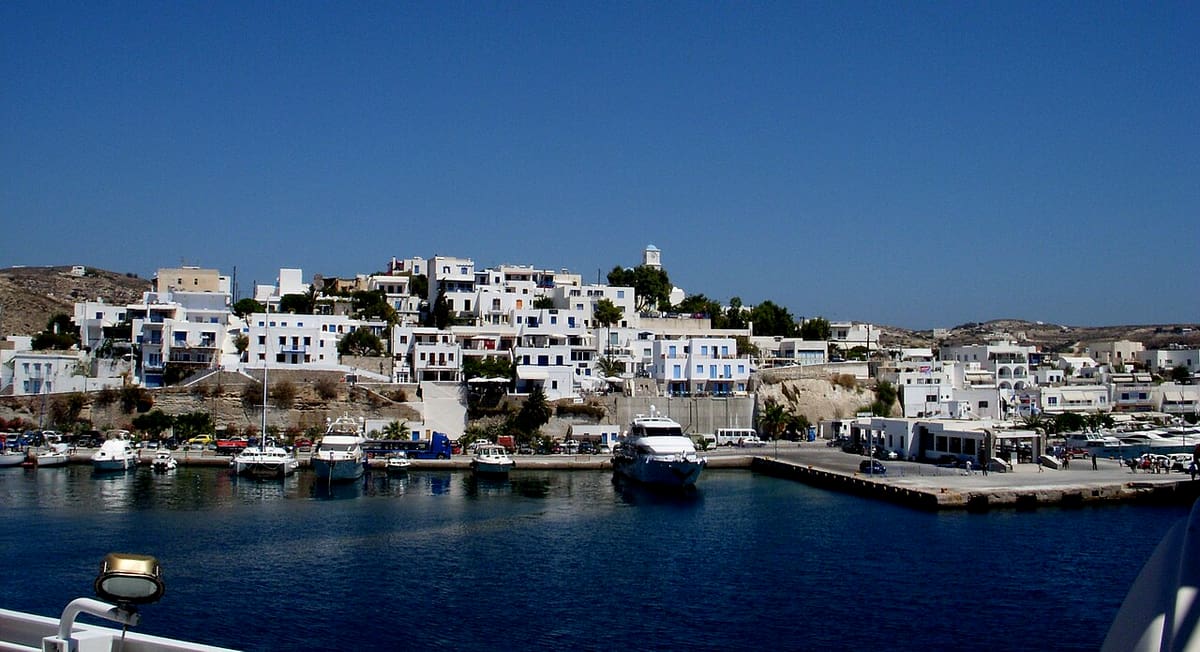
The port sits on the north-eastern shore of the gulf of Milos, below a hill that holds villages and ancient ruins. Three settings share the town: the waterfront, the harbour with its moored boats, and the open square by the quay. Each one has its own rhythm, and coffee and drinks in Adamas move between them through the day.
Where do coffee and drinks in Adamas gather around the port?
Coffee and drinks in Adamas gather along the waterfront, on the quay of the harbour and around the open square beside the boats, where cafés and bars stand in a line under the hill that holds Plaka, the chief town.
The harbour of Adamas fills the hollow of the principal crater of the island, and the water deepens towards the entrance. The arm of the gulf separates Milos into two parts that meet at a narrow neck of land. Coffee and drinks in Adamas stand on the north-eastern shore of that gulf. The island has the shape of a horseshoe, and the bay inside it forms one of the largest natural harbours of Greece, which frames the port.
The waterfront follows the coast of the harbour, and the boats moor along the quay in a row. Fishing caiques, small yachts and the large ferries share the same water. Tables stand under awnings, close enough to the edge that a diner looks straight at the sea. The port is the first place a traveller sees on arrival, and coffee and drinks in Adamas begin there with a cup taken slowly beside the moored boats.
Behind the quay, narrow streets run between white houses with flower-decorated courtyards. The town is the cultural and commercial centre of Milos, and its population was 1,268 in 2021. Cretan refugees settled the place in 1831, and their descendants carry the name Milokretikoi. A military cemetery of the Crimean War stands near the water, from the years when the French fleet used the harbour. The village of Adamas keeps its own history beside the port.
Three museums stand within reach of the waterfront. The maritime museum keeps rare maps and a wooden boat, the ecclesiastical museum is housed in the church of Agia Triada beside the port, and the mining museum honours the mineral history of the island. Above the town, the hill carries Plaka at 220 metres and the Kastro, built by the Venetians in the 13th century on a volcanic rock. Coffee and drinks in Adamas look up at that hill.
- Waterfront: Cafés and bars line the shore road beside the water.
- Quay: The main pier takes the ferries, and smaller moorings hold the boats.
- Square: The open space beside the quay gathers families in the evening.
- Lanes: Narrow streets behind the waterfront hold the houses and churches.
- View: The gulf, the hill villages and Profitis Ilias at 751 metres frame the port.
The port of Adamas keeps its cafés and bars in one long line beside the water, and the hill above gives the scene its villages and ruins. A walk along the quay passes the moored boats, the ferry pier and the open square, and coffee and drinks in Adamas appear at every step. The town is small enough to cross on foot.

Which Greek coffees belong to coffee and drinks in Adamas?
Coffee and drinks in Adamas rest on three Greek coffees: Greek coffee cooked in a small pot, the frappé shaken from instant coffee, and the iced espresso drinks served over ice. Each has its own glass, its own order and its own place in the day.
Greek coffee is made in a small pot with a narrow neck, called a briki in Greek, a cezve in Turkey and an ibrik elsewhere. Coffee and water go in with sugar, and the mixture is brought just to the boil. As soon as it froths, the pot leaves the heat, and a little of the coffee goes into each small cup with the foam on top. The coffee is taken to the boil once or twice more to build that foam.
The fine powder stays in the cup, and part of it sinks to the bottom while the rest stays in suspension and is drunk with the coffee. Water comes on the same tray, and a first sip clears the mouth before the coffee is tasted. The order names the sugar: sketos for none, metrios for medium and glykos for sweet, with the measures set at 60 millilitres of water and one teaspoon of coffee. A small sweet comes on the saucer beside the cup.
The frappé is the cold coffee of the port. Instant coffee, sugar and a little water are shaken or blended until a thick foam forms, and the foam is poured into a tall glass with ice cubes and cold water. Spray-dried instant coffee holds nearly no oil, and that is what lets the foam grow thick and last. Water drains from the foam over a period of two to ten minutes. A straw comes with the glass.
The iced espresso drinks came later. The freddo espresso was first made in Athens in 1991 and is seen as a higher quality frappé: espresso is mixed with ice and poured over ice. The freddo cappuccino adds a layer of cold milk foam, called afrogala, on top. In Adamas both sit beside the frappé on the same list of coffee and drinks in Adamas, which offer the old cup and the cold glass together on the quay.
- Sketos: The word means plain, and the cup holds no sugar.
- Metrios: The word means medium, with half a teaspoon of sugar.
- Glykos: The word means sweet, with a full teaspoon of sugar.
- Me gala: The phrase means with milk, added only on request.
- Frapogalo: The name joins frappé and milk in one glass.
The three Greek coffees cover the whole day at the port. Greek coffee suits the early morning and the small cup, the frappé suits the heat of the afternoon, and the freddo drinks sit between them. Coffee and drinks in Adamas use one set of words for sugar and milk across all of them, so an order stays short wherever it is placed, and the coffee and drinks of Milos use the same words in the other villages.
How do the ferries shape coffee and drinks in Adamas in the morning?
Coffee and drinks in Adamas wake with the ferries, because the harbour is the main port of Milos and the island’s link with Piraeus and the neighbouring islands. Sailings arrive and leave at the pier, and the cafés on the quay fill while travellers wait.
The port of Adamas is the main sea gate of Milos, and the coastal connection with the mainland runs from the harbour of Piraeus. A second, smaller port at Pollonia serves the short crossing to Kimolos, an island that lies just under a kilometre to the north-east. The large ships come to the pier of Adamas, and coffee and drinks in Adamas follow the traffic of the island past the quay through the whole of the day.
Morning at the harbour has a fixed order. The light arrives on the water first, then the first cups appear on the tables, then the vehicles and the travellers move towards the pier. Rusk, bread, cheese and honey come with the coffee, and the smell of the bakery travels along the waterfront. A cup taken at that hour is a slow one, and coffee and drinks in Adamas begin the day without hurry, before the noise of the sailings reaches the quay.
The wait for a sailing is part of the ritual. Luggage gathers in piles beside the benches, and the talk turns to the weather and the wind. The north wind of the Aegean, the meltemi, blows from the middle of spring until the middle of September, strongest in the afternoon and lighter at night. On a strong day the sea outside the gulf carries white tops, and the ferry moves with the swell. Coffee and drinks in Adamas feel that wind on the quay.
The morning also shows the history of the harbour. Traces of ancient buildings are visible in the water about thirty metres from the beach, and they point to a settlement that sank with the ground beneath it. A warm spring rises at the foot of the hill by the beach, and hot sulphur springs lie on the eastern shore of the harbour. The pier, the spring and the sunken stones share one small bay, where coffee and drinks in Adamas look out on the water.
- Piraeus: The coastal line to the mainland runs through this harbour.
- Kimolos: The short crossing to the neighbouring island leaves from Pollonia.
- Meltemi: The dry north wind blows from the middle of spring until September.
- Bakery: Bread, rusk and honey arrive with the first cups of the day.
- Pier: Vehicles and travellers gather at the pier before each sailing.
The morning belongs to the harbour. Ferries bring people in and take people out, and the quay between the pier and the waterfront holds the cafés where the waiting happens. Coffee and drinks in Adamas at that hour are simple: a Greek coffee in a small cup or a frappé in a tall glass, a glass of water beside it, and the movement of the port in front of the table.

Which evening drinks carry coffee and drinks in Adamas into the night?
Coffee and drinks in Adamas turn to spirits in the evening: ouzo with anise, tsipouro from the grape press, and the wine of the island’s volcanic ground. The light leaves the gulf, the wind drops, and the small glasses come out.
Ouzo is a dry aperitif flavoured with anise, and it holds between 42 and 55 percent alcohol by volume, with a minimum of 40.5 percent. In the glass it stays clear until water or ice arrives, and then it turns cloudy white. It comes in a small glass with ice cubes, and it can also be drunk straight. A plate of small dishes, called meze, sits beside the glass, as it does beside all coffee and drinks in Adamas, with olives, cheese, small fish and fries.
Tsipouro is an un-aged brandy distilled from grape pomace, the residue left in the winepress, and it holds 40 to 45 percent alcohol. Tradition places the first batch with Orthodox monks on Mount Athos in the 14th century. It is served in shot glasses, chilled, with water or ice added as the drinker prefers, and the plate beside it holds nuts, dried fruit, raisins, cheese, olives, seafood, halva or paximadi, a hard rusk. Coffee and drinks in Adamas keep that glass for the evening.
Wine comes from the same ground as the island itself. Grapes, cotton and barley are the main crops of Milos, and wine production has revived in recent years, with local makers drawing on the volcanic soil. The island is dry and the vegetation is thin, so the vineyards share the land with olive groves and fields of grain. A glass of local wine at the end of the day belongs to that landscape. Coffee and drinks in Adamas bring that landscape to the table in a glass.
The gulf carries the evening. The harbour strikes in from the north-west, so the water faces the last light of the day, and the hill of Plaka and the Kastro stand above the quay in the fading brightness. The meltemi falls away at night, the stones of the waterfront lose their heat, and the tables stay full. Coffee and drinks in Adamas pass from cup to glass without leaving the quay, and the tables hold their place until the last boat.
- Ouzo: A dry anise aperitif that turns milky white with water.
- Tsipouro: A clear brandy of the grape press, served chilled.
- Wine: A local pour from vineyards on the volcanic ground.
- Meze: Small plates of olives, cheese or rusk that arrive with the glasses.
- Sunset: The last light of the day falls on the water of the gulf.
Evening at the port is built on three drinks and one view. Ouzo, tsipouro and local wine arrive in small measures, always with something to eat beside them, and the water of the gulf holds the light while the tables fill along the quay. Coffee and drinks in Adamas finish the day the way they started it, in the open air, a short step from the boats.
Which sweets join coffee and drinks in Adamas after the cup?
Coffee and drinks in Adamas come with sweets that belong to Milos: almond koufeta covered in icing sugar, watermelon pie, sesame and honey bars, fried dough strips and small fried dough balls served with honey. Each one has a place in the celebrations of the island.
The almond sweet of Milos is the koufeto, a small sweet covered in icing sugar, made with the flesh of sweet pumpkin, honey and almonds. It is served at weddings and engagements, traditionally by the mother of the bride. Honey stands for the sweet life ahead of the couple and almonds for fertility, so the sweet carries a message with its taste. A plate of koufeta belongs to the celebrations of the island rather than to an ordinary afternoon.
Watermelon appears twice in the sweets of the island: as a spoon sweet kept in syrup, and as karpouzopita, a sweet pie baked with watermelon. Pasteli, a bar of sesame and honey, is the simplest of them. Xerotigana are strips of fried dough, and loukoumades are balls of fried dough served with honey; on Milos the last of these carry the name kourtalides, a word of the island itself. Coffee and drinks in Adamas carry these sweets to the table after the meal.
Honey joins the coffee in other ways as well. Small units on the island produce thyme honey, and the same hills give thyme, oregano and sage. A spoon of honey on thick yoghurt, or on a warm pie with cheese, works as a sweet beside a cup of Greek coffee. The pitaraki, a small fried pie with cheese or herbs, is served hot with honey, so the sweet and the savoury arrive on one plate.
The cheese of the island keeps the table going after the sweet. Arseniko matures in stone storerooms and comes out spicy, manoura is made with goat’s milk, and xinomyzithra is creamy and tangy. Tomatoes of the local bournela kind give the beltes, a tomato paste that is served as an appetizer with a little olive oil. The sweets of Adamas sit beside coffee and drinks in Adamas on the same table, and both follow the same hour.
- Koufeto: A small almond and pumpkin sweet in icing sugar.
- Karpouzopita: A sweet pie of watermelon, the island sweet.
- Pasteli: A bar of sesame and honey, the simplest Greek sweet.
- Xerotigana: Strips of fried dough, eaten with honey or sugar.
- Kourtalides: Fried dough balls served with honey, the local name.
Sweets on Milos are made from what the island gives: honey, almonds, pumpkin, sesame, watermelon and the flour of its fields. Coffee and drinks in Adamas gather them into one habit, because a cup is rarely served alone and a glass of tsipouro rarely arrives without something small beside it. The sweet course at the port is short, local and shared.

How does a day of coffee and drinks in Adamas move along the quay?
Coffee and drinks in Adamas move along the quay from dawn to late night: a Greek coffee with breakfast, a frappé in the heat, a freddo after a swim, then ouzo or wine with the sunset and something sweet at the end.
Breakfast on the waterfront is a plate of bread or rusk with cheese, honey or tomato, and a cup of coffee. The bread of the island is baked as fouskoma, a sourdough loaf that comes out of a wood-fired oven. The first cup of the day is taken slowly, and the tables face the water while the port begins to work. Coffee and drinks in Adamas open with that quiet stretch, before the traffic of the sailings takes over the quay.
Midday belongs to the cold glass. The heat builds on the quay, the light hardens on the water, and the order changes to frappé, freddo espresso or freddo cappuccino. Ice keeps the glass cold, and a straw deals with the thick foam. The north wind arrives in the afternoon and carries the heat away, which makes the shade of the awnings the finest place in town. Coffee and drinks in Adamas change their order with the hour of the day.
The afternoon sends people to the water. Papikinou lies about a kilometre to the east of the town, and the salt pans and the beach of Achivadolimni lie further along the same shore; Achivadolimni is the largest beach of the island, with white sand and shallow blue water. A swim, then a return to the quay, then a cold coffee in wet clothes. Coffee and drinks in Adamas follow the swimmers back to the quay in the late afternoon.
Evening changes the table. The glasses come out with meze, the talk lengthens, and the last light sits on the gulf. After the spirits, the sweets of the island close the day: koufeta, a slice of watermelon pie, or a plate of small fried dough balls with honey. Coffee and drinks in Adamas end late, and the quay stays busy until the boats are only dark shapes. That rhythm holds the quay of coffee and drinks in Adamas until the last table empties.
- Breakfast: Bread or rusk with cheese, honey or tomato, and Greek coffee.
- Midday: A frappé or a freddo in the shade while the heat stands.
- Afternoon: A swim at Papikinou or Achivadolimni, then a cold glass.
- Evening: Ouzo, tsipouro or wine with small plates as the light goes.
- Night: Something sweet with a last coffee on the quiet quay.
The day on the waterfront has a simple shape. It opens with a hot cup and bread, turns to ice in the middle hours, takes a swim in the afternoon, and closes with a small glass and something sweet. Coffee and drinks in Adamas are not one drink but a sequence, and the quay is the stage where the sequence runs.
How does the season change coffee and drinks in Adamas?
Coffee and drinks in Adamas follow the season of Milos: summer brings the crowds, the heat and the north wind, while spring and autumn bring quieter tables on the quay and a slower port. Winter closes much of the water trade and leaves the town to itself.
Milos has a Mediterranean climate, with mild, rainy winters and warm to hot dry summers. The island is a popular tourist destination in summer, and the port fills with arrivals through the warm months. The permanent population of the island was 5,193 in 2021, while the settlement of Adamas held 1,268 residents, so the summer crowd is large against the winter town. Coffee and drinks in Adamas keep the same place in that count through the year.
The island receives fewer visitors than other islands of the Cyclades, and it has become a more popular destination in recent decades. The attractions are the traditional architecture, the long coastline with its beaches and a setting that is less crowded than Santorini or Mykonos. In July and August the quay works at full speed, and coffee and drinks in Adamas are ordered in a hurry between two sailings. Coffee and drinks in Adamas work hardest in the high summer weeks.
The wind shapes the season as much as the calendar does. The meltemi blows from the middle of spring until the middle of September, dry and strong, at its heaviest in the afternoon. It cools the waterfront, keeps the sky clear and raises the sea outside the gulf. On certain days the wind holds for a long stretch without a break, and the tables move back from the edge of the quay. Coffee and drinks in Adamas keep to the shade on such days.
Spring and autumn give the port another face. The tables stand half empty, the ferry pier is calm, and the water keeps its colour under a lower sun. Winter is quiet and wet, with rain on the hills and travellers rare on the quay. The cafés and bars stay part of the daily life of the town in every season, because coffee and drinks in Adamas serve the residents first and the visitors second. Coffee and drinks in Adamas keep the same face through the quiet months.
- Summer: The port fills with arrivals, and the quay works until late night.
- Meltemi: The dry north wind blows from spring until September.
- Autumn: The tables thin out, the water stays warm and the port slows.
- Winter: Rain falls on the hills, and the town keeps its own rhythm.
- Spring: The wind returns, the light lengthens and the first swimmers appear.
The season decides the mood of the port rather than the list of drinks. Summer fills the quay and the water, spring and autumn leave room at the tables, and winter hands the harbour back to the town. Coffee and drinks in Adamas stay the same in every month, but the pace changes with the weather and the sailings. The sailings keep to their own calendar.
What do travellers ask about coffee and drinks in Adamas?
Coffee and drinks in Adamas raise the same questions from travellers: where the cafés stand, which drinks suit the summer, how Greek coffee is ordered, which sweets come with a cup, when the port is quiet and how the wind changes the waterfront.
Where do the cafés of coffee and drinks in Adamas stand?
The cafés and bars of the port stand along the waterfront, on the quay beside the moored boats and around the open square by the water. The hill of Plaka and the Kastro rise behind them, and the gulf lies in front. A short walk covers the whole line, and the tables face the sea all day.
Which drinks suit coffee and drinks in Adamas in summer?
Summer belongs to the cold drinks. A frappé, a freddo espresso or a freddo cappuccino keeps a table cool through the afternoon, and a glass of water comes with every order. In the evening coffee and drinks in Adamas turn to the small glasses, and ouzo with ice or a chilled tsipouro suits the warm air by the water.
How is Greek coffee ordered in coffee and drinks in Adamas?
Greek coffee is ordered by its sugar. Sketos means no sugar, metrios means medium and glykos means sweet, and the pot holds 60 millilitres of water with one teaspoon of coffee. The cup arrives with the foam on top and a glass of water beside it, and the grounds settle at the bottom of the cup.
Which sweets come with coffee and drinks in Adamas?
Sweets of the island sit beside the cup. Almond koufeta in icing sugar belong to weddings, karpouzopita is a pie of watermelon, pasteli is a bar of sesame and honey, and loukoumades, called kourtalides on Milos, are fried dough balls served with honey. Thyme honey from the island also reaches the table.
When is the quiet season for coffee and drinks in Adamas?
Spring and autumn are the quiet seasons at the port. The tables stand half empty, the ferry pier is calm, and the water keeps the light of a lower sun. Winter is quieter still, with rain on the hills, while summer fills the quay with arrivals and keeps coffee and drinks in Adamas busy from morning until late night.
How does the wind change coffee and drinks in Adamas on the quay?
The meltemi blows from the middle of spring until the middle of September, dry and strong, at its heaviest in the afternoon. It cools the waterfront and raises the sea outside the gulf. Tables move back from the edge on a windy day, and the cafés fill the shade instead of the open quay.