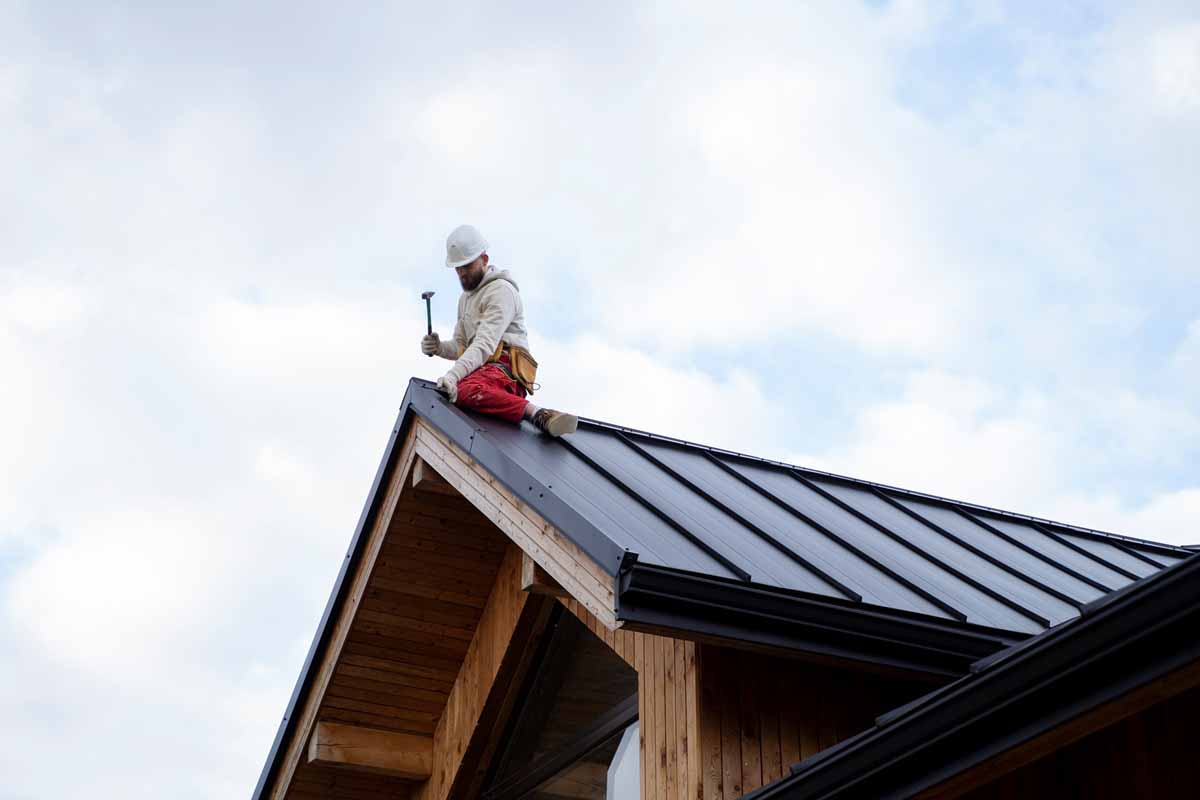
When a storm rips through town or a ceiling starts dripping at 2 a.m., nobody calmly compares roofing quotes. They grab a phone and search something like “emergency roof repair near me” or “24 hour roofer.” Those searches behave differently, and the SEO that wins them is different, too.
In this playbook, we’ll show how we approach emergency roof repair SEO when the goal is simple: rank fast, convert fast, and turn a chaotic weather window into predictable organic leads (without wrecking your long-term roofing SEO). We’ll cover keyword mapping, conversion-first page structure, Google Business Profile tactics, reviews, mobile speed, local links, and tracking, so you can measure what actually matters: calls, booked jobs, and revenue.
At Divramis, our roofers SEO team has spent over a decade helping roofing companies, contractors, and local home-service businesses climb Google’s rankings with white-hat strategies, transparent reporting, and measurable lead growth.
We’ll keep it practical, NOW-ready, and tailored to competitive local markets, whether you’re a roofer in Athens, Thessaloniki, London, or Tampa.
Why Emergency Roof Repair SEO Is Different From Standard Roofing SEO
Emergency queries are “now” queries. Standard roofing SEO is often a “planning” journey.
When someone searches for roof replacement cost or best shingles, they’re usually weeks away from signing a contract. They’ll read guides, compare materials, maybe download a checklist. That’s classic content-led SEO.
But when someone searches emergency roof repair, they’re already in the decision moment. They’re looking for three things:
- Immediate availability (today, tonight, within hours)
- Proximity (“near me” + city modifiers)
- Trust signals (reviews, photos, licensing, insurance, warranties)
That changes how we win rankings and leads:
- Speed matters more. In emergency SERPs, the click goes to the fastest answer, often the Map Pack. If your mobile page loads slowly, you lose the call.
- Local intent is non-negotiable. Google leans heavily on location signals: your Google Business Profile, consistent NAP citations, service area relevance, and distance to the searcher.
- Conversion UX is part of SEO. If you rank but bury the phone number, you’re paying an “SEO tax” you didn’t need to pay.
- Volatility is real. Demand spikes during storms and heavy rain. That’s why we build systems that capture peak demand without relying on it.
In other words: standard roofing SEO builds a pipeline. Emergency roof repair SEO captures a moment. Our job is to be the most relevant, fastest, most credible option in that moment, especially on mobile.
How To Map High-Intent Emergency Keywords To Real Service Pages
Most roofing sites accidentally funnel urgent searches into generic “Roof Repair” pages. That’s a common reason they don’t rank, or they rank but don’t convert.
We map emergency intent to dedicated service pages, not blog posts and not catch-all pages. Here’s the approach we use.
1) Build an “emergency keyword set” (not a giant list)
Focus on terms that imply urgency and immediate service:
- emergency roof repair near me
- roof leak repair near me / leaking roof fix
- 24 hour roofer / same day roof repair
- storm damage roof repair
- tarp roof service / emergency roof tarp
- hail damage roof repair (region-specific)
Add city and neighborhood modifiers once you know where you actually want to win.
2) Match one primary intent to one primary page
A clean mapping avoids internal competition:
- Page A: Emergency Roof Repair in [City] → targets “emergency roof repair,” “24 hour roofer,” “same day roof repair”
- Page B: Roof Leak Repair in [City] → targets “roof leak repair,” “leaking roof,” “ceiling leak from roof”
- Page C: Storm Damage Roof Repair in [City] → targets “storm damage,” “wind damage,” “missing shingles after storm”
If you only have the capacity for one page, start with the broad “Emergency Roof Repair” page and include leak + storm subsections.
Read more: How to increase the conversion rate of your website
3) Use H1s that match how people search
This is simple but powerful:
- H1: Emergency Roof Repair in Athens
- Supporting H2s: “24/7 Response,” “Temporary Tarping,” “Insurance Support,” “Common Emergency Repairs”
Google doesn’t need fancy copy. It needs clarity.
4) Don’t forget the “pre-call” questions
Urgent searchers still need quick confirmation:
- Do you serve my area?
- How fast can you arrive?
- Do you do tarps?
- Are you insured?
- Can you help with insurance photos?
Answer those directly on the page, and you’ll improve both rankings (relevance) and conversions (confidence).
At Divramis, this keyword-to-page mapping step is where we often see the biggest lift, because it turns vague relevance into precise relevance, the kind Google rewards in competitive local SERPs.
Build A Conversion-Ready Emergency Repair Landing Page That Google Can Rank
An emergency landing page has two jobs: convince Google you’re the best match, and convince a stressed homeowner to contact you.
Here’s the structure we use when we want a page to rank and convert.
Above the fold (first screen on mobile)
- A direct headline: Emergency Roof Repair in [City] – 24/7 Response
- A one-sentence credibility line: “Licensed & insured. We can tarp, stop active leaks, and document storm damage.”
- Two CTAs:
- Call now (tap-to-call)
- Request emergency service (short form)
If a visitor has to scroll to find the phone number, we’re usually leaving money on the table.
Core on-page SEO elements (done naturally)
- Title tag that includes the main keyword + city
- H1 aligned with search intent
- H2 sections that reflect emergency sub-intents (leaks, tarps, storm damage)
- Image alt text that’s descriptive (e.g., “emergency shingle repair after wind damage”)
- Internal links to related pages (standard roof repair, roof replacement, commercial roofing)
Schema that helps local + service context
We typically add:
- LocalBusiness or RoofingContractor schema
- Service schema (where appropriate)
- Review snippets (only if compliant and accurate)
- FAQ schema for “How fast can you arrive?” and “Do you offer temporary tarping?”
Conversion trust stack (what people look for in a crisis)
- Photos of real crews and real jobs (especially tarping and leak containment)
- Clear service area statement
- Proof points: years in business, number of crews, financing if relevant
- A short “What happens next” section (reduces anxiety)
A quick, useful FAQ (not bloated)
Example questions that convert:
- “Can you come out today?”
- “Do you do emergency roof tarps?”
- “Will you work with my insurance adjuster?”
- “What should I do while I’m waiting?”
This is where many roofers accidentally write generic fluff. We keep it concrete and local.
Read more: How to make responsive websites SEO friendly
A well-built page like this doesn’t just rank for emergency roof repair SEO terms, it also converts the traffic you already have, which is the fastest “ranking win” you can get.
Local SEO Must-Haves: Google Business Profile, Service Areas, And Proximity Signals
For emergency searches, Google often shows the Map Pack before anything else. That’s why Local SEO isn’t “nice to have”, it’s the playing field.
Google Business Profile: treat it like your second homepage
We optimize GBP with urgency in mind:
- Primary category: Roofing contractor (and relevant secondary categories)
- Accurate hours (and special hours during storms if you truly have crews available)
- Services list: add “Emergency roof repair,” “Roof leak repair,” “Roof tarping,” “Storm damage repair”
- Photos: recent, geo-relevant, and varied (crews, trucks, before/after)
- Posts: storm response updates and availability windows (only if true)
Also: your GBP description should actually mention emergency help in plain language. Not keyword stuffing, just clarity.
Service areas: don’t create thin “city pages” at scale
If you serve 40 locations, it’s tempting to spin 40 near-identical pages. In NOW, that’s a risky strategy.
Instead, we recommend:
- A handful of strong, content-rich city pages where you truly compete
- Neighborhood sections within those pages
- A clear service area statement on the emergency page itself
Proximity signals (what you can and can’t control)
You can’t fake distance. But you can:
- Make your address/NAP consistent across the web
- Strengthen relevance to priority areas with localized content and case studies
- Earn reviews that mention city/neighborhood names naturally
- Build local citations and links (we’ll cover this later)
When storms hit, Google becomes brutally practical: who’s nearby, reputable, and clearly offering emergency help? If your GBP and landing pages answer that, you’re already ahead of most markets.
Reviews And Reputation: Earning Trust Fast In A High-Stakes Moment
In emergency scenarios, reviews aren’t “social proof.” They’re a decision shortcut.
People don’t just want a roofer. They want the roofer who will show up, communicate, and not disappear after taking a deposit. That’s why review strategy is part of emergency roof repair SEO.
Read more: The must-have features every professional website should have
What reviews should emphasize (without scripting customers)
We encourage clients to request reviews that mention specifics like:
- “They came the same day”
- “Stopped the leak fast”
- “Installed a tarp and prevented more damage”
- “Helped with insurance photos/documentation”
- “Clear pricing and no surprises”
Those phrases align perfectly with the intent behind emergency keywords.
How we collect reviews during high-volume weeks
Storm weeks are chaotic. So we simplify:
- Send a review link by SMS within 24–48 hours of the emergency stabilization
- Train the office to ask at the “relief moment” (after the leak is stopped)
- Use a short script that’s human, not salesy: “If we helped you today, would you mind leaving a quick Google review? It helps neighbors find us during storms.”
Responding matters more than most roofers think
Responses send strong quality signals (to users and sometimes indirectly to visibility):
- Thank them
- Reference the service (“tarping,” “leak detection,” “storm damage”), naturally
- Mention the city/neighborhood when appropriate
If you’re in a competitive niche, roofing in a major metro, plumbing, or even iGaming affiliates, reputation velocity is often what separates page-one brands from everyone else.
The key is consistency: reviews shouldn’t only spike when a storm hits. We want steady trust building year-round so your emergency rankings don’t depend on a single weather event.
Technical SEO For Speed And Stability On Mobile (Where Emergency Searches Happen)
Most emergency searches happen on mobile, often on poor connections, in the middle of a stressful moment. If your site is heavy, slow, or glitchy, you’ll lose the lead even if you rank.
Our technical checklist is not complicated, but it’s strict:
- Fast load time on 4G/5G (optimize images, reduce script bloat)
- Clean Core Web Vitals where possible (LCP, INP, CLS)
- No intrusive pop-ups that block the phone number
- Tap-to-call that works and is easy to hit
- Crawlable pages (no accidental noindex, broken canonicals, or redirect chains)
- Fix 404s that appear in navigation or internal links
A quick reality check we use: open your emergency page on your own phone, on cellular, with one hand. If it’s annoying, it’s costing you money.
Content That Wins Urgency Searches Without Cannibalizing Your Core Roofing Pages
One of the fastest ways to sabotage standard roofing SEO is to create overlapping pages that confuse Google.
We avoid cannibalization by separating intent:
Read more: How to rank first in ChatGPT SEO with proven AI visibility strategies
- Emergency pages focus on immediate actions: stop active leaks, tarping, storm response, short timeframes.
- Core roofing pages focus on planned work: replacements, materials, warranties, financing, long-form education.
Then we connect them with smart internal linking:
- Emergency page → links to “Roof Repair” and “Roof Replacement” as next-step options once the home is stabilized.
- Core pages → link back to emergency help (“If you have active leaking, see our emergency roof repair service”).
We also publish a small set of urgency-driven supporting content (not endless blogs), for example:
- “What to do if your roof is leaking during a storm (5 steps)”
- “Temporary roof tarp: how it works and what it costs”
- “Does homeowners insurance cover storm roof damage?”
These posts target long-tail urgency searches and funnel visitors to the emergency landing page, without trying to replace it.
Local Links And Citations That Actually Move The Needle For Roofers
Not all citations and links are equal. We care about the ones that either (1) strengthen NAP consistency or (2) send real authority signals.
What we build first:
- Core citations: major data aggregators + top local directories
- Industry-specific: home services platforms and vetted contractor listings
- Local proof: chamber of commerce, local business associations, neighborhood sites
- Partnerships: suppliers, builders, restoration companies, property managers
For links, we prefer “real world” sources that make sense:
- A supplier page listing preferred installers
- A case study with a local property management company
- Sponsorships with local clubs/events (done transparently)
- Local news features during storm response efforts (if legitimate)
A small number of quality local links tends to outperform dozens of weak directory submissions.
Tracking And Lead Attribution For Emergency Calls, Forms, And Maps Leads
If you can’t track emergency leads, you can’t scale what’s working, or prove SEO ROI.
We track three primary conversion paths:
- Calls from organic pages (tap-to-call)
- Forms from organic pages (emergency request)
- Google Business Profile actions (calls, website clicks, direction requests)
Implementation basics we recommend:
- GA4 + Google Search Console set up properly
- Call tracking with number pools (so you can attribute calls to organic vs GBP vs paid)
- Conversion events for form submissions and call clicks
- UTM tagging for GBP website link and GBP posts
Then we report on what actually matters for emergency services:
Read more: Redesigning a website without losing its SEO rankings
- Which queries drive leads (not just clicks)
- Which locations generate profitable calls
- What times/days spike (storm windows)
- Map Pack visibility vs organic rankings
At Divramis, we’ve found this closes the loop: once you know which emergency keywords and locations drive booked jobs, you can refine pages, reviews, and GBP signals with confidence, often leading to compounding gains instead of random “SEO tasks.”
Conclusion: Turn Emergency Demand Into Consistent Organic Leads Year-Round
Storms create spikes, but the best roofers don’t build their marketing around panic weeks. They use emergency roof repair SEO to capture high-intent demand when it appears, then turn those first-time callers into long-term customers through strong pages, fast mobile UX, reviews, and a local footprint Google trusts.
If we had to prioritize: nail one conversion-ready emergency page, dominate your Google Business Profile, build reputation momentum, and make the mobile experience ridiculously easy. Then track calls and Maps leads so you can double down on what’s actually booking jobs.
Do that well, and “emergency” stops being seasonal luck, it becomes a reliable organic channel all year.
Key Takeaways
- Emergency roof repair SEO focuses on immediate availability, local proximity, and trust signals to capture urgent customer needs.
- Mapping emergency keywords like ’emergency roof repair near me’ to dedicated service pages improves ranking and conversion rates.
- A conversion-ready landing page with clear 24/7 contact options and trust elements maximizes emergency lead capture on mobile devices.
- Optimizing Google Business Profile with accurate hours, services, and local photos is essential to appear prominently in emergency Map Pack results.
- Collecting and responding to specific, timely reviews builds trust rapidly and encourages more emergency service calls.
- Fast mobile page speed and a simple user experience prevent losing emergency leads during critical moments.
- Tracking calls, forms, and Google Business Profile actions enables measurement of which SEO efforts drive bookings and revenue effectively.
Emergency Roof Repair SEO Frequently Asked Questions
What makes emergency roof repair SEO different from standard roofing SEO?
Emergency roof repair SEO targets urgent searches with a focus on immediate availability, local proximity, and trust signals, prioritizing fast mobile speed and clear call-to-actions, unlike standard roofing SEO which supports long-term planning and research.
How should I organize my website pages for emergency roof repair SEO?
Create dedicated service pages mapped to specific emergency keywords like “emergency roof repair near me” or “storm damage roof repair,” using clear H1 headers reflecting search intent and including fast access to contact options to improve ranking and conversion.
What are the key elements of a high-converting emergency roof repair landing page?
A strong emergency landing page features a keyword-rich title and headers, above-the-fold tap-to-call buttons, trust signals like licensing and insurance info, photos of real crews, FAQs about response time, and schema markup to help Google understand the service and improve local rankings.
Why is Google Business Profile optimization crucial for emergency roof repair SEO?
Google Business Profile acts like a second homepage in emergency searches; optimizing categories, accurate hours, geo-specific photos, service lists including emergency roof repair, and active posts helps your business appear prominently in the Map Pack for local urgent queries.
How do online reviews impact emergency roof repair SEO effectiveness?
Reviews serve as vital trust shortcuts during emergencies; encouraging customers to mention quick responses, tarping services, and insurance support builds credibility and influences both customer decisions and search rankings in high-stakes moments.
What role does mobile site speed play in emergency roof repair SEO success?
Since most emergency searches happen on mobile and under stress, fast load times, clean user experience without intrusive pop-ups, and tap-to-call functionality are critical to retain visitors and convert emergency leads effectively.
Read More
Discover more from MILOS ADVISOR: