Sweets in Tripiti, Milos: see our Sweets in Milos section for the island.
Tripiti is a village on a ridge in the north of the volcanic island of Milos, between the chief town of Plaka and the shore settlement of Klima. The sweets in Tripiti are the sweets of the whole island, served in a village with a panoramic view of the gulf. This page places them in the village and in the order of a meal.
The first section sets out the sweets in Tripiti at a glance: the village, its tables and the island list. The second takes one sweet, the watermelon pie, and sets it against the view of the gulf from the ridge. Almond sweets, honey and cheese pies and a sweet for the road to Plaka follow in the later sections of the page.
What are the sweets in Tripiti at a glance?
Sweets in Tripiti are the traditional sweets of Milos, eaten in a village on a ridge between Plaka and Klima. Koufeta, watermelon pie, sesame bars, fried dough strips and honeyed dough balls form the island list that the village shares with the rest of Milos.
Tripiti stands on the northern coast of Milos, 150 metres above the sea, at the point where the sea enters the bay. The village is almost united with Plaka and is built over the ruins of the classical city. Its taverns, restaurants and meze shops serve gastronomic dishes, and the view takes in Adamas Bay. A Greek taverna menu runs from bread, salads, grills and fish to fruit and desserts, so the sweets in Tripiti belong at the end of those meals, with the bay in view.
The sweets of Milos form a short list. Koufeta stand out: small almond sweets covered in icing sugar. Beside them come a watermelon spoon sweet, karpouzopita, the watermelon pie, pasteli, the bar of sesame and honey, xerotigana, the strips of fried dough, and loukoumades, the fried dough balls that Milos calls kourtalides and serves with honey. Greek cooks also dress them with cinnamon or walnuts. That list is the frame for the sweets in Tripiti, because the village shares the table of the island.
The ground under the village is ancient, and the roots of the sweets are old as well. Loukoumades go back to enkrides, a dough fried in oil and eaten with honey in ancient Greece, and the treat stayed popular in the Byzantine era, particularly during Lent. Itrion, a thin cake of sesame seeds and honey, is documented in ancient Greek cooking. Dessert watermelons spread across the Mediterranean world during Roman antiquity. The sweets in Tripiti therefore sit above an old city and rest on old recipes.
One more form belongs on the list: the spoon sweet. Its Greek name, glyko tou koutaliou, means sweet of the spoon. It is a preserve of whole fruit, boiled gently in water and sugar until the syrup sets, and a well-made one keeps the shape, colour, aroma and taste of the fruit. It is served by the teaspoon in a small dish, with coffee or tea and cold water, and it tops yogurt or ice cream. Among the sweets in Tripiti, the spoon sweet is eaten alone or with cheese.
- Place: The village stands 150 metres above the sea on the northern coast of Milos.
- Tables: Taverns, restaurants and meze shops serve the food of the village.
- Island list: Koufeta, watermelon pie, pasteli, xerotigana and kourtalides lead the sweets in Tripiti.
- Roots: Fried dough with honey goes back to the enkrides of ancient Greece.
- Spoon: A spoon sweet is a fruit preserve served by the teaspoon with cold water.
The sweets in Tripiti start from a place and a short list: a ridge village above the gulf, a table of taverns and meze shops, and the sweets of Milos with roots in ancient Greek cooking, from fried dough to sesame cake. The island-wide range is set out on the page for sweets in Milos. The next section takes one sweet from the list, the watermelon pie, and sets it beside the view of the gulf.
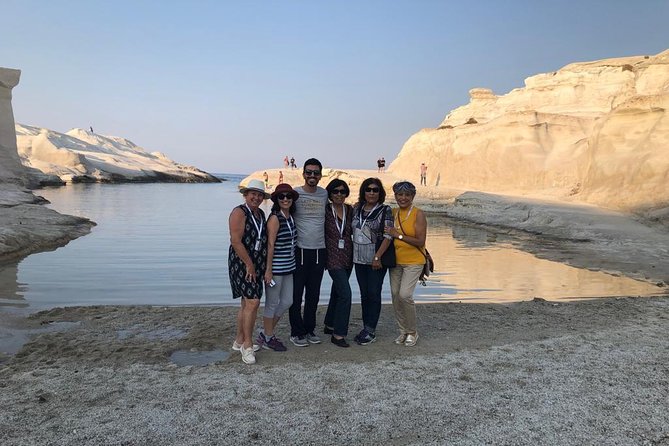
Which of the sweets in Tripiti suits a seat above the gulf of Milos?
Sweets in Tripiti that suit a seat above the gulf begin with karpouzopita, the watermelon pie of Milos. The pie belongs to summer, when watermelon is in season, and its recipe lists raisins, walnuts, cinnamon and clove, so a slice is a sweet of the island.
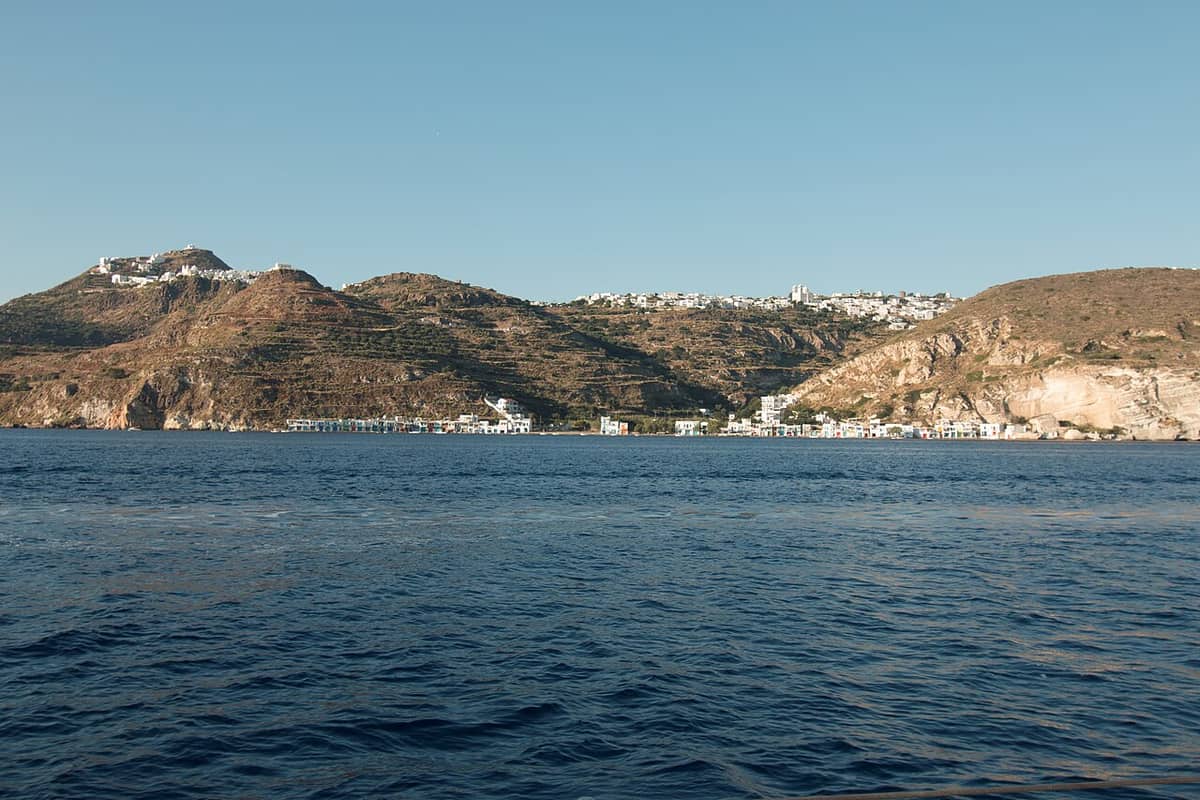
The ridge of Tripiti faces the sea entrance of the bay of Milos. The island has the shape of a horseshoe that closes around a large gulf, and the gulf is one of the largest natural harbours of Greece. Milos lies at the south-western end of the Cyclades, and karpouzopita is a traditional pie of that island group, baked on Milos and on Kimolos, which lies to the north-east across a channel 1 kilometre wide. Among the sweets in Tripiti it is the one that belongs to these islands.
The pie follows the watermelon season. In the past, when watermelon was in season in summer, part of the flesh was eaten as fruit and the rest went into the pie, while the rinds became a spoon sweet or a pickle. Cooks saved materials this way. Watermelons were first grown for their high water content and stored to be eaten in dry seasons, to supply both food and water. A slice among the sweets in Tripiti keeps that old tie between the fruit and the dry months.
One fruit gives two sweets. Watermelon flesh is too delicate to keep its texture in a spoon sweet, so cooks use the rind instead and preserve it in sugar syrup. The rind is edible after cooking, and the fruit can also be pickled. The sweets of Milos list the watermelon spoon sweet beside the pie. Among the sweets in Tripiti, the fruit therefore appears in two forms, a soft baked slice and a firm preserved rind, and both sit on the same list.
The recipe lists watermelon, flour, baking powder, sugar or honey, oil, raisins, walnuts, cinnamon and clove. Flour is made by grinding grain in a mill, and the restored windmills of Tripiti once ground grain for the village. Raisins are dried grapes, and grapes rank among the main crops of Milos, with barley and cotton. Wheat is the basic grain of Greece. Greek cooks use seeds and nuts from pastry to main dishes, so the walnuts of the pie follow a wide custom among the sweets in Tripiti.
- Pie: Karpouzopita is a traditional pie of the Cyclades, baked on Milos and Kimolos.
- Season: The pie belongs to summer, when watermelon is in season.
- Rind: The rind of the fruit becomes a spoon sweet or a pickle.
- Raisins: The raisins in the recipe are dried grapes, and grapes are a main crop of Milos.
- View: The ridge of Tripiti faces the sea entrance of the gulf.
The watermelon pie gives the sweets in Tripiti a seat, a season and a view: a ridge above the gulf, a fruit of the summer, and a recipe that uses the fruit from rind to flesh. The pie comes from the Cyclades and is baked on Milos and on its neighbour Kimolos. The sections that follow leave the watermelon and turn to the almond sweets of the islands, then to the pies of honey and cheese.
What are amygdalota, the almond cookies among the sweets in Tripiti?
Sweets in Tripiti sit on the Cycladic table, where the almond cookie is amygdalota. These small cookies are made from almonds, sugar and flower water, with a soft, almost velvety texture, and they appear at weddings, baptisms, feasts and the welcome of a guest to the island.
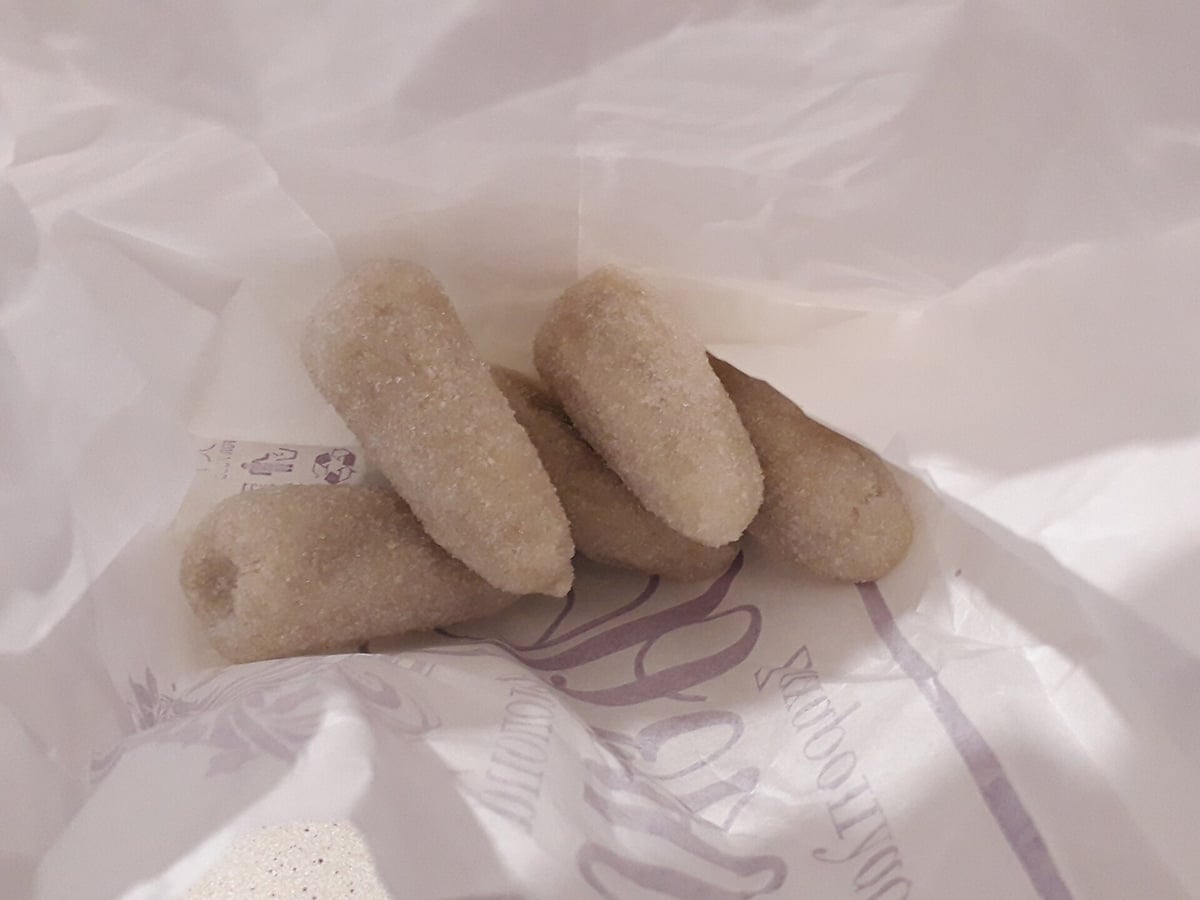
Amygdalota is the Greek name of an almond cookie associated with the Cyclades, the island group of the Aegean Sea that includes Milos, and the name means almond pears. This cookie frames the sweets in Tripiti. It holds no coconut, yet it is sometimes called Greek macaroons. In certain regions the same sweet answers to rozethes, ergolavoi or troufes. A pear is the shape behind the name, and balls, half-moons and other small forms make up the rest of the family.
Whatever the shape, the cookies are small enough to eat in one bite. The texture is soft, almost velvety. Honey can sweeten the cookies, and orange flower water or rose water gives the scent. The Greek kitchen knows the sweet in more than one version, always built on almonds, sugar and flower water. Ancient Greeks, Hittites and Romans already cooked with almonds, and cooks still do. Similar almond cookies appear across the eastern Mediterranean, so the sweets in Tripiti stand inside a larger family.
Two scented waters flavour the cookie. Orange flower water is a clear aromatic by-product of distilling fresh bitter-orange blossoms, and Greece and Cyprus call it anthonero. It is a traditional aroma in Mediterranean desserts. Rose water comes from steeping rose petals in water, and it is a by-product of distilling roses for perfume oil. Marzipan has long carried the flavour of rose water. These two scents tie the sweets in Tripiti to the whole sea basin around the island.
The almond gives the sweet its name, because the Latin amygdala was borrowed from Ancient Greek amygdale. The fruit is a drupe, not a nut, and the edible seed sits inside a woody shell. Blanched almonds have had the skin softened with hot water and then removed, which reveals the white embryo. The tree prospers in a Mediterranean climate with warm, dry summers and mild, wet winters. In Greece, the amygdalota are the best-known almond sweets, and they carry that old crop into the sweets in Tripiti.
Joy and welcome define the occasions of the cookie. Greek tradition places it at weddings, baptisms, feasts and panigyria, and it greets a visitor who arrives on the island. The almond itself holds 25 to 40 percent almond oil and 18 percent protein, and pastry-making uses the seeds roasted and ground, or whole. The sweets in Tripiti that mark an occasion therefore rest on a seed rich in oil and protein and on a tradition of hospitality.
- Pear: The name means almond pears, and a small pear is one of the shapes the cookie takes.
- Syros: The island of Syros keeps a version of its own, listed as amygdalota axladakia.
- Sifnos: Melopites, amygdalota and pastelia appear together among the traditional dishes of Sifnos.
- Andros: Almond sweets stand beside spoon sweets among the traditional sweets of Andros.
- Marzipan: White marzipan is a wedding treat on the Aegean islands, served to guests at wedding feasts.
Almonds, honey or sugar and a scented water are all the cookie needs, and the islands turn that short list into pears, balls and half-moons. Regions keep their own names for it, from rozethes to troufes, and the cookie stays small enough for one bite. Honey, the sweetener of the cookie, leads into the next section, where honey meets fresh cheese inside a pie.
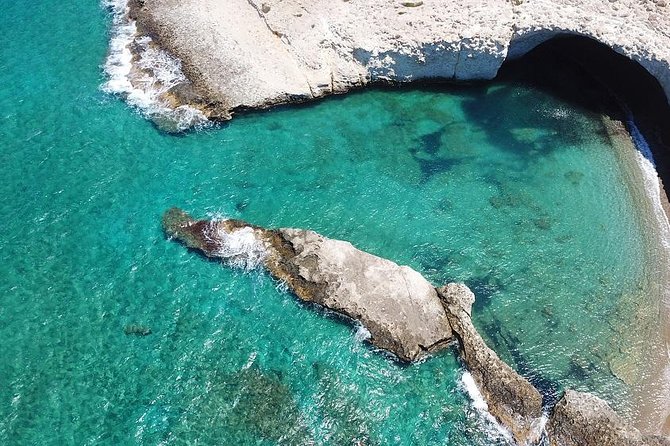
What is melopita, the honey and cheese pie among the sweets in Tripiti?
Sweets in Tripiti share the Cycladic table with melopita, the honey and cheese pie of the islands. Fresh cheese, honey and dough are its base, and the pie is a traditional Easter sweet. The cheese and the pastry change from one island to the next.
Melopita means honey pie, and Greek tradition counts it as an Easter pie of the Cyclades. The island of Sifnos is tied to it, though the pie is made on other islands of the Aegean too. Three ingredients carry the recipe: cheese, honey and dough. The sweets in Tripiti reach back to this tradition through the Cyclades, since Milos is one of the islands of the group, and the pie shows the cheese side of the island table. The archipelago counts about 220 islands.
Easter explains the cheese. In spring the animals give birth, and their milk is rich in fat and of high quality, so the fresh spring cheeses go into salty and sweet dishes alike. Melopita became an Easter sweet to use those cheeses. Sweets with cheese at Easter are a tradition of the Cyclades, the Dodecanese and Crete. A Neolithic culture of the western Aegean drew on sheep and goats, the same animals whose milk gives mizithra, so the cheese side of the sweets in Tripiti has deep roots.
The pie has a Byzantine origin. Island societies in Greece, in the north and in Cyprus stayed closed, and Byzantine sweets survived there until recent times, which kept the traditional cooking alive. The pastry shows the island differences. One island uses no sheets of dough, a second uses sheets only as a base, and a third puts sheets above and below the filling. That range of local versions joins melopita to the sweets in Tripiti only through the shared table of the Cyclades.
The cheese is local. Mykonos supplies tyrovolia, and Sifnos supplies sweet mizithra, also called anthotyra. A cook from the rest of Greece swaps in another soft Greek cheese: anevato, galotyri, katiki, manouri, xygalo or xinomizithra. Fresh mizithra is a whey cheese from sheep or goat milk, close to Italian ricotta. No salt goes in, so the taste is almost sweet and milky, and the cheese is eaten as dessert with honey or baked in pies. A cheese like this anchors the pies among the sweets in Tripiti.
Honey is the main sweetener of the pie. Sugars make up 77 to 78 percent of honey, mainly fructose and glucose, and its sweetness matches that of table sugar. Its chemistry suits baking, and its low moisture does not favour microorganisms. Cooks use honey in cooking, baking, desserts and as a spread on bread. In melopita it meets a fresh cheese that carries no salt, and that pairing defines the pie among the sweets in Tripiti.
- Mizithra: Milk and whey meet in a ratio of 7 to 3, and lemon juice or vinegar can curdle the milk.
- Anthotyros: The name means flowery cheese, and the fresh cheese goes with honey and fruit at breakfast.
- Kalitsounia: Sweet kalitsounia of Crete hold mizithra and carry honey poured on top, and Lasithi adds cinnamon.
- Relatives: Lychnarakia, tsimpita and melitinia are named as sweets related to melopita, which widens the pies behind the sweets in Tripiti.
- Placenta: Ancient cooking knew a sweet layered cheese dish called placenta, and honey was poured over it when it was ready.
Cheese, honey and dough explain the pie, as almonds, sugar and flower water explain the cookie of the previous section. Easter, spring milk and local cheese give the pie its place in the Cycladic year. The village of Plaka, on the plateau above the harbour, carries the same table forward, and the sweets in Plaka continue where the sweets in Tripiti stop.
Where do sweets in Tripiti fit on the walk to Plaka?
Sweets in Tripiti fit at the start or the end of the walk to Plaka, because the two villages almost join. The stone lanes lead past the old churches of Korfiatissa, Thalassitra and Mesa Panagia, and the castle at the top closes the whole route.
Plaka takes its name from the flat ground on which its houses rose when the castle was too small for the whole population. The present town grew out of the abandonment of the older settlement of Zefyria, called Chora, which is why Plaka does not carry that name. The castle dates from after 1204, and the medieval town spread over the plateau just below it. Sweets in Tripiti and the lanes of Plaka therefore belong to one outing, since a hiking route is listed from Tripiti to Plaka.
Panagia Korfiatissa stands at the western edge of Plaka on steep rocks. The place is called Chalara, and the ground before the church is called Marmara, because the courtyard is paved with marble gravestones from the old city. Inside, the church keeps heirlooms from the old abandoned churches of the island, icons of Cretan-Byzantine art from the churches of Zefyria, relics of saints in small silver boxes, a gilded wooden altar screen and a gilded epitaphios of 1600 brought from Smyrna. A museum of folk life lies behind it.
Panagia Thalassitra protects sailors and is photographed more than any other church on the island. The path meets it on the climb to the castle. A small chapel stood on the site in 1739, and the larger church of 1839 replaced it, taking in the neighbouring Frankish church of Panagia Eleousa as its south aisle. A coat of arms of a duke of Naxos survives above the west door. At the top, Mesa Panagia was rebuilt after 1944, once the older chapel had been blown up during the German occupation.
Among the sweets in Tripiti, as across Greece, the spoon sweet is the old answer to a stop for something sweet. It is a fruit preserve, served as a gesture of hospitality by the teaspoon in a small dish, with coffee or tea and a glass of cold water. A well-made spoon sweet keeps the shape, colour, aroma and taste of the fruit. A white mastic sweet, dropped into a tall glass of ice-cold water, is called a vanilla submarine.
- Plaka: The town takes its name from the flat ground on which its first houses stood once the castle was too small.
- Korfiatissa: The church stands on steep rocks at the western edge, above a courtyard paved with old gravestones.
- Thalassitra: The church of the sailors’ protector lies on the climb to the castle and keeps a duke’s coat of arms.
- Mesa Panagia: The small vaulted church on the castle summit was rebuilt by the residents after 1944.
- Spoon sweet: A teaspoon of preserved fruit comes with coffee or tea and cold water as a gesture of hospitality.
The walk gives sweets in Tripiti a setting of stone lanes and old churches. A sweet stop can open the route in the lower village or close it in the capital, and what lies between stays the same: a church on steep rocks, a church of the sailors and a small vaulted church on the castle. A cup for the same pause is set out under coffee and drinks in Tripiti, the companion page for the village.

What do travellers ask about sweets in Tripiti?
Sweets in Tripiti raise questions about fried dough, almond cookies, custard pie, nut pastry, holiday biscuits, Easter bread, breakfast pastry and fasting halva. The eight answers below set out what each sweet is made of, where it comes from and where it belongs on the Greek table.
Which fried dough balls count among the sweets in Tripiti?
The island list of sweets names loukoumades, balls of leavened dough fried in oil and served with honey, under the local word kourtalides. Greek cooks add cinnamon, walnuts or chocolate sauce. The ancient enkrides, dough fried in oil and eaten with honey, were their ancestor, and in Byzantine Lent the dish met the rules of Orthodox fasting.
What are amygdalota among the sweets in Tripiti?
Amygdalota are almond cookies linked to the Cyclades, and Milos lies at the south-western end of that group. They are sometimes called Greek macaroons, although they hold no coconut. Cooks shape them like pears, balls or other forms, small enough to eat in one bite, sweeten them with honey and flavour them with orange flower water or rose water.
How is galaktoboureko made among the sweets in Tripiti?
Galaktoboureko is a dessert of semolina custard between layers of filo, covered in a clear sweet syrup. The custard bakes together with the pastry and is not added afterwards. Lemon, orange or rose flavour the custard, and the pie is cut into square portions or rolled into single servings. The earliest references date to the Byzantine period.
Which nuts fill the baklava among the sweets in Tripiti?
Greek baklava layers filo with chopped nuts and soaks in a syrup of sugar, honey, water, cinnamon and orange or lemon zest and juice. Walnuts are more common than pistachios in Greek cooking, and cinnamon flavours the pastry. Southern Greece fills it mostly with chopped almonds, and the north with walnuts. Hazelnuts, sesame and raisins also appear.
Which Christmas biscuit belongs with the sweets in Tripiti?
Melomakarona are egg-shaped biscuits of flour, olive oil and honey, prepared in the Christmas season. Right after baking, the biscuits go into a cold syrup of honey, sugar and water for seconds, and ground walnut tops them. The name joins meli, honey, with makaria, an ancient and medieval bread eaten at funerals. A second name for the biscuits is finikia.
Which Easter bread suits the sweets in Tripiti?
Tsoureki is a sweet holiday bread of flour, milk, butter, eggs and sugar, seasoned with lemon or orange zest, mastic resin or mahleb. The Greek Easter version, lampropsomo, is braided, with dyed red eggs pressed into the dough. A loaf with a coin hidden inside, called vasilopita, is baked for the feast of Saint Basil on New Year’s Day.
Where does bougatsa stand among the sweets in Tripiti?
Bougatsa is a Greek breakfast food and mid-morning snack, sweet or savoury. The sweet form, bougatsa krema, wraps semolina custard in hand-made phyllo. After baking, the pie is cut into small pieces and served hot, dusted with powdered sugar or cinnamon. The modern version comes from northern Greece, in particular the cities of Serres and Thessaloniki.
Does halva suit fasting days among the sweets in Tripiti?
Halva is a traditional fasting food among Greeks, who keep food restrictions, above all on meat, on Wednesdays and Fridays and for all of Great Lent. Cooks make it of sesame or semolina across Greece, and it also appears as a dessert and at village festivals called paniyiria. Farsala in Thessaly makes a version from cornflour.