
The best time to visit Milos depends on heat, rain, wind and crowds. This page sets out the climate of the island of Milos month by month. Readers can then match the month to the kind of holiday they want.
Milos is a volcanic island at the south-west edge of the Cyclades. It lies in the Aegean Sea, with the Sea of Crete to its south. The Milos island overview covers beaches, villages and history. This page covers only the weather and the best time to visit Milos.
Which months are the best time to visit Milos at a glance?
The best time to visit Milos is May, June or September. These months bring warm days and almost no rain. July and August are hotter, and the north wind blows on more days. Winter is mild and wet, with rain on up to nine days a month.
Milos has a Mediterranean climate. In plain words, winters are mild with rain. Summers run from warm to hot with dry air. The yearly mean high is 20.3 °C, and the yearly mean low is 14.8 °C. Rain adds up to 410.8 mm a year, spread over about 46 wet days.
Summer is the season when visitors come to Milos. The island draws fewer people than Santorini or Mykonos, so it stays less crowded. Summer days are sunny and dry, hot by day and warm at night. The best time to visit Milos for sea and sun is this long dry season.
The meltemi, a dry wind from the north, shapes the summer. Its season opens in mid-May and closes around the middle of September. It blows on the greatest number of days in July and August. It holds the heat down, but it can stop ferries and small boats.
Winter is the wet and cool season. Spring warms from April, when rain drops to 20.5 mm. Autumn stays warm into October, when rain returns and wet days rise to nearly four. For beach weather, the best time to visit Milos ends with October.
- Spring: Highs climb from 14.8 °C in March to 22.8 °C in May.
- Summer: June to August brings highs of 27 to 28 °C and almost no rain.
- Autumn: September stays dry at 25.2 °C, and October brings 42.9 mm of rain.
- Winter: December to February are the wettest and coolest months.
- Wind: July and August have the greatest number of meltemi days; the season spans mid-May to mid-September.
The best time to visit Milos therefore depends on the goal. The hot dry months suit the sea. The mild months suit walks, villages and museums. The sections below take each season in turn. They give the monthly highs, lows and rain behind this summary.

How does the climate month by month set the best time to visit Milos?
The best time to visit Milos follows the monthly numbers. Highs run from 12.9 °C in January to 28.1 °C in July. Lows run from 8.5 °C to 21.8 °C. Rain falls from October to March and almost stops from June to September.
Winter runs from December to February. Highs sit between 12.9 °C and 14.6 °C. Lows stay from 8.5 °C to 10.3 °C. December is the wettest month, with 90.3 mm of rain. January follows with 74.7 mm on nearly nine wet days.
Spring moves quickly. March still has highs of 14.8 °C and 47.2 mm of rain. April climbs to 18.4 °C. May reaches 22.8 °C by day and 15.9 °C at night. Only 13.1 mm of rain falls then, on about one wet day.
June opens the dry season with a high of 27.1 °C. July is the hottest month, at 28.1 °C by day and 21.8 °C by night. Only 0.3 mm of rain falls in July. August stays at 27.6 °C. For pure heat, the best time to visit Milos is July.
September still feels like summer, and it closes the best time to visit Milos. Highs average 25.2 °C and lows 19.6 °C, with 5.8 mm of rain. October cools to 21.3 °C, and rain climbs to 42.9 mm. November brings 18.0 °C highs and 60.7 mm.
- Record high: 44.0 °C, measured in June.
- Record low: Minus 2.0 °C, measured in January and February.
- Driest month: July, with 0.3 mm of rain and almost no wet days.
- Wettest month: December, with 90.3 mm of rain and nine wet days.
- Humidity: June is the least humid month, at 58.8 percent.
These numbers explain the best time to visit Milos in plain terms. From June to September, rain is rare and days are hot. From December to February, rain falls on seven to nine days a month. April, May and October sit in between, with mild air and lighter rain.
Is spring the best time to visit Milos?
The best time to visit Milos for mild air and open space is spring. April days average 18.4 °C, nights 12.4 °C, and rain falls to 20.5 mm. May warms to 22.8 °C, and light north winds arrive before the summer crowds.
April opens the best time to visit Milos with the first warm days. Highs average 18.4 °C and lows 12.4 °C, so the daily mean is 15.2 °C. The April record high is 28.4 °C and the record low 5.4 °C.
Rain fades fast in spring. March still brings 47.2 mm over 5.7 days. April drops to 20.5 mm over 2.9 days. May sees 13.1 mm over 1.4 days. Highs reach 22.8 °C and lows 15.9 °C.
The sea lags behind the air. In winter the far south of the Aegean has surface water of 13 °C. By summer it climbs to 19 to 24 °C, and spring water sits between those two marks.
Walkers who choose spring as the best time to visit Milos head west. Plants, herbs and wild flowers grow there in great number. That Natura 2000 land holds over 800 plant types, and 35 of them grow only in Greece.
- Rain days: April has 2.9 rainy days, May 1.4.
- Wind: Light north winds blow for two to three weeks in late spring.
- Birds: Migrating birds rest at Achivadolimni, the Cyclades’ biggest natural wetland.
- Visitors: The busy season is summer, so spring stays quieter.
- Humidity: April averages 67% and May 63.5%, below every winter month.
Spring, the best time to visit Milos for walkers, gives warm days without heat. April still has cool nights and a little rain. May is drier and warmer, and the north wind only begins to show. The island is calm before summer.
Is June the best time to visit Milos?
The best time to visit Milos for the longest days is June. The summer solstice falls on 20 or 21 June and brings the longest daylight. Highs average 27.1 °C, and rain drops to 3.3 mm. The air is the driest of the year.
The summer solstice sets the best time to visit Milos for daylight. It is the day with the longest daylight and the shortest night. In the Northern Hemisphere it falls on 20 or 21 June. The noon sun then stands at its highest.
Europe long called this day midsummer, yet other calendars treat it as the start of summer. On Milos the June mean high is 27.1 °C and the mean low 19.8 °C. The daily mean reaches 23.5 °C, so the nights stay warm.
June holds the island’s all-time record high of 44.0 °C, so a hot spell is possible. Rain averages 3.3 mm, and a rainy day comes only 0.3 times a month. Humidity drops to 58.8%, the lowest figure of the whole year.
The first north winds shape the best time to visit Milos at sea. Light north winds blow from May into early June, then pause for a while. A week later the meltemi proper returns, and it stays until early October.
- Daylight: The solstice on 20 or 21 June brings the longest day.
- Nights: The June mean low is 19.8 °C, so nights stay warm.
- Sea: Summer surface water is 19 to 24 °C.
- Wind: The returning meltemi averages 6 to 7 Beaufort.
- Rain days: June averages 0.3 rainy days.
June, the best time to visit Milos for long light, brings dry air before the peak heat. The solstice gives the longest day, highs stay near 27 °C, and rain has all but stopped. The meltemi pauses early in the month and then returns.
Are July and August the best time to visit Milos?
The best time to visit Milos for full heat is July and August. July is the hottest month, with highs of 28.1 °C and lows of 21.8 °C. Rain falls on 0.1 days a month, and the island is at its busiest.
For heat-lovers, July is the best time to visit Milos, since it is the warmest month. Highs average 28.1 °C and lows 21.8 °C, so the daily mean is 25.0 °C. August follows close behind at 27.6 °C by day and 21.6 °C at night.
July’s record high is 41.0 °C, and August’s is 39.8 °C. The record lows are 14.0 °C and 14.2 °C, so the nights stay warm. Rain is almost absent. July gets 0.3 mm and August 1.4 mm, on 0.1 days each.
The meltemi marks the best time to visit Milos as much as the heat does. It comes up without warning under a clear sky and peaks in the afternoon. It eases at night, yet it sometimes runs for days on end.
At force 7 to 8, yachts and the inter-island ferries stay in port. Small boat routes stop by day, in the hottest hours. The beaches and boats carry the summer crowd, yet the island stays less crowded than Santorini and Mykonos.
- July: The daily mean of 25.0 °C is the year’s highest.
- August: Humidity climbs to 63.4%, from 60.1% in July.
- Sky: Meltemi air dries over Europe and leaves a deep blue sky.
- Direction: In the southern Aegean the wind blows from the north-west.
- Culture: Summer festival events make island cultural life more intense.
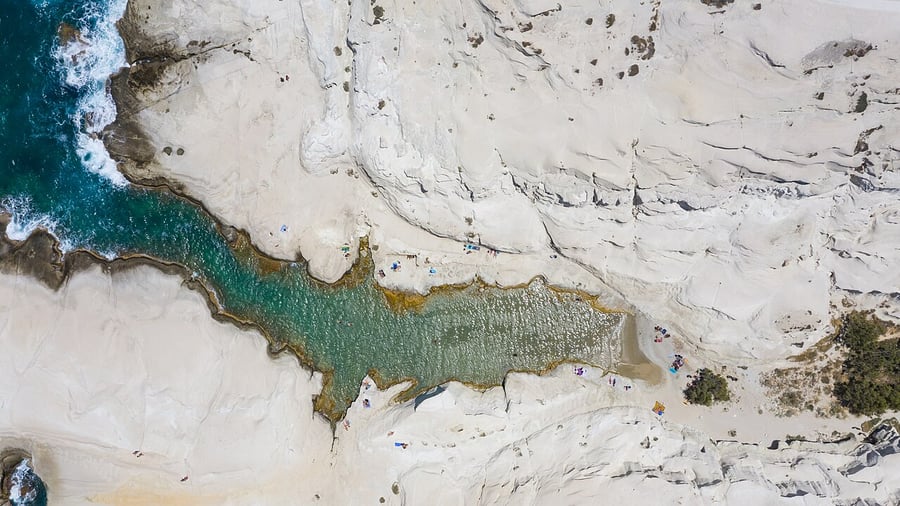
July and August are the best time to visit Milos for heat and the full summer season. The catch is the wind, which halts small boats and keeps ferries in port. At Sarakiniko beach on the north shore, north-wind waves beat the white rock. A couple of trees give the only shade.
Is autumn the best time to visit Milos?
September and October are the best time to visit Milos for warm water and quiet beaches. The air stays warm, September has almost no rain, and the summer crowds thin out. The north wind also fades in these weeks, so the sea settles on every coast.
September keeps summer heat without its peak. Daytime highs average 25.2 °C, and nights stay near 19.6 °C. Rain is rare, with 5.8 mm over less than one wet day. Humidity sits at 66.8 percent, lower than in winter.
October stays mild, with daytime highs of 21.3 °C. The first real rain arrives, 42.9 mm over about four wet days. The Aegean surface reaches 19 to 24 °C in summer. In winter it drops to 8 to 13 °C. Early autumn sits at the warm end.
Summer is the busy season on Milos, so numbers drop in September. The island draws fewer visitors than Santorini or Mykonos, and the gap widens in autumn. For the best time to visit Milos with space on the sand, these weeks win.
The meltemi, the dry north wind of summer, loses strength in these weeks. Its season ends between mid-September and early October. That makes early autumn the best time to visit Milos on the north coast. Sarakiniko’s pale rock then meets calm water.
- Daytime: September averages 25.2 °C and October 21.3 °C.
- Nights: 19.6 °C in September, 16.1 °C in October.
- Rain: Under one wet day in September, four in October.
- Sea: Aegean surface water, 19 to 24 °C in summer.
- Wind: The meltemi ends between mid-September and early October.
For a warm sea without crowds, the best time to visit Milos is early autumn. September keeps summer conditions with the wind gone, and October adds a little rain. Island-to-island links run mainly in summer, so an autumn plan checks the routes early.

Is winter ever the best time to visit Milos?
The best time to visit Milos for quiet is winter, from November to March. The island has mild, rainy winters. Daytime highs stay above 12 °C on average, and the record low is only minus 2 °C. Beaches empty, villages go quiet, and boat links thin out.
Rain shapes the Milos winter more than cold does. The wettest month is December: 90.3 mm of rain over nine wet days. January follows with 74.7 mm. The year brings 410.8 mm, and the bulk falls between October and March.
Walkers find winter the best time to visit Milos, because the cold stays gentle. January and February are the coolest months, with lows averaging 8.5 °C. Highs sit near 13 °C. February has even reached 26.2 °C, so a warm spell can arrive mid-winter.
Milos fills up in summer, so winter leaves the island to its residents. Winter is not the best time to visit Milos by boat. Fishermen dug boat garages, the syrmata, into soft rock at Klima, Mandrakia and Fyropotamos to escape winter weather.
In summer, Milos has frequent links with other Cycladic islands, Crete and Rhodes. Those extra routes shrink once summer ends. Winter travel leans on the mainland sea route into Adamas, or on the flight from Athens.
- Wettest month: December, with 90.3 mm and nine rainy days.
- Coolest months: January and February, with average lows of 8.5 °C.
- Record low: Minus 2 °C, measured in January and February.
- Humidity: Between 72 and 74 percent from November to February.
- Sea: The Aegean’s top layer cools to 8 to 13 °C in winter.
For hot springs by the harbour and quiet villages, winter is the best time to visit Milos. It is the wrong season for a beach holiday, because wet days cluster from December to February. March opens the door again, with 14.8 °C days and less rain.
How does the meltemi shape the best time to visit Milos?
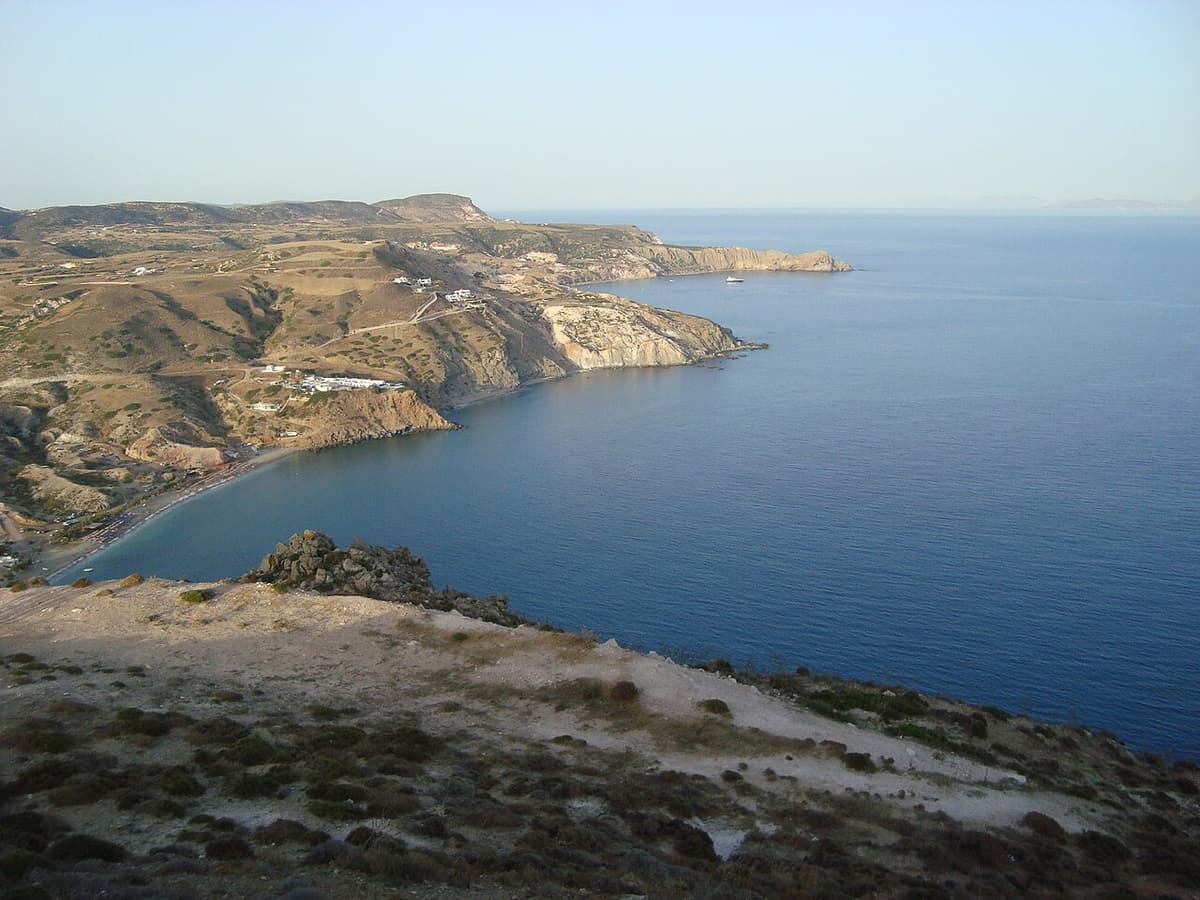
The meltemi wind shapes the best time to visit Milos. This dry wind blows out of the north across the Aegean. Its season runs from mid-May to mid-September, sometimes into early October. It raises waves, holds boats in port, and leaves the south coast calm.
The name is Turkish in origin. The ancient Greeks called the wind etesian, from their word for year, because it returns each summer. High pressure over the Balkans and low pressure over Asia Minor push the air south. The air arrives cool and dry.
The season opens with light northerlies in May, known as the forerunners. They pause in June. Then the full meltemi returns and holds until early October. For the best time to visit Milos by boat, these dates matter more than the heat.
Clear skies and rough water mark a meltemi day. The wind averages 6 to 7 Beaufort, a scale of wind strength. At its worst it hits 7 to 8. At that level small boats stay in harbour and island ferries stop sailing.
Milos curves like a horseshoe around a wide bay. The island blocks a north wind, so the bay and south coast stay flat. One list of 90 beaches puts its largest groups in the bay and on the south coast. Fewer face north, so a windy month still leaves calm water to swim in.
- Name: The ancient Greeks called it etesian, from the word for year.
- Strength: An average of 6 to 7 Beaufort, peaking at 7 to 8.
- Timing: Strongest in the afternoon, weaker or gone at night.
- Shelter: The bay helps in a north wind, the south coast more.
- South wind: The north shore becomes the calm one.
For boat days, the wind matters more than the heat. Early spring and the weeks after mid-September bring calm seas on every coast. In high summer, a morning start beats the wind. So does a south-facing shore such as Firiplaka beach on the south coast.
What is the best time to visit Milos by activity?
Each activity has its own best time to visit Milos. Swimming and boat trips belong to the warm, dry months. Kayak trips run between April and October. Walkers do best in spring and autumn, and villages and museums work in every month.
Swimming and beach days fit the window from June to September. Night lows stay between 19.6 and 21.8 °C, so evenings on the sand remain warm. Rain hardly falls then, and the south coast shelters from the north wind.
Boat trips to Kleftiko follow the wind, not the date. The meltemi peaks in the afternoon and eases after dark. A morning start meets a calmer sea. A Kleftiko boat tour leaves from Adamas or Pollonia through the warm months.
Kayak trips run between April and October. The two end months are the wet ones of that window. April gets 20.5 mm of rain and October 42.9 mm. The sea caves and tunnels of the coast are the target.
Hiking belongs to spring and autumn, the two mild seasons. Spring walks meet 47.2 mm of rain in March but only 13.1 mm in May. The eight villages and six museums fill a wet winter day or a hot afternoon.
- Swimming: June to September, warmest sea in late summer.
- Kleftiko by boat: a calm morning in the warm months.
- Kayak: April to October, when the trips run.
- Hiking: spring and autumn, away from the midsummer heat.
- Villages and museums: any month, first on a rainy day.
The best time to visit Milos for a mixed plan is June or September. Each sits at an edge of the swimming season, inside the kayak season. The whole list of activities in Milos is open then, and the August crowd is absent.

Which questions decide the best time to visit Milos?
The best time to visit Milos raises eight short questions. They cover the sea, quiet months, Easter, winter ferries and rain. They also cover a short stay, a honeymoon and the hottest month. Each answer rests on the island’s climate figures.
Is the sea warm at the best time to visit Milos?
The sea warms more slowly than the air and cools more slowly too. It is coolest in spring and warmest in late summer and early autumn. The air is hottest in July, yet the water keeps its heat into October. The weeks after the air peak suit a swim best.
Is the quietest month the best time to visit Milos?
The quietest months are January and February, the coldest of the year. Their daily means are 10.5 and 10.7 °C. Rain falls on more days then than in spring or summer. The summer ferry links are gone, and the village streets stand empty. Quiet is the reward for the rain.
Is Easter the best time to visit Milos for customs?
Easter falls in spring, and one custom is the island’s own. In Triovasalos and Pera Triovasalos a figure of Judas is set alight. Dynamite goes off in a field between the villages. The weather is mild and the sea still cool. More than 160 churches and chapels hold the services.
Is winter the best time to visit Milos by ferry?
The sea link with Piraeus is the one that lasts all year. Direct boats reach the port of Milos. Others call at Kythnos, Serifos and Sifnos on the way. Summer adds links with Syros, Paros, Naxos and Santorini. Those links fade outside summer, and strong wind stops sailings in any season.
Does rain spoil the best time to visit Milos?
Rain is a winter matter on the island. The whole year brings 410.8 mm. December carries the largest share at 90.3 mm, and July the smallest at 0.3 mm. The winter half of the year holds nearly all of it. A summer trip meets dry ground on almost every day.
Does a short stay change the best time to visit Milos?
A short stay needs calm seas, because a boat day and a beach day share it. The meltemi season opens in mid-May and closes in mid-September. A windy afternoon pushes a boat trip to the next morning. Late September and early October pair warm water with a calmer sea.
Which season brings the best time to visit Milos on a honeymoon?
Couples marry on the island for its sunsets, the backdrop of the Aegean and its chapels. A honeymoon does well in September and early October. The daily mean is 22.3 °C in September and the water is still warm. The summer crowd has thinned. Boat trips still sail on calm days.
Is the hottest month the best time to visit Milos?
July is the hottest month on average. Its daily mean reaches 25.0 °C and its nights 21.8 °C. The single highest reading, 44.0 °C, came in June. July suits swimmers and boat passengers more than walkers. The air stays dry, and the north wind takes the edge off the heat.