Food and drink in Milos follows the shape of the island of Milos itself: dry slopes for goats and sheep, rocky ground for capers, small plots for tomatoes and a sea that supplies fish. The table is plain and local, and it rests on a short list of ingredients. This page names those ingredients first, then the dishes built from them.
Cheese, capers, tomatoes, honey, wine and fish form the base of the cooking, and small pies, fritters and slow-cooked meat form the repertoire. A fuller picture of the volcanic soil, the dry climate and the history of Milos is on the about Milos page. Food and drink in Milos makes sense once that setting is clear, because the ground decides the menu.
Which local products shape food and drink in Milos?
Food and drink in Milos rests on sheep and goat cheeses, hand-picked capers, bournela tomatoes, thyme honey, fresh fish and wines grown on volcanic soil. These products come from a dry island where rocky ground, sun and sea decide what is grown, caught and cooked.
Cheese comes first because sheep and goats suit the dry slopes. The name Milos is said to come from an old word for sheep, and the climate and terrain of Greece favour goats and sheep over cattle. Stone storerooms give arseniko its spicy flavour, xino tyri is fresh with a mild acidity, and manoura is made with goat milk. Fresh myzithra fills the island pies, which makes cheese the thread through food and drink in Milos.
Capers grow in abundance on the rocky soils, are collected by hand and are dried in the sun before they go into vinegar or salt. The local tomato is called bournela, and it makes beltes, the tomato paste of Milos. Olive oil, the defining and ancient element of Greek cooking, binds the plate together, while grapes and barley number among the main crops that the dry soil supports in food and drink in Milos.
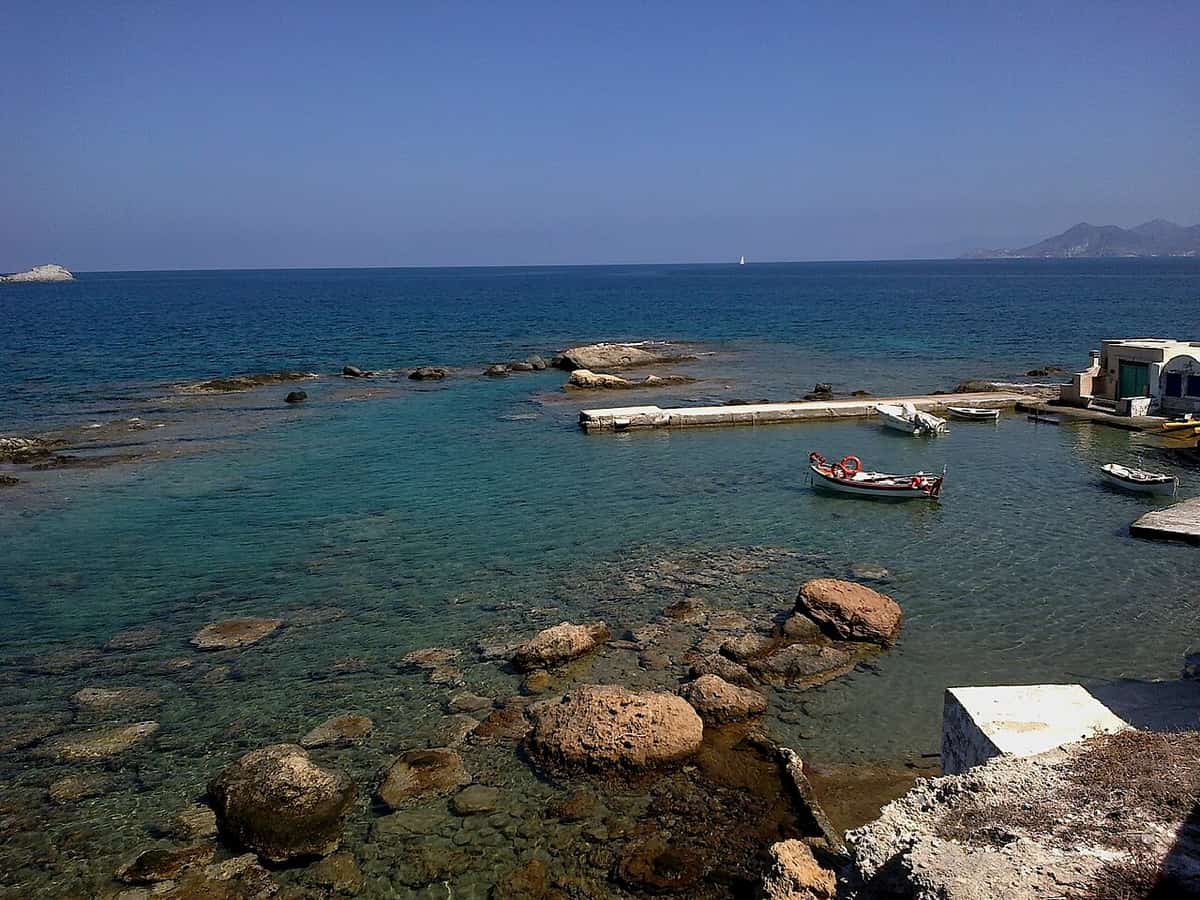
The sea and the hives complete the list. Phylakopi, the Bronze Age town on the north-east coast, was settled first by tuna fishermen, and fish dishes are common on the islands of Greece. Small units on Milos produce thyme honey and the herbs thyme, oregano and sage. Wine production has revived in recent years, and local winemakers make wines that reflect the volcanic soil. Each product turns island ground into a flavour of food and drink in Milos.
- Touloumotyri: A cheese aged in an animal skin, listed with manoura among the local cheeses.
- Bournela: The local tomato that gives the island its paste, beltes.
- Herbs: Thyme, oregano and sage come from the same small units that make thyme honey.
- Wine: Local winemakers bottle wines that carry the character of the volcanic soil.
- Barley: One of the main crops of the island, alongside grapes and cotton.
These products share one trait: each needs little more than sun, rocky ground and patient work. Cheese matures in stone, capers dry in the open air and tomatoes become paste. The dishes in the next section all start from this short list of ingredients. Food and drink in Milos therefore reads as one connected story, from the field and the hive to the oven and the glass.
Which traditional dishes and pies belong to food and drink in Milos?
Food and drink in Milos is best known for pitarakia, ladenia and karpouzopita. Pitarakia are small half-moon pies of myzithra, ladenia is a fasting tomato pie, and karpouzopita is a watermelon pie. Fritters, sourdough bread and goat, lamb and rooster dishes complete the traditional table.
Greece has countless variations of the savory pie, called pita, from spinach pie to cheese pie. Among them, pitarakia are the pie tied to Milos. Each is a mini half-moon of pastry around myzithra with mint or around a peppery dry cheese. The small pies are fried or baked and served hot with honey. The shape, the filling and the honey together define this pie within food and drink in Milos.
Ladenia, the second pie of food and drink in Milos, suits fasting days and can be eaten through the whole year. A crisp dough of flour, yeast, olive oil, water and salt carries a topping of tomato, dry onion, oregano and olive oil. The neighbouring island of Kimolos has made it since the Venetian period, and Cycladic cooking counts it as a signature dish. A winter version replaces fresh tomato with tomato paste, and the same pie reaches the tables of Milos.
Within food and drink in Milos, karpouzopita is the watermelon pie it shares with Kimolos, Ios and Folegandros across the Cyclades. Watermelon replaces the liquid of the dough, such as juice, water or milk, and its own juice keeps the baked pie soft. Flour, sugar or honey, raisins, walnuts, cinnamon and clove complete the filling, and plenty of sesame lines the tray and covers the top. The rinds become spoon sweet or pickle, so the whole fruit is used.
- Domatokeftedia: Tomato fritters, lightly fried in olive oil, a dish that belongs mainly to the Cyclades.
- Kolokythokeftedia: Courgette fritters, fried lightly in olive oil like the tomato version.
- Fouskoma: Sourdough bread baked in a wood-fired oven.
- Lemonato: Goat cooked with lemon, served in tavernas and at village festivals.
- Lamb and rooster: Lamb baked with tomato paste and rooster braised or roasted in wine.
The traditional dishes of the island share simple methods and a short list of ingredients: dough, tomato, cheese, watermelon and olive oil. Seasons set the recipe, with watermelon pie in summer and tomato paste ladenia in winter. Knowledge passes from one generation to the next, and the cooking stays plain. Food and drink in Milos shows that a short list of ingredients can fill a whole table.

Which villages and coastal areas offer food and drink in Milos?
Food and drink in Milos varies by area. Plaka and Tripiti hold taverns, restaurants and cafes above the bay, Adamas adds cafe bars, ice cream and nightlife, Pollonia lands the morning catch at its pier, and Paleochori, Provatas and the fishing coves add seaside tables.
Plaka is the capital of Milos, built on a hill 220 metres above the sea. Cobbled alleys hold small traditional shops, restaurants and cafes, and car traffic is prohibited. Tripiti stands almost joined to Plaka and looks over Adamas Bay, and its taverns and restaurants are known for gastronomic delicacies. The two villages form the upper part of food and drink in Milos, and the Venetian castle on Plaka hill adds sunset views.
Adamas is the main port and the largest tourist centre of Milos. Rest, nightlife and entertainment share the village, with cafe bars and an ice cream shop for the day. Pollonia, a fishing village on the north-eastern tip of the island, works differently. Boats reach the pier in front of the church of Agia Paraskevi each morning with fish, octopuses and lobsters, and the taverns and restaurants extend as far as that church. Food and drink in Milos at Pollonia starts at the water.
The south coast adds beach settlements to food and drink in Milos. Paleochori is a beach almost two kilometres long and extremely popular, where warm water gushes among red, pink and yellow rocks, and a fish tavern and a restaurant serve the area. Provatas lies seven kilometres from Adamas on a paved road with frequent bus service, and its organised beach has sunbeds, a hotel and taverns. The neighbouring beach of Agios Sostis has a restaurant.
- Mandrakia: A fishing village of colourful boat houses with a restaurant and a small beach of dark grey pebbles.
- Klima: Fishermen kept boats on the ground floor of the colourful houses and lived above.
- Firopotamos: A sandy beach with a beach bar lies beside fishing houses.
- Emporios: An old commercial port with a beach has a traditional tavern for food.
- Kipos: A small port, where boats leave for Kleftiko, has a sandy beach and a restaurant.
Each area gives food and drink in Milos a different setting. Hill villages offer lanes and sunset views, the harbour offers cafe bars and late evenings, the fishing coves offer the morning catch, and the south coast offers tables beside the sand. Choosing a village shapes the whole meal, and a day that moves between areas samples the island rather than a single menu.
What sweets, coffee and island drinks belong to food and drink in Milos?
Food and drink in Milos ends with sweets such as koufeto, karpouzopita and xerotigana, with Greek coffee and iced frappe at cafe tables, and with wine, honey and herbs. Spoon sweets arrive beside coffee as a gesture of hospitality, and rakomelo belongs to the wider island tradition.
Sweets on Milos follow family occasions. The koufeto is served at weddings and engagements by the mother of the bride, and its almonds stand for the fruits of fertility. The koufeta of Milos also appear as small almond sweets covered in icing sugar at celebrations. Karpouzopita, the watermelon pie, combines watermelon, honey and sesame seeds. Xerotigana, fried dough strips, complete a sweet list that belongs to food and drink in Milos and differs from the cheese pies.
Coffee works as the daily ritual. Greek coffee is one local name for a style made by bringing very fine grounds and water just to the boil in a special pot, and the froth is poured into the cup. The frappe, a cold drink of instant coffee, water, sugar, ice and milk, became a hallmark of outdoor Greek coffee culture. Plaka has cafes, Adamas has cafe bars and Pollonia has island cafes, so food and drink in Milos includes a coffee stop.
Drinks follow the island logic of the table. Wine production on Milos has revived in recent years, and the wines reflect the volcanic soil. The wider Greek tradition adds ouzo, tsipouro and retsina, a wine flavoured with pine resin. Rakomelo, a mix of raki or tsipouro with honey and spices such as cinnamon and cardamom, is made on Crete and other Aegean islands. Sage, thyme and oregano from small herb producers complete the pantry of food and drink in Milos.
- Xerotigana: Fried dough strips belong to the sweet list of Milos.
- Spoon sweet: A fruit preserve comes on a teaspoon with coffee and cold water as a gesture of hospitality.
- Frappe: The iced coffee was invented in Thessaloniki in 1957 and is shaken or blended to a thick foam.
- Rakomelo: Raki or tsipouro, honey and spices make this drink of the Aegean islands.
- Ice cream: Adamas has an ice cream shop to match the cafe bars.
Sweets, coffee and drinks finish a meal on Milos in a fixed order. A spoon sweet and a small coffee close the table, a frappe fills a long afternoon at a cafe, and a glass of wine or rakomelo marks the evening. These habits complete the picture of food and drink in Milos that begins with cheese, capers and fresh fish.
How does food and drink in Milos change with feasts and seasons?
Food and drink in Milos follows the church calendar and the weather. Easter ends the Lenten fast, the Virgin’s feast on 15 August brings one of the island’s major panigyria to Zefyria, and the season decides which fish reach the table.
A panigyri is a traditional village festival, and Milos holds them for its churches. Zefyria, the settlement that keeps the old cathedral of Milos, Panagia Portiani, stages one of the island’s major panigyria every year on 15 August in honour of the Virgin Mary. Goat cooked with lemon, called lemonato, is found at panigyria and in tavernas, and koufeta, small almond sweets covered in icing sugar, are served at weddings and celebrations.
Easter Day brings its own customs. At the churches of Agios Georgios and Agios Spyridon, the burning of Judas dates from the first Christian years and is still revived. It joins the gunpowder custom, when young men from Triovasalos and Pera Triovasalos throw dynamite between the two churches, and the village that makes the loudest noise wins. Greek tradition then puts lamb roasted whole on the spit on the Easter Sunday table.
The sea sets the fish menu. Milos is a rich fishing ground because of its volcanic geology, and its reefs, caves and rocky shores shelter a wide variety of fish. Catches change with the season and the area. Red mullet, red snapper and sea bream come from the water, together with octopus, squid, cuttlefish and lobster. Fish dishes are common on the islands, so the catch drives the fish side of food and drink in Milos.
- Great Lent: The fast starts on Clean Monday, lasts 40 days and ends only on Easter Sunday.
- Lazarus Saturday: The vespers of that day close Great Lent officially, yet the fast continues through the following week.
- Easter Sunday: Magiritsa, a soup of lamb offal, dill, egg and lemon, is traditionally eaten on that day.
- Bright Week: The week that starts on Easter Sunday has no fasting, even on Wednesday and Friday.
- Home cooking: Seasonal vegetables stewed in olive oil and tomato sauce, called lathera, are part of home-cooked meals.
The calendar gives the island’s cooking its shape. Lent and Easter come first, the Milos Festival and the 15 August panigyri follow in summer, and the fish change with the season. Planning a stay around those dates turns food and drink in Milos into a series of events, and the activities of Milos fit into the same days.
What do visitors ask about food and drink in Milos?
Food and drink in Milos raises practical questions about church foods, the summer festival, the Easter date and the weather. The four answers below cover Orthodox breads and wheat dishes, the programme of events, the timing of Easter and the climate.
Which church foods belong to food and drink in Milos at feasts?
The Greek Orthodox Church has its own food tradition, with prosphora bread, christopsomo (Christmas bread) and fanouropita. Koliva, boiled wheat with honey, sesame, walnuts, raisins and almonds, is prepared for commemorations of the dead. Vasilopita, the Greek New Year cake, hides a coin or a trinket inside it. These follow the church year.
Can visitors join the Milos Festival alongside food and drink in Milos?
The Milos Festival is held under the Municipality of Milos and runs from late June to September. Its programme holds concerts, theatre, exhibitions, music and dance events and book fairs. The festival is open to residents and invites every visitor to share moments of artistic enjoyment. Food and drink in Milos share those summer weeks.
When does the Easter table arrive for food and drink in Milos?
Easter follows the Orthodox calendar, so its date moves each year. It falls on the same day as Catholic Easter or one, four or five weeks later. The Orthodox service begins late on Saturday evening, and the Paschal celebration starts at midnight. Good Friday, Saturday, Easter Sunday and Monday are traditional public holidays in Greece.
How does the weather shape food and drink in Milos?
Milos has a Mediterranean climate, with mild, rainy winters and warm to hot, dry summers. December is the wettest month at 90.3 millimetres of rain, and July the driest at 0.3. August, the month of the 15 August panigyri, averages 1.4 millimetres. Summer is also the season when the island is a popular tourist destination.