Category Rooms: 2 keys
Location: Pollonia
Number of apartments: 10
Ostria Vento Rooms are in the picturesque village of Pelekouda in Pollonia, on the island of Milos. Enjoy your stay a few metres from the sea, in a warm, friendly, family atmosphere.
We have 10 newly built rooms, equipped with a bathroom, refrigerator, TV and air conditioning. Most of them have a sea view. The rooms are cleaned daily.
Ostria Vento Rooms Milos name a set of rooms in Pelekouda, a small area of Pollonia on the island of Milos. The rooms stand metres from the sea, on the north-eastern coast of the island, and the lighthouse on the cape stands within the village. The island page for Milos sets the island in the Cyclades and places Pollonia and Pelekouda clearly on its map.
Pollonia is the second harbour of Milos after Adamantas, a seaside village built around a small bay. Ostria Vento Rooms Milos stand on its north-eastern edge, and a regular connection joins the village to the neighbouring island of Kimolos. Two words for wind give the rooms their name, and the sea and the cape shape a stay.
Where do Ostria Vento Rooms Milos stand at Pelekouda in Pollonia?
Ostria Vento Rooms Milos stand at Pelekouda, a settlement in Pollonia on the north-eastern coast of Milos. The rooms sit at the water’s edge, metres from the sea, in the second harbour of the island after Adamantas, and the peninsula of Pelekouda carries the cape.
Ostria Vento Rooms Milos take their address from Pelekouda, which forms the eastern side of Pollonia. A lighthouse stands on the peninsula there, and the name of the village is tied to a temple of Apollo that stood on the cape in ancient times. The village was recorded as a settlement in 1940, when it was attached to the community of Pera Triovasalos, and it now belongs to the community of Triovasalos of the municipality of Milos. The main beach is sandy, and two more lie near the village.
The settlement sits at an elevation of ten metres, so the houses stand at the level of the water. Adamas, the main port of the island, lies eight kilometres away, and Plaka, the capital, lies fourteen kilometres away. Ostria Vento Rooms Milos stand inside that small village, and the census of 2021 recorded 268 people in Pollonia, after 272 in the census of 2011. A chapel of Agia Paraskevi stands at the right end of the village, and fishing boats tie up at the pier in front of it.
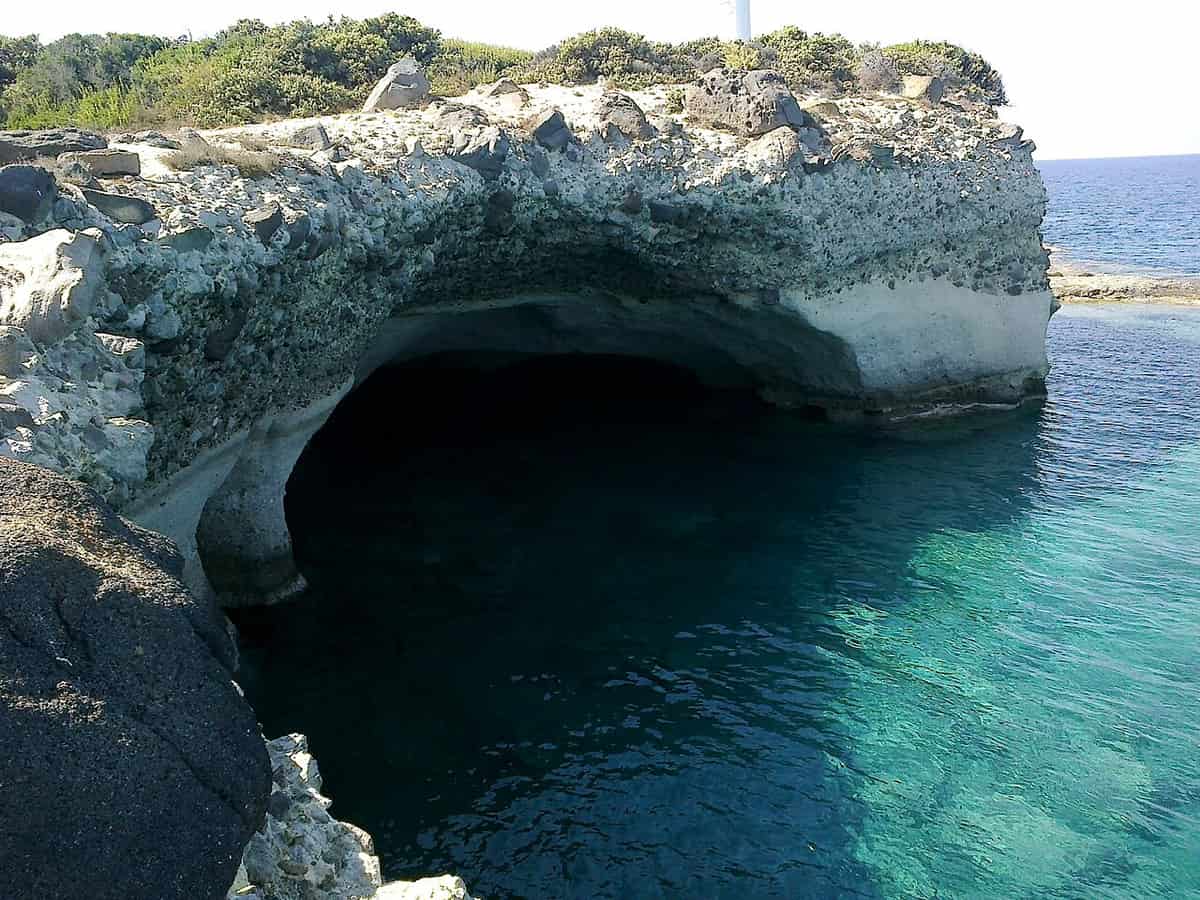
The north coast of Milos runs in a line from Kapros and Papafragas, past Phylakopi and Kalogeros, to Pelekouda and Pollonia, and Ostria Vento Rooms Milos sit at its eastern end. White volcanic rock shapes the shore, and Milos is of volcanic origin, with tuff, trachyte and obsidian among its ordinary rocks. A sea cave with blue-green water lies under a white rock at the cape of Agios Nikolaos. The buildings of the village stand around a small bay, and the sand carries tamarisk trees.
Ostria Vento Rooms Milos hold ten rooms, which are newly built and reach a category of two keys. Each room has a bathroom, a refrigerator, a television and air conditioning, and the larger part of the rooms look out to the sea. The rooms are cleaned every day. A kitchen is present in a part of the rooms, and internet access, parking and a no-smoking rule cover the rest of a stay. The wider apartments list places these rooms beside other self-contained stays of the island.
- Area: Pelekouda, inside Pollonia, on the north-eastern coast of Milos.
- Distance to Adamas: eight kilometres from the main port of the island.
- Harbour: the second harbour of Milos after Adamantas, with a link to Kimolos.
- Elevation: the village stands ten metres above the sea.
- Population: 268 people in the census of 2021, after 272 in 2011.
Pelekouda and Pollonia put the sea in front of the door. The lighthouse, the sandy beach, the back sea and the small boat to Kimolos all lie within the village and its cape, and Adamas and Plaka lie inland along the road. A stay at Ostria Vento Rooms Milos begins with that simple map. The rooms, the shore and the wind all meet in one small corner of the island. The bay gives the village its shape.
What do the rooms of Ostria Vento Rooms Milos hold for a guest?
Ostria Vento Rooms Milos hold ten newly built rooms in one property at Pelekouda. The category is two keys, each room has a bathroom, a refrigerator, a television and air conditioning, and the larger part of the rooms face the sea. Cleaning takes place every day.
Ten rooms make up Ostria Vento Rooms Milos, and all of them are newly built. The property carries a category of two keys. One building holds the whole set, so the rooms share a single yard and a single address at Pelekouda in Pollonia. The sea lies metres from the building, and the buildings of the village stand around a small bay. The building sits inside the settlement, and parking stands beside it for arriving cars.
Each room of Ostria Vento Rooms Milos is equipped with a bathroom, a refrigerator, a television and air conditioning. A kitchen is present in a part of the rooms, so a guest cooks in the same unit or eats in the village. The larger part of the rooms have a sea view, which places the water in the frame from the window. A refrigerator keeps the shopping of the day fresh, and a television fills an hour in the evening.
Ostria Vento Rooms Milos clean the rooms every day, and that daily work belongs to the pattern of a stay. Sand from the beach does not travel into the evening, and a family with children loses no time on housework during the holiday. Bed linen and towels change with the same rhythm. The small size of the property keeps the work simple and the rooms fresh, and a guest who returns from the shore finds the room in order at the end of a day.
A room of Ostria Vento Rooms Milos stands at the smaller end of the places to stay on Milos. The rooms are rented units in a single building, and their size suits a pair, a small family or a group that takes more than one room. The apartments in Milos page compares the layout of such rooms with self-catering flats that carry a kitchen and a living area of their own. A larger unit gives a group more space between the beds.
- Number: ten rooms, all of them newly built.
- Category: two keys, the mark given to these rented rooms.
- Facilities: a bathroom, a refrigerator, a television and air conditioning.
- View: the larger part of the rooms look out to the sea.
- Cleaning: the rooms are cleaned every day.
Ostria Vento Rooms Milos keep the list short and clear. Ten rooms, one building, a bathroom, a refrigerator, a television and air conditioning in each unit, a sea view in the larger part of them, and daily cleaning. A kitchen appears in a part of the rooms, while parking, internet access and a no-smoking rule cover the rest of a normal stay at Pelekouda. A guest finds everything in one place. The room gives the day a simple base.
How do the ostria and the meltemi reach Ostria Vento Rooms Milos?
Ostria Vento Rooms Milos carry a name built from two words for the wind. The ostria is the southerly wind of the Mediterranean, warm and wet, and the meltemi is the strong dry north wind of the Aegean that blows through the summer.
Two words give Ostria Vento Rooms Milos their name. The ostria is the southerly wind of the Mediterranean, and its name comes from the Latin word auster, which also meant a southerly wind. It is warm and humid, and it carries rain. The word vento is the Italian word for wind, and sailors use it as a term in Greek. A guest who reads the sign at the entrance reads a weather word, once in Greek and once in Italian.
The meltemi is the strong dry north wind of the Aegean, and the ancients called it the etesian wind, a name that comes from the Greek word for year. Ostria Vento Rooms Milos stand in the path of that wind. It blows periodically from late spring to the middle of September. Its direction lies between north-east and north-west, and local ground decides the exact line. It is strongest in the afternoon, and at night it falls away.
The meltemi can blow at force seven to eight on the Beaufort scale out of a clear sky, and boats that cross between the islands wait for calmer hours. Its weather is fine and clear, and the north wind tempers the summer heat. The bay of Pollonia lies on the north-eastern corner of the island, so the water near Ostria Vento Rooms Milos meets that wind from the open north. The meltemi raises waves, and it can interrupt the runs of small boats for a day.
The ostria comes from the south, and it brings warm, humid air as well as rain. It is the opposite of the dry north wind in direction and in feel, and the two names sit together in the name of Ostria Vento Rooms Milos. On a day of ostria, the sky holds cloud in place of the clear sky that belongs to the meltemi. Between the start of the warm season and June, light north winds last two to three weeks before a pause.
- Ostria: the southerly wind of the Mediterranean, warm, humid and wet.
- Vento: the Italian word for wind, and a nautical term in Greek.
- Meltemi: the strong, dry north wind of the Aegean in summer.
- Direction: between north-east and north-west, decided by local ground.
- Season: from late spring to the middle of September, strongest in the afternoon.
Wind names on a sign turn out to describe weather. The ostria arrives from the south with warm, humid air, and the meltemi arrives from the north as a dry and steady wind that clears the sky and lifts the water. The two together cover the year that a visitor meets at Pelekouda, and a stay at Ostria Vento Rooms Milos sits inside that pattern. The meltemi leaves the sky clear and the sea wavy.
What sea days begin near Ostria Vento Rooms Milos at Pollonia?
Ostria Vento Rooms Milos stand at a harbour, so the sea lies at hand. Paddling, diving and snorkelling start from the shore of Pollonia, and a small boat leaves the village for the neighbouring island of Kimolos. The cape of Pelekouda closes the bay.
A kayak carries a paddler along the north coast of Milos, where the line of beaches runs from Kapros and Papafragas past Phylakopi and Kalogeros to Pelekouda and Pollonia. White volcanic rock makes the shore easy to read from the water, and the coves of the coast near Ostria Vento Rooms Milos give a landing place. The kayak routes of Milos are set out in a separate page, and each route has its own start and its own end.
Diving and snorkelling work from the same shore. A sea cave with blue-green water lies below a white rock at the cape of Agios Nikolaos, a short distance from Ostria Vento Rooms Milos, and the rock of the island is volcanic, formed of tuff, trachyte and obsidian. Volcanic activity on Milos began two to three million years ago, and the last eruption took place ninety thousand years ago. The sea keeps its colour against the pale rock.
A regular connection joins Pollonia to the neighbouring island of Kimolos by a small boat. Kimolos lies just under one kilometre to the north-east of Milos, and the crossing leaves from the second harbour of the island. Ostria Vento Rooms Milos stand a short walk from that pier, and Kimolos was known in ancient times for its figs and its fuller’s earth. Fishermen bring fish and octopus to the pier each morning, beside the water. Ostria Vento Rooms Milos look out on that daily traffic.
Polyaigos lies east of Milos, an uninhabited island of the western Cyclades. Its name refers to goats, it belongs to the Natura 2000 programme, and the Mediterranean monk seal gives birth there. The island lies two kilometres south-east of Kimolos and three and a half nautical miles east of Milos, and it was once disputed between Milos and Kimolos. Ostria Vento Rooms Milos keep that island within reach of a boat day, and no one lives on it today.
- Kayak: the north coast offers coves, white rock and a line of small beaches.
- Diving: volcanic rock and a sea cave lie at the cape of Agios Nikolaos.
- Snorkelling: the cave holds blue-green water below a white rock.
- Kimolos: a small boat joins the village to the neighbouring island.
- Polyaigos: an uninhabited island of the Natura 2000 programme, east of Milos.
A day on the water starts at the door of Ostria Vento Rooms Milos. A kayak follows the coast, a mask and a snorkel explore the cave at the cape, and a small boat crosses to Kimolos or reaches the uninhabited island beyond it. The harbour of Pollonia keeps every one of those plans within a short walk of the rooms, and the second harbour of Milos serves the whole coast. The sea gives the village a direct route outward.


Which walks lead from Ostria Vento Rooms Milos to Phylakopi and Papafragas?
Ostria Vento Rooms Milos sit at the eastern end of a coastal line of beaches. A walker follows the shore west from Pelekouda past Kalogeros to Phylakopi, a Bronze Age settlement on the north coast, and then on to Papafragas.
The beaches of the north side of Milos run in order from west to east: Kapros, Papafragas, Phylakopi, Kalogeros, Pelekouda and Pollonia. A walker who leaves Ostria Vento Rooms Milos and keeps the sea on the left meets Kalogeros first, then Phylakopi, and reaches Papafragas last. The ground is dry and pale, and the water stays beside the whole line. The walk keeps close to the shore, and the pale rock of the coast gives it colour.
Phylakopi lies on the northern coast of the island, and it counts among the leading Bronze Age settlements of the Aegean and of the Cyclades. People lived there through the whole Bronze Age, from the middle of the third millennium before Christ to the twelfth century before Christ. The first settlers were tuna fishermen, and part of the site has been washed away by the sea. Ostria Vento Rooms Milos stand on the same coast as the site.
Excavations at Phylakopi began in 1896 and continued to 1899, under the British School at Athens, and further work followed in 1911, 1963 and 1974 to 1977. The monuments of the site are the cyclopean wall of the settlement, built with large volcanic blocks, the area of the sanctuary and the megaron. A figurine of a female deity, known as the Lady of Phylakopi, came from the sanctuary, and the settlement was left around 1090 before Christ. Ostria Vento Rooms Milos stand near those remains.
Papafragas closes the walk at its western end, a beach of the north side that lies beside Phylakopi. The walks of Milos collect the coastal paths of the island in one place, and the pale rock stays in view the whole way. The same coast carries a walker from Ostria Vento Rooms Milos past Kapros and past the beaches that face the islets of Glaronisia. The white rock and the small beaches follow one another to the end.
- Order: Kapros, Papafragas, Phylakopi, Kalogeros, Pelekouda and Pollonia, west to east.
- Phylakopi: a Bronze Age settlement of the north coast, lived in for the whole Bronze Age.
- Excavations: 1896 to 1899, then 1911, 1963 and 1974 to 1977.
- Monuments: a cyclopean wall of large volcanic blocks, a sanctuary and a megaron.
- Papafragas: the western end of the walk, on the north side beside Phylakopi.
A walk from Ostria Vento Rooms Milos therefore begins at the shore of the village and turns west. Kalogeros, Phylakopi and Papafragas follow one another along the same pale coast, and the order of the names stays the same on the ground as on a map. The walker keeps the sea on one side and dry, bright rock on the other. The sea stays in view for the whole distance. Each bend adds a new section of shore.
Why do Ostria Vento Rooms Milos suit a family stay at Pollonia?
Ostria Vento Rooms Milos suit a family because the village keeps the water, the beach and the harbour within a short walk. Rooms stand metres from the sea, the main beach is sandy, and a small boat crosses to Kimolos.
A family day at Pollonia needs short distances, and the village keeps them short. Ostria Vento Rooms Milos stand metres from the sea, the main beach of the village is sandy, and two more beaches lie near the settlement. The chapel of Agia Paraskevi stands at the right end of the village, with the fishing boats at the pier in front. The pier and the sand stand within the same small area. The street between them stays short.
The water at Pollonia stays close to the building, and the bay wraps around the village. A child reaches the sand in a short walk, and the harbour lies in the same small area. The sea cave at the cape of Agios Nikolaos gives an easy first taste of the water, and a small boat from the village near Ostria Vento Rooms Milos turns a quiet day into a short passage to another island. A parent watches the water from the shore. Ostria Vento Rooms Milos sit inside that bay.
The rooms themselves fit a family. Ten units share one building, so relatives or friends book more than one room and stay close together. Each room of Ostria Vento Rooms Milos has a bathroom, a refrigerator, a television and air conditioning, the larger part of them look out to the sea, and cleaning takes place every day. The single building keeps a family group in one place at the edge of the village near the sea.
Summer weather keeps the evenings easy. The mean daily maximum on Milos reaches 28.1 degrees Celsius in July, and the mean daily minimum stands at 21.8 degrees in the same month. A family eats out of doors after sunset without a coat, and the rooms stay cool with air conditioning. Spring and autumn bring milder days, when walking and swimming share the same holiday. The warm months leave the evening air mild, and a family stays out after dark.
- Water: the rooms stand metres from the sea, in a bay beside the village.
- Beaches: a sandy main beach and two more shores lie near the settlement.
- Rooms: ten units in one building, each with air conditioning and daily cleaning.
- Harbour: fishing boats come to the pier of the village each morning.
- Evenings: the mean daily minimum reaches 21.8 degrees Celsius in July.
A family stay at Ostria Vento Rooms Milos rests on three things that sit close together: the sea, the sand and the harbour. A child walks to the water, a parent keeps the room in order with daily cleaning, and a short boat ride adds a second island to the week. Pelekouda holds all of it in one small corner of Pollonia. The village holds the whole holiday inside a short walk. The cape and the bay stay close to the rooms.

What do guests ask about Ostria Vento Rooms Milos?
Ostria Vento Rooms Milos draw questions about the place, the rooms, the winds, the sea and the walks. The answers below cover Pelekouda, the ten rooms, the two winds of the name, the harbour and the coast that runs west to Phylakopi.
Where exactly do Ostria Vento Rooms Milos stand?
Ostria Vento Rooms Milos stand at Pelekouda, inside Pollonia, on the north-eastern coast of Milos. The village sits ten metres above the sea, so the houses stand almost at the level of the water. Adamas lies eight kilometres away and Plaka fourteen kilometres away. The sea lies metres from the building, and the peninsula carries the lighthouse.
What number of rooms do Ostria Vento Rooms Milos hold?
The property holds ten rooms at Pelekouda, and all of them are newly built. The whole set sits in one building, so the number of units stays small and the rooms stay close together. The listing gives the property a category of two keys. A family that needs more than one unit books two rooms.
What does each room at Ostria Vento Rooms Milos contain?
Each room holds a bathroom, a refrigerator, a television and air conditioning. A kitchen appears in a part of the rooms, so a guest cooks in the unit or eats in the village. Internet access and parking are offered, pets are allowed on request, and the rooms stay non-smoking. The larger part of them look out to the sea.
Do Ostria Vento Rooms Milos keep the rooms clean every day?
Yes. Cleaning takes place every day in all ten rooms. A guest who returns from the beach finds the room in order, and a family with children spends no part of the holiday on housework. The small size of the property keeps the work simple, and the room stays fresh through a long stay in the warm months.
Which winds give Ostria Vento Rooms Milos their name?
Two words for wind give the property its name. The ostria is the southerly wind of the Mediterranean, warm and humid, and it carries rain. The word vento is the Italian word for wind. The meltemi is the strong, dry north wind of the Aegean, which blows through the summer and clears the sky over the island.
How far do Ostria Vento Rooms Milos stand from the port of Adamas?
Ostria Vento Rooms Milos stand eight kilometres from Adamas, the main port of Milos. Plaka, the capital of the island, lies fourteen kilometres away. Pollonia is the second harbour of Milos, so a boat for Kimolos leaves from the village itself and no crossing to Adamas is needed for that trip.
Which boats leave the harbour near Ostria Vento Rooms Milos?
A small boat leaves Pollonia for the neighbouring island of Kimolos, which lies just under one kilometre to the north-east of Milos. Beyond Kimolos lies Polyaigos, an uninhabited island of the Natura 2000 programme, three and a half nautical miles east of Milos. A sea cave with blue-green water sits at the cape of Agios Nikolaos beside the village.
What walks begin near Ostria Vento Rooms Milos?
A walker follows the north coast west from Pelekouda, past Kalogeros to Phylakopi and then to Papafragas. Phylakopi is a Bronze Age settlement of the northern coast, and its monuments are a cyclopean wall of volcanic blocks, a sanctuary and a megaron. The coast stays pale and dry along the whole line, and the sea lies below it.