Food in Triovasalos, Milos: see our Food in Milos section for the island.
This page describes food in Triovasalos, the everyday table of a working village on the island of Milos. The village stands on a hill beside Plaka, the seat of the municipality, and its pedestrian street is a place where people work, shop and eat. The home kitchen, the grill and the tavern all sit close to that street.
The page has two sections. The first looks at where locals eat and what the island lists for tavernas and grill houses. The second turns to home dishes, grilled meat, garden vegetables and the meals of farming families behind food in Triovasalos. Bread, pies and the baking tradition of the village come in a later section, and the closing questions answer the practical points.
What does food in Triovasalos look like at a glance?
Food in Triovasalos is the food of a working hill village beside Plaka. Locals eat Greek home cooking at the taverna and at the family table, the island lists grill houses beside its restaurants, and the skewer is the grilled dish known across the world.
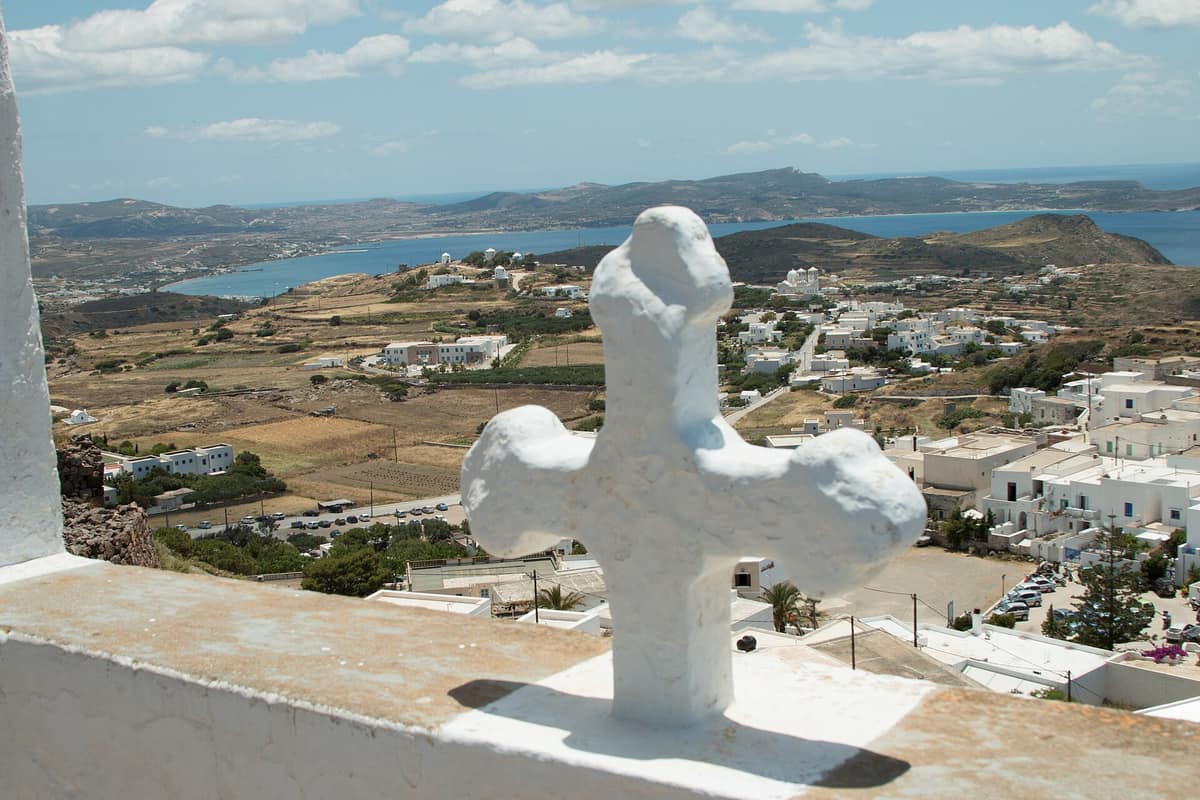
Triovasalos is densely built in the form of an amphitheatre, and trade along its street is remarkable. In a village of this kind, food in Triovasalos follows the Greek table. Dining out is common in Greece, and the taverna and the estiatorio are widespread. Both serve home cooking to locals and to travellers. Fast-food chains opened across the country, yet Greeks still rely mainly on their own broad cuisine, and the Mediterranean diet of Greece has been on the UNESCO lists of intangible cultural heritage since 2013.
The official list of eating places on the island names restaurants, tavernas, grill houses and wine kitchens. Greek eating places come in different kinds. The taverna serves traditional dishes to locals and tourists. A mezedopoleio, an ouzeri or a tsipouradiko serves small plates in small amounts with wine, ouzo or tsipouro, and meze culture is part of daily life and of social occasions. The souvlatzidiko sells the skewer. These kinds of place frame food in Triovasalos from the meze table to the grill.
Souvlaki is a Greek dish of small pieces of meat, and sometimes vegetables, grilled on a skewer and eaten straight off it while hot. Pork is the meat used in Greece and Cyprus. In Greece the skewer is sold mainly in special shops called souvlatzidika. The name changes with the region: the north says souvlaki, while around Athens and in southern Greece the plain skewer is kalamaki, from the word for small reed, and souvlaki names the wrap. Food in Triovasalos shares these words with the rest of the country.
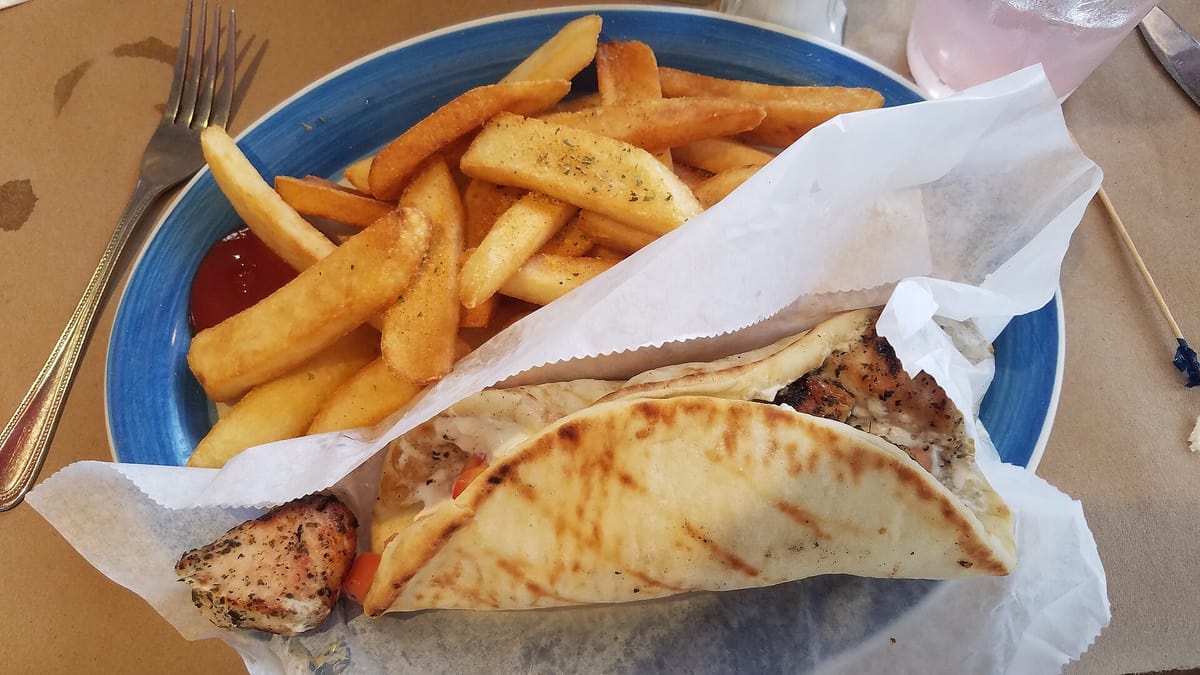
Souvlaki comes in three forms. The plain skewer is eaten off the stick with a lemon wedge, the wrap folds the meat into a lightly grilled pita with tomato, onion and tzatziki sauce, and the merida is a full plate with fried potatoes, vegetables, sauce and quartered pita. Skewers sold as fast food spread across Greek streets in the 1960s, carried by vendors from Boeotia. In restaurants a larger skewer places pieces of tomato or pepper between the meat, with potatoes alongside. All three forms belong to food in Triovasalos.
- Taverna: Serves home cooking to locals and to travellers, so the taverna anchors food in Triovasalos.
- Estiatorio: A Greek restaurant, widespread and serving home cooking beside the taverna.
- Ouzeri: A meze shop and social gathering place, where small plates come with wine, ouzo or tsipouro.
- Souvlatzidiko: The special shop where the skewer is sold in Greece, with pita and fried potatoes.
- Merida: The plated portion with fried potatoes, vegetables, sauce and quartered pita on the side.
At a glance, food in Triovasalos is the table of a working hill village: Greek home cooking in tavernas, a grill tradition built on the skewer, and meze shops for small plates and company. The island-wide page on food in Milos sets these dishes beside the rest of the island. The next section moves from the eating place to the home kitchen of the hill and to the gardens and flocks behind it.

What does everyday cooking add to food in Triovasalos?
Food in Triovasalos rests on everyday village cooking: pots of soup and stew, meat from the coals, salads and stuffed vegetables from the garden, and beans with olive oil on the plain day. The home kitchen of a farming family is seasonal and frugal.
The pot comes first on the village table. Youvarlakia are meatballs of ground meat and rice cooked in a pot and finished with avgolemono, the creamy sauce of egg and lemon. Kotosoupa is chicken soup with tender pieces of chicken, root vegetables and rice. Hirino me selino pairs pork with celery. Keftedakia are fried meatballs of ground beef with egg, onion, garlic, parsley and mint. Roast chicken with potatoes or rice completes the plain list. Food in Triovasalos shares these pots with every Greek village.
Paidakia, lamb chops, are grilled with lemon, oregano, salt and pepper. Biftekia are patties of ground pork, beef or lamb mixed with onion, breadcrumbs, egg and herbs, and they can be grilled, baked or fried. Loukaniko is a pork or lamb sausage flavoured with orange peel and fennel seed. The fire is old: cooking on spits dates to the Bronze Age, and at Easter a whole lamb still turns on a spit over charcoal. From the weekday chop to the Easter spit, grilled meat is part of food in Triovasalos.
The garden supplies the rest of the table. Kipourou, the gardener’s salad, mixes cabbage, carrot and radish. Sfougato is an oven-baked omelette of eggs, grated courgette, spring onion, dill and cheese, well known on Santorini, Crete and Mytilene and also served at breakfast. Courgettes are also stuffed with rice, and sometimes meat, and cooked on the stove or in the oven, so the garden shapes food in Triovasalos from salad to main dish. Hot peppers are grilled or roasted and served with olive oil and vinegar.
Beans and potatoes carry the ordinary day. Fasolada is a soup of dry white beans, olive oil and vegetables. Gigantes plaki bakes large white beans with tomato sauce and herbs, and it also serves as a main course. Yachni simmers potatoes in tomato sauce with onion, garlic and herbs. This plain cooking has old roots: ancient Greek food was frugal, with meat rarely eaten, and meat became more available only through recent technological progress. Lentil soup and fasolada trace back to that older table, which food in Triovasalos shares.
- Giouvetsi: Lamb and small orzo noodles cooked together in a tomato sauce with garlic and oregano.
- Tigania: Pork or chicken pan-fried in the shallow pan that gives the dish its name.
- Sikotakia: Small slices of fried lamb or chicken liver with olive oil and oregano.
- Kokoretsi: Lamb or goat intestines wrapped around seasoned offal, such as hearts or kidneys, and grilled.
- Kontosouvli: Large pieces of meat on a long thin metal skewer, eaten at Easter.
Everyday cooking gives food in Triovasalos its second layer: the pots of soup and stew, the chops, sausages and spit roasts of the grill, the salads and stuffed vegetables of the garden, and the beans of the ordinary day. Olive oil, lemon, oregano and tomato tie the plates together. Bread, pies and the baking tradition of the village come in the next section.
How do bread, pies and bakeries shape food in Triovasalos?
Food in Triovasalos begins with bread, one of the oldest prepared foods. Bakeries on the neighbouring hill serve residents and visitors, the sourdough of Milos bakes in a wood-fired oven, filo wraps the pies, and the Orthodox year adds feast loaves like Christopsomo, vasilopita and prosphora.
Bread comes first in food in Triovasalos because it comes first in Greek cooking, which rests on wheat, olive oil and wine. Loaves are made from water and flour, raised with yeast or sourdough, and bread is the staple food of Europe and the Middle East. The ancient Greeks, like the Egyptians and the Romans, took refined baking as a sign of civilization. The village of Triovasalos shares the craft with its twin: Pera Triovasalos, on the next hill, keeps bakeries beside small shops and local businesses that serve residents and visitors alike.
The wood-fired oven shapes the loaf behind food in Triovasalos. Fouskoma, the sourdough of Milos, bakes in one. In a masonry oven, heat passes straight from the hot floor bricks into the dough, and bakers call the extra rise of the loaf oven spring. Radiant, conducted and convected heat together speed the bake. The classic direct-fired type is the black oven, named for the soot that its fire leaves on the dome, and it dates back to at least the Roman Republic. These ovens were frequently built for communal use.
Pies are the second pillar of food in Triovasalos. Greek kitchens wrap chicken, spinach and cheese, wild greens, ground meat and courgette in filo, in countless variations. Filo is a very thin unleavened dough of flour, water and a little oil, used for sweet and savoury baked goods. Cooks brush each sheet with oil or butter, stack the sheets and bake them. The name comes from the Greek word fýllo, meaning leaf. A village-style pastry called horiatiko has a thicker crust, and the half-moon pitarakia of Milos belong to the same family.
The church year gives the oven its feast loaves. The Greek Orthodox community keeps a bread tradition of its own, with Christopsomo for Christmas, fanouropita as a lenten cake and prosphora for the liturgy. Prosphora is a small loaf of leavened bread, made from only four ingredients: wheat flour, yeast, salt and water, though salt was not used in early times. Christopsomo and vasilopita both belong to the tsoureki family of Greek holiday breads. Both churches of the twin villages follow the Orthodox calendar, so food in Triovasalos keeps its feast days.
- Christopsomo: The round Christmas loaf carries a cross made from dough set aside for it, and walnuts, sesame seeds and slivered almonds can decorate the crust.
- Vasilopita: The New Year bread, cake or pie hides a coin or trinket that brings good luck to the person who receives it.
- Prosphora: Two round pieces of leavened dough are stacked and baked together as a single loaf, and a special seal is stamped on top before baking.
- Artos: These loaves are baked for blessing and for giving out to the faithful, and a simple cross or an icon such as the patron saint of the local church can mark each loaf.
- Fanouropita: This oil-based cake holds no butter and no eggs, so it can be eaten on fasting days and is blessed in church.
Bread, pies and the feast loaves form the baked side of food in Triovasalos. The bakeries next door bake the daily loaf, the wood-fired oven stands behind the sourdough of Milos, filo carries the pie, and the Orthodox calendar brings the blessed and festive breads. Every item in the list rests on plain ingredients: flour, water, oil and a hot oven, and a feast day sets the time for each festive loaf. The questions below take each bread in turn.

What do travellers ask about food in Triovasalos?
Food in Triovasalos raises six questions about breakfast breads, fasting pies, the New Year loaf, the Christmas loaf, the making of filo and the flatbread of Clean Monday. The six short answers below explain what each item is, what goes into it and how it is made.
Which breads sit on the breakfast table of food in Triovasalos?
A Greek-style breakfast sets rusks, bread, butter, honey and jam beside the coffee, and adds koulouri, a sesame bread ring. Bougatsa, tiropita and spanakopita join the table as pastries, and tsoureki joins it as a sweet bread. Koulouri descends from a Byzantine ring-shaped bread of barley or wheat flour, and it is still regularly eaten in Greece today.
Which pie suits fasting days in food in Triovasalos?
The fasting spanakopita suits those days. Its filling holds spinach, onions or green onions and green herbs such as dill, parsley or celery, with olive oil and a little wheat flour, and it uses no eggs or dairy products. The oven bakes the mixture until crisp. A version without cheese and eggs is eaten during religious fasts throughout Greece.
How is the New Year loaf cut in food in Triovasalos?
Families cut the vasilopita on New Year’s Day to bless the house and bring good luck. A knife etches the sign of the cross on the cake, and a slice goes to each family member and each visitor, in order of age from eldest to youngest. Slices are also cut for symbolic guests, including the household and the poor.
What goes into the Christmas loaf of food in Triovasalos?
Christopsomo, which translates as Christ’s bread and is also called Christmas fruit bread, is a traditional Greek holiday loaf made from tsoureki dough. The dough can carry raisins, dried apricots, dried figs, orange zest, cinnamon, allspice, cloves, cardamom, mastic, a plant resin, and mahleb. A syrup of honey, orange juice and slivered almonds can glaze the baked loaf.
How is filo made for the pies of food in Triovasalos?
Filo dough is made with flour, water and a small amount of oil. Homemade filo takes time and skill, as the dough is rolled and stretched in stages into one thin, very large sheet on a very big table, preferably with a marble top. A long, thin rolling pin does the work, with continual flouring between layers to stop sticking.
Which flatbread belongs to Clean Monday in food in Triovasalos?
Lagana is the Greek flatbread baked for Clean Monday, the first day of the Great Lent. It was traditionally unleavened, and the leavened form is now more common. The loaf is flat and oval, with fingertips pressed into the surface. Sesame seeds are a common topping, and herbs and olive oil season it. Its name also gave the word lasagna.