Food in Zefiria, Milos: see our Food in Milos section for the island.
This page covers food in Zefiria, the table of a small farming village in the inland east of the island of Milos. The village stands beside a large plain, away from the sea, so its table leans on fields, flocks and home kitchens more than on boats. A meal there is a pause on the road between the port and the south-coast beaches.
The page has three sections and a closing set of questions. The first sets out food in Zefiria at a glance, with the meze table and the place of a meal in a visit. The second turns to home cooking in the old capital: pulses, vegetables, cheese and meat. The third moves to the farm table of the plain.
What is food in Zefiria like at a glance?
Food in Zefiria is the food of a small inland farming village beside a large plain, built on bread, olive oil, cheese and vegetables. A meal fits between the port and the south coast, and meze plates make the lightest stop.
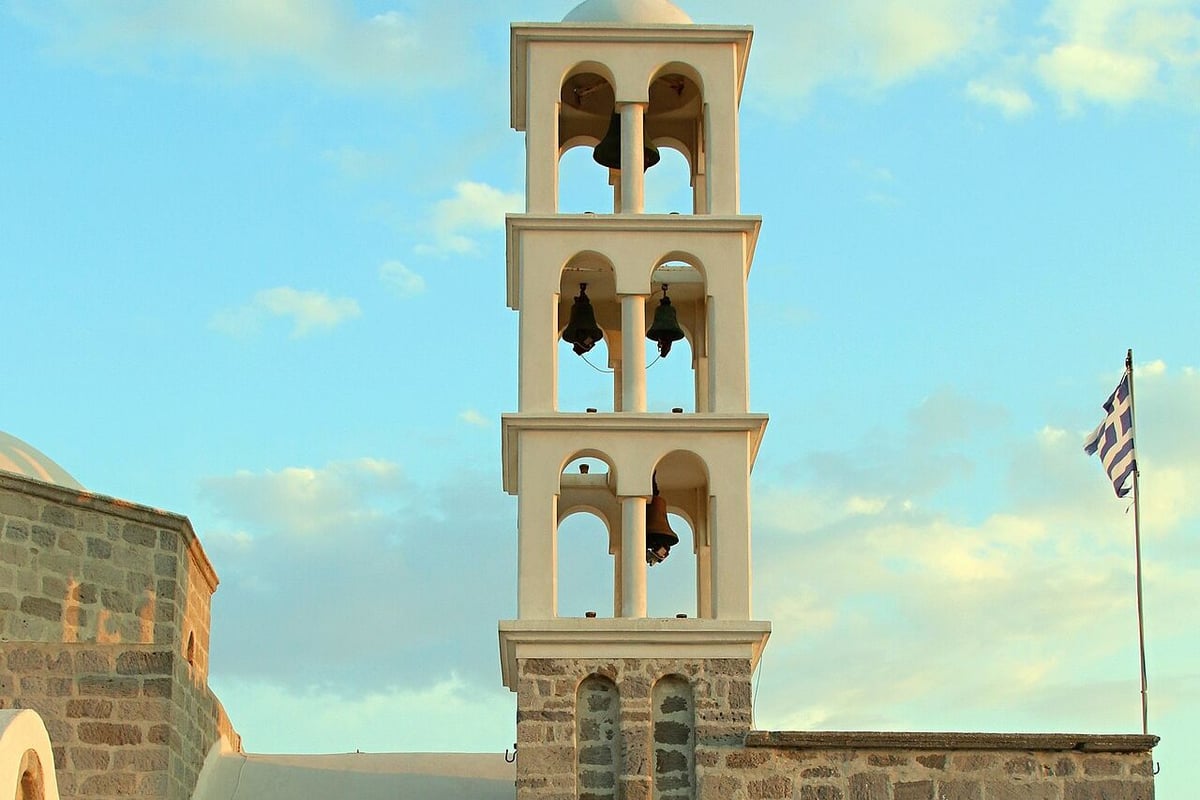
Zefiria is a mainly agricultural village of 190 residents, set inland in the centre of east Milos. The two settlements on the south coast beyond it are far smaller: Agia Kyriaki counted 12 residents and Paleochori 17 at the census of 2021. The village has no harbour, since it lies inland, so food in Zefiria draws on the plain more than on the sea. Bread, olive oil, cheese and vegetables play a large part on the everyday Greek table.
The road from Adamantas to the beaches of Agia Kyriaki and Paleochori passes through Zefiria, which lies 5.5 kilometres from the port, while the beaches lie about 10 and 14 kilometres from Adamantas. A table in the village therefore divides that journey in two. The stop can be short or long, because a meze can be one part of a multi-course meal or can form a meal in itself. Food in Zefiria suits both kinds of pause.
A meze is a small dish served with a drink. The word comes from Turkish meze, meaning appetizer, which was borrowed from Persian maze, meaning taste or relish. The custom began in the Byzantine Empire and grew in Ottoman Greek houses and tavernes. In Greece a meze goes on a small plate, because it is meant to go with the drink and not to fill the diner. Food in Zefiria in this form is light and social.
Greek meze are salty by design, because the salt encourages more drinking. Bread is a necessary companion, and a toothpick is a common choice for picking up each bite, though small forks are also accepted. When meze arrive together on one plate, the plate is called a poikilia. Meze also carry the diminutive names mezedakia and mezeklikia. They belong to the social side of Greek eating, and food in Zefiria shares that habit of small dishes passed between friends and family.
- Salt-cured: Salt-cured foods lead the Greek list of characteristic meze.
- Olives: Olives and cubes of cheese are common features of a meze plate.
- Pickles: Pickled peppers and mixed pickles count among Greek appetizers.
- Salad: Tomato and cucumber appear on the Greek list of meze.
- Beans: Cooked beans are named among Greek meze as well.
At a glance, food in Zefiria is a village table of small plates, bread and farm produce, placed on the road between the port and the south coast. The island-wide page on food in Milos adds the fish, pies, cheeses and sweets of the whole island. The next section leaves the meze plate for the home kitchen of the old capital, where pulses, vegetables, cheese and meat fill the pot.

What does home cooking add to food in Zefiria?
Food in Zefiria rests on the home cooking of farming families: pulses, vegetables cooked with rice, cheese from the milk of sheep and goats, and goat or pork from the pot. Olive oil and bread tie the plates together on an everyday table.
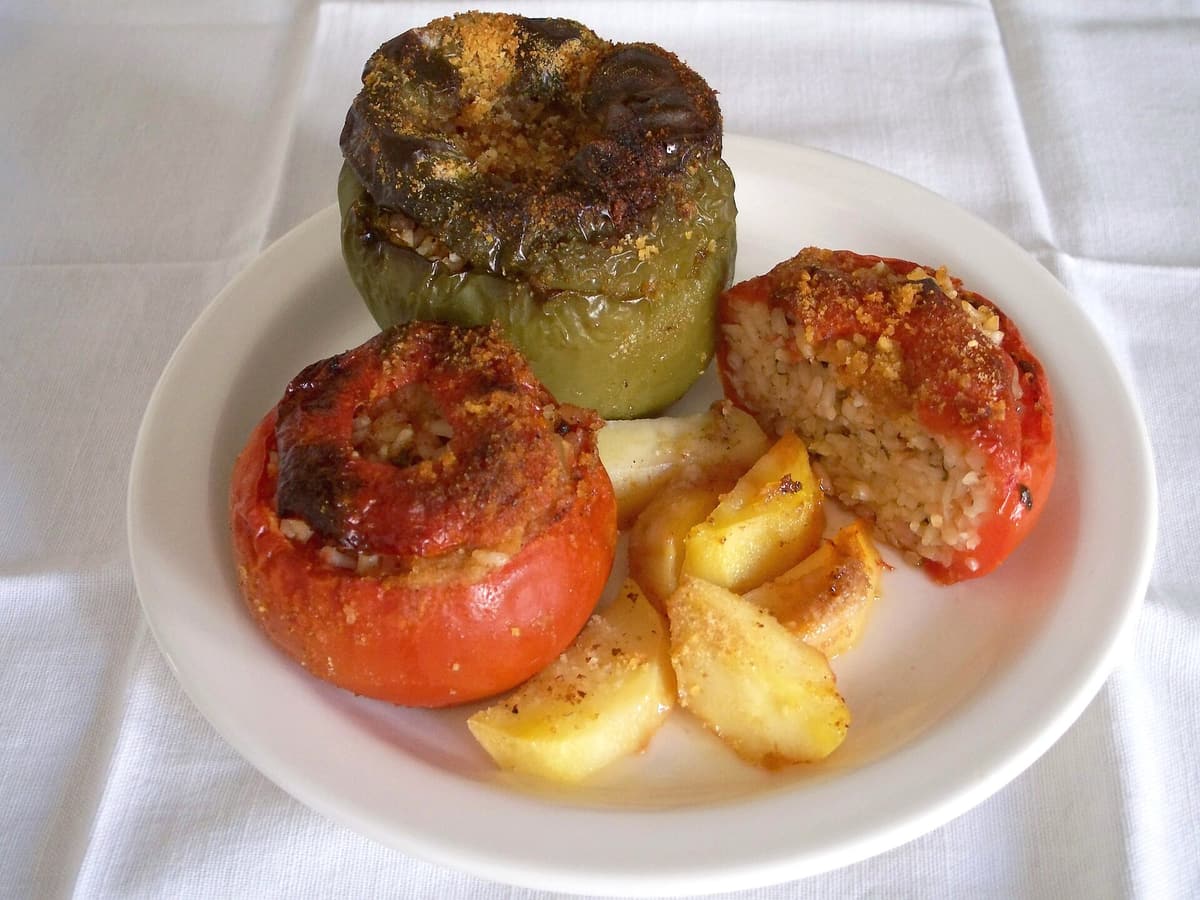
Pulses sit among the basic ingredients of the Greek table, beside cereals, vegetables and olive oil. Wheat is the basic grain, with barley beside it. Chickpeas become revithosoupa, a soup that also goes by the name revithada, and black-eyed peas, fasolia mavromatika, are served as a salad. Cheese held a central place in the Greek diet from antiquity, next to vegetables, pulses and dairy. Food in Zefiria draws on the same pantry, and olive oil is the fat that runs through it.
Rice turns plain vegetables into a meal. Prasorizo cooks rice with chopped sweet leeks, olive oil, garlic and dill, and lahanorizo joins rice with cabbage, onions and fresh herbs, with tomato sauce as an option. Lahanodolmades wrap a filling of rice, ground beef or both in cabbage leaves, with onions, mint and parsley, and the rolls are baked. Rice and fresh herbs recur across the three dishes. These are the vegetable plates behind food in Zefiria.
The climate and ground of Greece favour goats and sheep over cattle, so cheese comes from their milk and dishes of local beef are uncommon. Greek cooking draws on a wide range of cheeses, among them kefalotyri, graviera, anthotyros and metsovone, beside feta and myzithra. Cheese also becomes spreads, such as kopanisti, which blends feta with grilled red peppers, olive oil and fresh garlic, and fillings, such as goat cheese wrapped in the crisp filo of flogeres. Cheese plays an important role in food in Zefiria.
The same flocks supply the meat. Gida vrasti is boiled goat. Apaki is pork left to marinate in vinegar for two or three days and then smoked with aromatic herbs and spices, and it can be cooked on its own or added to other dishes. Magiritsa is a thick soup of lamb offal, dill, onion and rice, traditionally eaten on Greek Easter Sunday. Food in Zefiria draws on these farm meats.
- Ampelofasoula: A salad made from cowpeas.
- Spanakorizo: A dish of spinach and rice.
- Arakas me agkinares: Peas with cardoon, a vegetable dish cooked in olive oil.
- Tirokafteri: A spread of feta, yogurt, hot peppers, olive oil and vinegar.
- Spetsofai: Spicy country sausages cooked with sweet peppers, onion, garlic and olive oil in tomato sauce.
Home cooking fills out food in Zefiria with pulses and rice dishes from the pantry, cheese from the flocks, and meat that is boiled, cured or cooked with sausages and peppers. Olive oil and bread run through all of it. The next section leaves the kitchen for the farm table of the plain, where the produce of the fields and the flocks starts its journey to the plate.
What does the farm plain grow for food in Zefiria through the year?
Food in Zefiria follows the weather of a dry island. Winter rain, a caper bush that tolerates summer drought, thyme honey and watermelon set the farm calendar, and each crop reaches the table as a pickled bud, a spoonful of honey, a spoon sweet or a pie.
Weather decides the calendar behind food in Zefiria. Milos has a Mediterranean climate, with mild, rainy winters and warm to hot, dry summers. The strong, dry north winds called the meltemi blow from late spring to mid-September, with the highest frequency in July and August, and they temper the fierce summer heat. The meltemi is at its strongest in the afternoon. The caper bush suits that pattern. This perennial needs a semiarid climate, tolerates drought, and gains from a rainy spring followed by a hot, dry summer.
Capers grow in abundance on the rocky soils of Milos. Caper buds are picked in the morning, and daily picking is the norm. A ready bud is dark olive green and measures from under 7 millimetres to more than 14. Once picked, the buds are pickled in salt or in a salt and vinegar solution and then drained. Their flavour, described as close to black pepper or mustard, develops as glucocapparin is released from each bud. The fruit of the bush, the caper berry, is salted or pickled as well.
Honey comes from small units on Milos, which produce thyme honey and herbs. In Greece, honey comes mainly from the nectar of fruit trees and citrus trees, and thyme honey and pine honey count among the other kinds. The pitaraki, the small fried pie of Milos filled with cheese or herbs, is served hot with honey. Honey does not spoil when properly stored, so it carries the farm year onto the table in every season. Savoury and sweet meet in one bite of food in Zefiria.
Summer brings watermelon, a sweet fruit served freshly sliced. The crop has an old link to dry weather, because it was first cultivated for its high water content and stored for dry seasons. The watermelon pie belongs to the Cyclades, especially to Ios, Milos, Folegandros and Kimolos. While the fruit was in season, part of the flesh was eaten fresh, the rest went into the pie, and the rinds became a spoon sweet or a pickle. Karpouzopita counts among the traditional sweets of Milos.
- Winter: The island has mild, rainy winters, and the summers that follow are warm to hot and dry.
- Spring: A rainy spring is advantageous for the caper bush.
- Summer: The dry meltemi tempers the heat, and watermelon is the sweet fruit of the season.
- Hive: Thyme honey comes from small units on Milos and tops the hot pitaraki.
- Garden: Courgette fritters, called kolokythokeftedia, are lightly fried in olive oil.
The plain gives food in Zefiria a calendar of rain, wind, bud, honey and fruit. Each item reaches the plate close to its source: a pickled bud, a spoonful of thyme honey, a slice of pie. After the meal, coffee and drinks in Zefiria have a page of their own, which covers the village from the cup side. The questions below take meat, herbs, oil, vegetables, sweets and greens in turn, each in a short answer.

What do readers ask about the farm produce behind food in Zefiria?
Food in Zefiria raises six practical questions about meat, herbs, olive oil, vegetable stews, the watermelon pie and boiled greens. Each answer below takes one item and states what it is, what goes into it and how Greek kitchens use it in everyday cooking.
Why are beef dishes uncommon in food in Zefiria?
Across Greece, climate and terrain favour goats and sheep over cattle, so beef dishes are uncommon. The hills along the track toward Zefiria carry low vegetation whose main species resist grazing. One account derives the name of Milos from an old word for sheep. Lamb and goat therefore take the place of beef at the table.
Which herbs flavour food in Zefiria?
The small units of Milos produce thyme, oregano and sage. Greek cooks use oregano, mint, garlic, onion, dill, cumin and bay laurel leaves more freely than other Mediterranean cuisines do, and basil, thyme and fennel seed are common as well. Those flavours form the base of the pies and the stews on the island.
How does olive oil shape food in Zefiria?
Olive oil is both characteristic of Greek cooking and ancient in it, and cooks use it in the majority of dishes. Olive trees grow across Milos, and the olives themselves are eaten widely. Cycladic dishes combine fresh vegetables with virgin olive oil, spices and herbs. Ladenia, a pie of oil, tomato and onion, shows the idea.
What are lathera in food in Zefiria?
Lathera are seasonal vegetables stewed with olive oil, herbs and tomato sauce, and they belong to Greek home-cooked meals. Green beans, peas, okra, cauliflower, spinach and leeks all go into the pot. The dish is also spelled ladera, which translates as oily. Food in Zefiria follows the same home pattern of garden vegetables and oil.
What goes into the watermelon pie of food in Zefiria?
The pie of the Cyclades uses watermelon, flour, sugar or honey, oil, raisins, walnuts, cinnamon and clove, with plenty of sesame sprinkled in the tin and on top. The fruit stands in for a liquid such as juice, water or milk and softens the pie as it bakes. On Milos the sweet is made of watermelon, honey and sesame.
Which boiled greens join food in Zefiria?
Horta salad is made of boiled edible greens dressed with olive oil and fresh lemon juice. The greens can be endives, amaranth greens, wild chervil, chicory or chard, and asparagus also appears. The dish is plain and green, a counterpart to the pies and fritters of the island, and it needs only oil and a lemon.