
A Milos e-bike tour is a ride on electric bicycles around the island of Milos. A tour leader sets the route and rides with the group. The motor takes the strain out of the climbs. Riders reach villages, viewpoints and beaches without wearing themselves out.
This page explains what a Milos e-bike tour is. It also shows how the bike works. Later sections cover the hills, the coastal routes, safety and what to bring. Visitors who prefer a van or a jeep can read about a Milos island tour instead.
What is a Milos e-bike tour at a glance?
A Milos e-bike tour is an escorted ride on bikes with an electric motor. It links villages, viewpoints and beaches in one planned route. A tour leader sets the stops. The motor softens the hills, so riders of different fitness stay together.
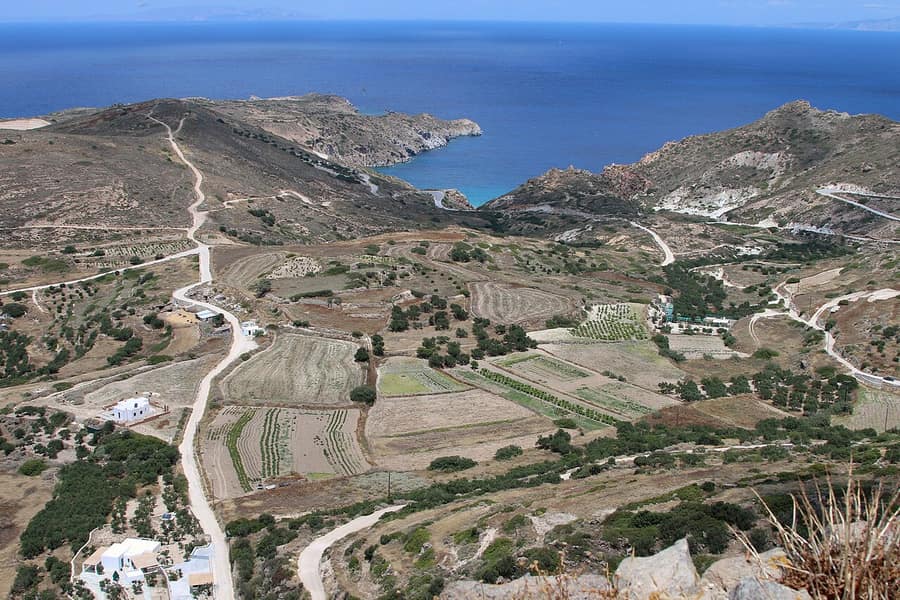
On a Milos e-bike tour, the group rides from one stop to the next along island roads. Villages give a place to pause. Viewpoints give a wide look over land and sea. Beaches bring the ride down to the water. The tour leader keeps the pace even for the whole group.
Hills fill the bigger part of Milos, so the roads between villages keep rising and falling. On a plain bicycle, every rise asks for hard effort. A Milos e-bike tour spares the rider on those rises. The energy saved against an ordinary bike is widest on the uphill stretches.
Milos has eight villages and beaches of all sizes. A ride therefore has plenty to join up. A Milos e-bike tour can pair a village with a sea view in one outing. The motor keeps the stretches between them light on effort. A rider spends that saved energy at the stops instead.
Confidence matters on a long route with hills ahead. The motor lets a rider take short breaks from pedalling. It also helps the rider finish the route without becoming too tired. The bike burns no fuel, so it gives off no exhaust fumes of its own.
- Ride: The group rides electric bikes together.
- Leader: A tour leader sets the route.
- Stops: Villages and beaches mark the route.
- Hills: The motor eases every climb.
- Fuel: The bike burns no fuel.
In short, a Milos e-bike tour pairs a pedalling ride with a motor that smooths the hills. The tour leader plans the route, and the stops tie villages, views and beaches together. The next section explains how the electric bike itself works.

How does the bike on a Milos e-bike tour work?
On a Milos e-bike tour, pedal assist adds a motor’s push to the rider’s own pedalling. A sensor notices the pedalling. The motor helps only while the rider pedals. A rechargeable battery feeds the motor, so the rider still steers and sets the pace.
The sensor is a part that notices movement. It reads how fast the rider pedals, how hard, or both. A controller, a small unit that manages power, passes electricity from the battery to the motor. When the rider stops pedalling, the push stops as well.
The battery stores the power for the motor. Lithium-ion packs are the common type. They do not mind a partial top-up. Hills, wind, tyre drag and the weight of bike and rider all drain the battery faster. A strong setting drains it sooner than a gentle one.
Motors sit in two main places. A hub motor is built into the wheel, normally the back one. A mid-drive motor sits at the pedals and pushes the chain. It therefore works through the bike’s own gears. This lets it help well at slow and fast speeds.
On the road, a pedal-assist bike feels like a normal bicycle with extra help. A mid-drive bike can feel smooth and steady. It comes close to a bike with no motor. A hub motor without gear help tends to push less well on slow, steep climbs.
- Sensor: It reads pedalling speed and force.
- Controller: It sends battery power to the motor.
- Motor: It adds to the rider’s effort.
- Battery: It stores power and can recharge.
- Gears: A mid-drive motor works through them.
So the bike on a Milos e-bike tour is a normal bicycle with four extra parts. They are a sensor, a controller, a motor and a battery. The rider still pedals, and the motor only adds to that effort. The rest of this page shows how that help meets the hills of Milos.
How does a Milos e-bike tour handle the island hills?
A Milos e-bike tour crosses rugged, hilly land. The island has a volcanic past. The motor of the bike takes part of the effort on each climb. The coast stays low, while the main villages sit on a rise above the harbour.
Milos is a volcanic island, and rugged hills cover the larger part of it. The west is uninhabited, and nearly all of it forms a Natura 2000 site. The villages around the gulf therefore set the course of a Milos e-bike tour.
Behind the town of Adamas, the land climbs to a plateau above the harbour. Plaka, the chief town, stands on that rise, 220 metres above the sea. Tripiti sits a little lower, at 150 metres above the sea.
That climb is the main uphill stretch of a Milos e-bike tour. An electric motor helps riders take steeper hills with less effort. The rise holds Plaka, Tripiti, Triovasalos and Pera Triovasalos, so the villages sit close together on it.
Milos has the largest network of dirt roads in the Cyclades. These tracks reach coastal sites, chapels and mines, but parts of them are very hard going. A road that carries cars and buses leads to Sarakiniko on the north coast.
- Rock: Tuff, trachyte and obsidian are the common rocks.
- Gulf: The harbour nearly splits the island in two.
- Peak: A road climbs the highest peak, Profitis Elias.
- Tiers: Triovasalos and Tripiti climb the slope in steps.
- Tracks: Dirt roads link coastal sites, chapels and mines.
In short, the hills set the shape of a Milos e-bike tour. One long climb leads from the harbour to the villages. After that, the villages sit close together. The land then falls away toward the coast and the north shore.
How does a Milos e-bike tour reach Sarakiniko?
A Milos e-bike tour can roll from the main villages down to the north coast. The ride drops from the plateau to the sea. It ends at the white rocks of Sarakiniko. The way back climbs the same slope again.
On the north shore of Milos, Sarakiniko lies about 5 km from Plaka. Cars and buses reach it easily, so a road leads down to the sea. At sea level, the shore lies far below the plateau villages.
A rider arrives at bare white rock with no plants on it. Waves have cut caves into the shore, and pirates once sheltered in them. Its name comes from those raiders, and ship bollards are still carved into the stone.
The route idea is simple: a Milos e-bike tour starts on the plateau at Plaka, Tripiti or Triovasalos. It drops toward the north shore and stops at the white rocks. The return climb leads back up to the same villages.
Sarakiniko has a small natural harbour between the rocks, and its sandy beach is only 10 metres long. The beach is not organised, meaning it has no sunbeds or beach bar. Deep blue water fills the harbour below the rock.
- Start: Plaka, Tripiti and Triovasalos sit on the rise.
- West: Mandrakia, a fishing harbour, lies to the west.
- East: Mytakas lies next along the coast.
- Rock: The white rock has volcanic layers and fossils.
- Road: Cars and buses can reach the shore.
In short, the north-coast ride is the downhill run of a Milos e-bike tour. It starts on the high plateau, ends at the white rocks and returns by the same slope. The ride can follow the road that cars and buses use to the shore.

What does a Milos e-bike tour pass between Adamas and Plaka?
A Milos e-bike tour from Adamas to Plaka links the harbour town with the chief town. The route climbs through Triovasalos and Tripiti, two villages on the rise above the harbour. It ends beside the castle hill of Plaka.
A Milos e-bike tour begins in Adamas, the harbour town and the largest tourist centre of Milos. Adamas stands on the northern side of the gulf, a large and safe natural bay. Refugees from Crete built it, and white houses with flowers in small courtyards line its quiet streets.
Heading up from the port, a rider meets Triovasalos before Plaka. The village is densely populated, and banks, public offices, cafes and shops make it a busy centre. Pera Triovasalos, its neighbour, stands on the next cliff.
Tripiti is almost joined to Plaka on the same rise. Holes in the soft volcanic rock below the village gave it its name. Restored windmills that once ground grain stand there, with a wide view over the gulf.
The ride ends in Plaka, where cobbled lanes wind between old houses. Car traffic is banned inside the village. A Venetian castle from the 13th century crowns the hill above and looks over the whole bay.
- Cemetery: A Crimean war cemetery lies near Adamas.
- Church: Holy Trinity, a 600-year-old church, stands in Adamas.
- Churches: Two churches from the 19th century stand in Triovasalos.
- Ruins: Tripiti stands above the ruins of an ancient city.
- Rock: Plaka perches on a large rock.
In short, the ride from Adamas to Plaka runs in one line. It goes from the sea up to the rise. The page on the villages of Milos tells more about each stop. A Milos e-bike tour along this line ends where the cobbled lanes begin.
Who can ride a Milos e-bike tour?
A Milos e-bike tour suits anyone who can balance on a bicycle and pedal slowly. The motor softens the climbs, so average fitness is enough for the ride. Riders who feel unsure on two wheels are better off choosing a van tour instead.
The key skill on a Milos e-bike tour is balance. A rider must be able to start, stop and steer a bicycle without wobbling or swerving. Putting a foot down at a stop feels natural to a confident rider.
A rider also needs to hold a straight line at a slow pace. Tight bends call for steady hands and a calm eye on the road ahead. A rider who has not cycled for years can practise on a quiet street first.
The motor adds push while the rider pedals, so a steep road takes far less effort. A rider still has to pedal, hold the handlebars and sit upright. Sore knees or a weak back make a Milos e-bike tour tiring, even with a motor.
Teenagers can ride when they handle a bicycle with confidence and listen to the tour leader. Older riders join in too, because the motor evens out the hills. Age matters less than balance, health and good judgement on a Milos e-bike tour.
A van tour is the better choice for a rider who cannot balance on a bicycle. It also suits a rider whose doctor warns against exercise, or one who dislikes sun and wind. A van tour sees the island from a seat, with no pedalling and no climbs.
- Balance: Riders stay upright at slow speed.
- Fitness: Average strength covers the climbs.
- Teenagers: Confident teenagers can ride with the leader.
- Age: Steady balance counts for more than age.
- Alternative: A van tour suits unsure riders.
A Milos e-bike tour is for riders who want to pedal and feel the island. Riders who prefer an engine can join a van tour or try getting around Milos by car. The right pick depends on skill, health and taste, because each way shows the island differently.
How safe is a Milos e-bike tour on the road?
A Milos e-bike tour starts with a helmet and a single line behind the tour leader. Early braking on descents keeps speed in check. Narrow roads, passing buses, and loose sand or gravel on bends all call for steady attention.
A helmet protects the head in a fall, so each rider wears one. Helmets reduce the severity of head injuries, especially serious ones, in an accident. A helmet must sit level with the strap fastened, because a loose one protects far less.
Riders keep to a tidy single line behind the tour leader. The leader of a Milos e-bike tour sets the pace and picks the line through each bend. A rider leaves a gap to the bike ahead and does not overtake the leader.
On a narrow road, a passing bus or car leaves little space. A rider slows down, moves to the edge and, if needed, stops to let it pass. Drivers can miss a bike coming from behind, so a rider never counts on being seen.
No other island in the Cyclades has a dirt-road network as large as Milos. Loose sand and gravel cut the grip of the tyres and can lie on any bend. A rider on a Milos e-bike tour slows before a bend, not in it.
An e-bike can make a new rider faster than expected, and a descent adds more speed. A rider squeezes both brake levers early and gently, well before the bend. An e-bike regains speed with little effort after a bend, so braking costs little.
- Helmet: It sits level with a fastened strap.
- Line: Riders stay in single file.
- Traffic: Buses and cars need room.
- Bends: Loose gravel cuts the grip.
- Descents: Brakes go on early and gently.
Safety on a Milos e-bike tour rests on four simple habits. They are a fitted helmet, a tidy line, early braking and calm respect for passing traffic. A rider who feels unsure tells the tour leader, since a rest stop beats a rushed bend.
What to wear and bring on a Milos e-bike tour?
A Milos e-bike tour calls for closed shoes, light clothes, sunglasses, sun cream and water. A small backpack carries it all. A swimsuit joins the bag when a beach stop is planned. Each item solves one problem of riding in the sun.
Closed shoes with a flat, firm sole grip the pedals. Open sandals can slip off a pedal or catch the chain. Light, loose clothes let the knees bend and the body shed heat. The motor helps only while the rider pedals, so the body still warms up.
A sun hat does not fit under a helmet. Sun cream does the work of the hat instead. It goes on the face, the ears, the nose and the back of the neck. On a Milos e-bike tour, a swim means a second coat, because water washes the first one off.
Sunglasses shield the eyes from glare, dust and wind. A small backpack with two wide straps keeps both hands on the handlebars. A heavy bag pulls on the shoulders and warms the back. Light packing keeps every Milos e-bike tour easy.
Water comes first. Even mild dehydration dulls concentration, and a road needs full attention. A bottle or two in the backpack covers the ride. A swimsuit under the shorts makes a beach stop simple. Other ways to join a ride with a swim or a walk appear under combined activities in Milos.
- Shoes: Closed, flat-soled shoes grip the pedals.
- Clothes: Light, loose clothes let heat escape.
- Sun: Cream and sunglasses guard skin and eyes.
- Pack: One small backpack holds the water and the swimsuit.
- Beach: A swimsuit under the shorts speeds up a stop.
With these items packed, a Milos e-bike tour stays light and easy. Each one answers a plain problem. Shoes grip the pedals and clothes cool the body. Cream guards the skin and water stops thirst. A swimsuit adds a quick dip at the beach. One small bag holds the lot.
How do the seasons and the heat shape a Milos e-bike tour?
A Milos e-bike tour meets hot, dry summers, strong sun and the meltemi wind. The early and late parts of the day are cooler. They suit a ride better than the afternoon, when the wind is strongest. Water and shade protect the rider.
Milos has a Mediterranean climate. Summer days are dry and sunny, and the heat runs from warm to hot. Winters are mild and rainy. Rain falls in winter and spring. A summer rider plans for sun and dry air, not for showers.
The meltemi is the dry summer wind of the Aegean, and it comes from the north. Its season runs from late spring to mid-September. The afternoon brings the strongest wind, and the night tends to bring calm. The sky stays clear as it rises, so a clear morning gives no warning.
On a Milos e-bike tour, a rider feels the wind in two ways. Heading north, the rider pedals into it. Heading south, the rider gets a push. A side gust can nudge the bike off line, so both hands stay on the bars.
North winds temper the summer heat, and sweat dries fast in the breeze. The rider feels cool while the sun burns and the body loses water. Hard effort in extreme heat risks heat exhaustion. So a Milos e-bike tour suits the cooler parts of the day, and shade is worth a stop.
- Summer: Warm to hot, dry and sunny.
- Wind: The north wind is active until mid-September.
- Shade: The dry island has thin greenery and little shade.
- Arrival: New arrivals need time to get used to the heat.
- Signs: Dizziness, headache and nausea call for shade and water.
A Milos e-bike tour in summer means clear skies, dry air and a north wind. Each of these is easy to handle with a little planning. Cooler parts of the day, water and shade keep the ride safe. The motor then keeps the climbs gentle.
How do riders choose and book a Milos e-bike tour?
A Milos e-bike tour comes down to four choices. The route, the group size, the tour leader and the start point decide it. A clear tour description answers all four points before a rider books a day out.
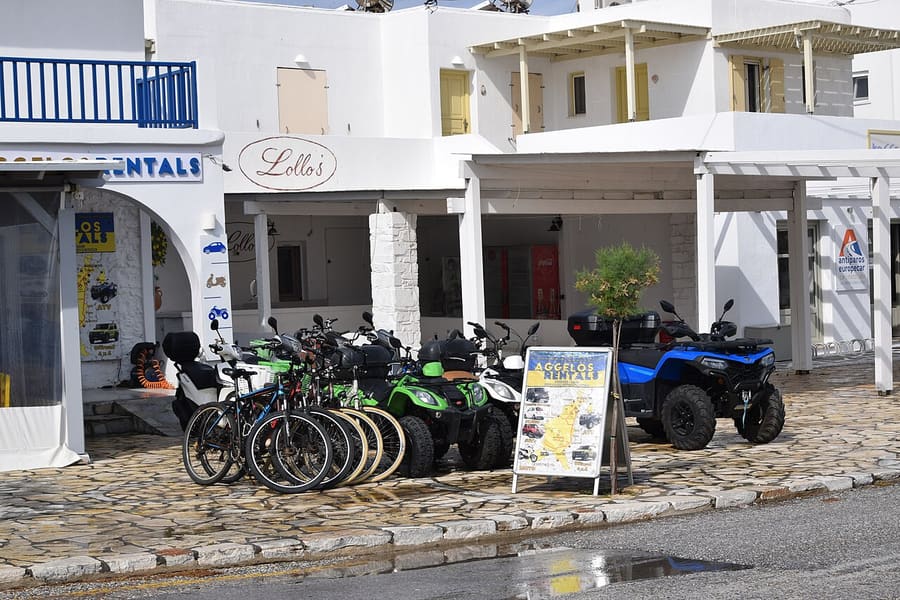
A half-day ride covers one area, such as the north coast. A longer ride links more areas and adds stops. It also draws more from the battery. A rider short of time picks the shorter format.
A small group keeps the ride quiet, and the tour leader can watch every rider. A private ride suits a family and sets its own pace. A larger group follows the slowest rider on every hill.
An escorted ride has a tour leader. The leader picks the stops and watches the group. A bike rental leaves the route to the rider. Newcomers to the hills tend to prefer the escorted ride.
The start point shapes the first stretch on a rugged, hilly island. Adamas is the harbour town beside the sea. Plaka, the chief town, stands on a plateau above the harbour. The road between them climbs.
- Route: The areas and the road type are named.
- Bike: The bike has pedal assist, and frame sizes are listed.
- Group: The largest group size and the leader’s role are given.
- Start: The meeting point and the end point are named.
- Level: The riding experience the route asks for is stated.
A Milos e-bike tour works best when its format matches the rider. A clear description makes that match easy to check. Riders can also browse the activities in Milos to compare other ways of seeing the island. An e-bike day can sit beside a boat trip.

Which questions do riders ask before a Milos e-bike tour?
A Milos e-bike tour raises eight practical questions before the ride starts. They cover children, cycling practice, the battery, weather, bags, photo stops, beach plans and riding alone later. Each answer below sticks to plain facts about the island and the bike.
Can children join a Milos e-bike tour?
A tour description states a minimum age or height, and those limits come first. A child must reach the pedals and the brakes from the saddle. The motor adds speed, so a young child rides faster than on a plain bike. Parents therefore match the tour to the child’s riding skill.
Is cycling practice needed before a Milos e-bike tour?
Basic balance on a bike is enough. On a pedal-assist e-bike, the motor helps only while the rider pedals. It cuts out at 25 km/h. That makes starts and slopes easier for a beginner. Unsure riders can ask for a test ride. A rider who cannot balance needs another activity.
What happens if the battery runs low on a Milos e-bike tour?
Almost all e-bikes work as plain bikes once the battery is flat. The rider then pedals without help, which is hard on a hill. Range depends on the assist level, the hills and the weight of bike and rider. Low assist on flat roads saves charge for the climbs ahead.
Does rain or wind stop a Milos e-bike tour?
Light wind rarely stops a ride. Strong gusts make open hill roads hard to hold. The tour leader can then pick a more sheltered route. Rain makes the road slick, so braking needs more room. Milos has dry summers and rainy winters, so a wet summer ride is uncommon. Riders watch the forecast.
Where does luggage go during a Milos e-bike tour?
Large suitcases stay at the lodging or in storage before the ride. A small daypack rides on the back, or in a basket if the bike has one. Weight cuts the battery range, so the load stays light. Valuables go in a closed bag within easy reach of the rider.
Are there photo stops on a Milos e-bike tour?
Routes plan stops at viewpoints and along the coast, where the varied shoreline is in view. The bike stops fully before the camera comes out. Riding with one hand on a phone is unsafe on hill roads. A wrist strap keeps the phone from dropping. The tour leader can take a group photo.
Can a Milos e-bike tour be combined with a beach day?
Yes. The island spans about 23 km from west to east, which keeps the coast close. A coastal route passes beaches, and swimwear and a towel fit in a small bag. Wet swimwear makes a saddle uncomfortable, so a dry layer helps. The bikes stay parked and locked while riders swim.
Can riders use the bike alone after a Milos e-bike tour?
That depends on the tour, and the description says so. A separate bike rental is the usual route for solo riding. Greek law asks for no plates, insurance or licence on e-bikes limited to 25 km/h. The hills still demand care, so a solo rider keeps to routes already ridden with the tour leader.