
Rent a car in Milos from the experts.
Travellers planning a stay on the island of Milos judge distance before anything else. Beaches, harbours and villages lie on different sides of a horseshoe-shaped gulf. A rent a car Milos plan answers that spread, and this part of the page explains why, then follows the car from the two arrival points on the island to the first road.
The island has two arrival points for air and sea passengers, the port of Adamas and the airport to its south-east. Each stands in a different spot, and both lead to the same scattered coast. The first section describes how the island is laid out, and the second places the two handover points on the map of the island.
Why does rent a car Milos matter at a glance?
A rent a car Milos plan matters because Milos is a horseshoe-shaped island of 151 square kilometres with 90 listed beaches in five areas. Villages stand apart on the plateau, around the gulf and on the coast, and a car joins them on one itinerary.
Milos lies at the south-western end of the Cyclades. It measures about 23 km from east to west and 13 km from north to south, and its area is estimated at 151 square kilometres. A large gulf cuts in from the north-west and gives the island its horseshoe form. The gulf separates the island into two fairly equal portions, joined by an isthmus no more than 2.2 km wide. By land, a trip from one portion to the other passes that isthmus or follows the curve of the gulf.
The beach list for Milos holds 90 entries: 17 on the north side, 12 on the east, 21 on the south, 15 on the west and 25 inside the gulf. The list is not complete, and each beach differs from the next because of the different rocks around it. Beaches reached over land share the coast with others that can be reached only from the sea. A rent a car Milos traveller therefore picks one side of the island for each day and drives to the beaches that lie there.
The settlements are as scattered as the beaches. Plaka and Plakes together form the capital, and Trypiti, Triovasalos and Peran Triovasalos stand on high ground above the port of Adamas. Zefyria, also called Kampos, is the former capital, while Klima, Mandrakia and Firopotamos are smaller settlements beside the sea. Pollonia, Provatas and Paliochori also appear in the list of inhabited settlements. A rent a car Milos itinerary strings these places together in one loop around the gulf.
The western half of the island has no villages, only a small number of settlements and old mines, and almost all of it belongs to a Natura 2000 site. That area includes Achivadolimni, the largest natural wetland of the Cyclades. The beaches there are isolated. Agios Ioannis, Triades and Kalogries appear among the 15 beaches of the west side. A rent a car Milos day on this side is a separate outing from a day among the plateau villages.
- Island size: Milos measures about 23 km from east to west and 13 km from north to south.
- Beach count: A list of 90 beaches covers the north, east, south and west sides and the gulf.
- Settlements: The list of inhabited settlements on Milos has 26 names.
- West side: The western half has no villages and lies almost entirely in a Natura 2000 site.
- Public transport: City buses serve certain areas of the island, so a rent a car Milos plan covers the places they miss.
A rent a car Milos plan works best when each day follows one side of the island. The gulf, the plateau villages and the empty west each need their own drive. City buses serve certain areas only, so a car gives the beaches and villages outside those routes a way in. The next section places the two arrival points where that drive begins.

Where does rent a car Milos begin at the port of Adamas or the airport?
A rent a car Milos pickup begins at the port of Adamas, on the north-eastern shore of the gulf, or at Milos Island National Airport, 5 kilometres south-east of the harbour. Taxis also stand at both of these places.
Adamas is the harbour town and main port of Milos. It stands on the north-eastern shore of the gulf, which is the hollow of the principal crater and one of the largest natural harbours in Greece. The ground behind the harbour climbs to the plateau above it. A rent a car Milos handover at the port therefore starts at the edge of the water, and the first climb from the harbour leads to the plateau villages.
Landmarks help to fix the port on the map. The church of the Holy Trinity, about 600 years old, stands very close to the harbour and holds the ecclesiastical museum. The Mining Museum and the Maritime Museum are also in Adamas. A British and French military cemetery from the Crimean war lies near the town and recalls the years when Adamas served as the base of the French fleet. These places give a rent a car Milos driver recognisable points for a meeting place before the first road is taken.
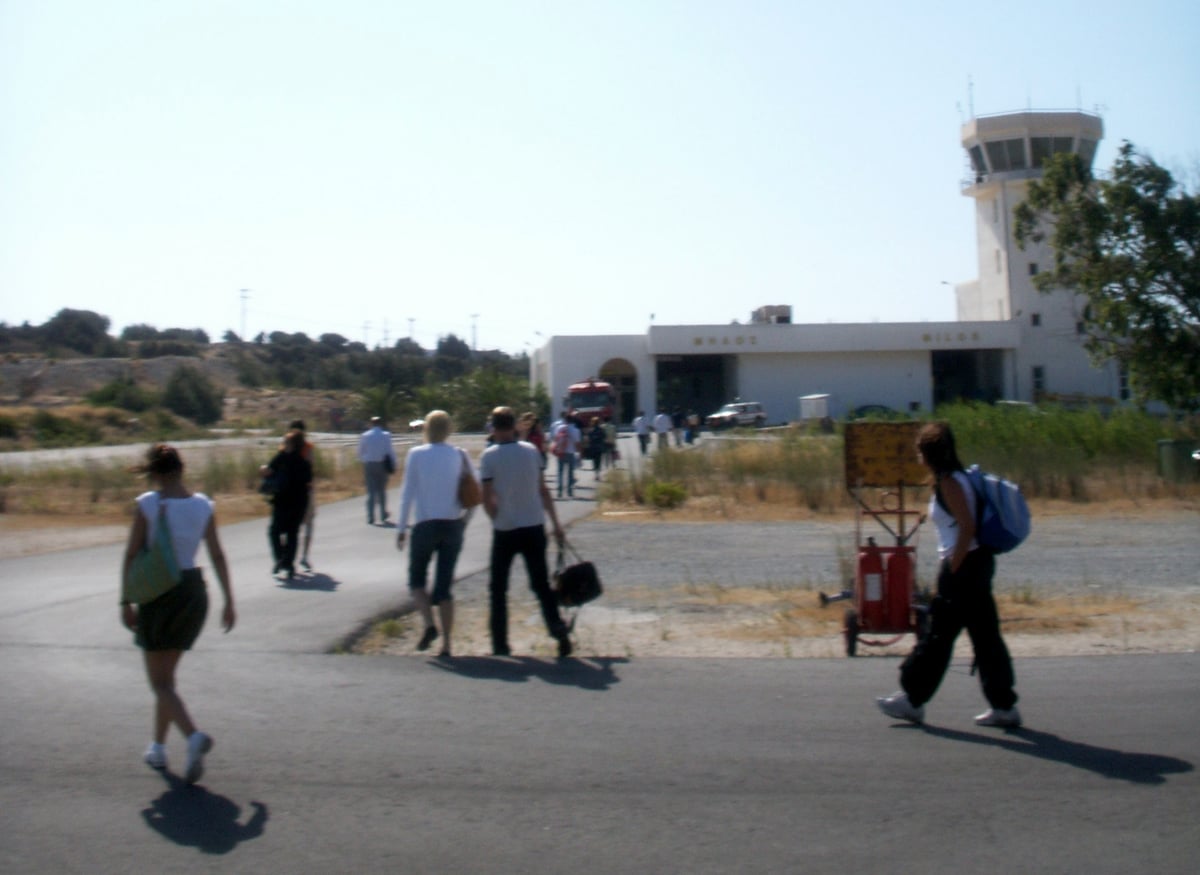
Milos Island National Airport carries the codes MLO and LGML and lies 5 kilometres south-east of the harbour of the island. It opened on 17 January 1973, and a new terminal came into use in October 1995. The port and the airport therefore stand in two separate places, with the airport to the south-east of the harbour. A rent a car Milos pickup at either one leads onto the same island roads and the same scattered coast.
The airport is small. Its apron covers 7,800 square metres and its runway is short, so only smaller aircraft use it, and the apron holds one larger aircraft or two light aircraft at a time. Other than by car, the airport is linked to the rest of the island by taxi. The island has 15 taxis, and taxis wait at both the port and the airport. A rent a car Milos arrival at the airport therefore swaps the taxi link for a direct road link.
- Port location: Adamas stands on the north-eastern shore of the gulf of Milos.
- Airport location: The airport lies 5 kilometres south-east of the harbour.
- Opening: The airport opened in 1973 and received a new terminal in 1995.
- Apron size: The apron covers 7,800 square metres, so a rent a car Milos pickup starts at a compact site.
- Taxis: The island has 15 taxis, and taxis stand at the port and at the airport.
Both pickup points feed the same island roads, and each stands in a place that can be named on a map. Contact details for the port police, the airport and the taxis sit on the Milos transport page. A rent a car Milos plan that names the arrival point first, port or airport, then moves on to the road network and the villages.
How does rent a car Milos work on the paved roads and dirt tracks of the island?
A rent a car Milos plan covers two kinds of road. Paved roads join Adamantas with the plateau villages, the east and Pollonia, while dirt tracks lead to coastal sites, chapels and mines. Each surface sets its own pace, and the two can change within one short drive.
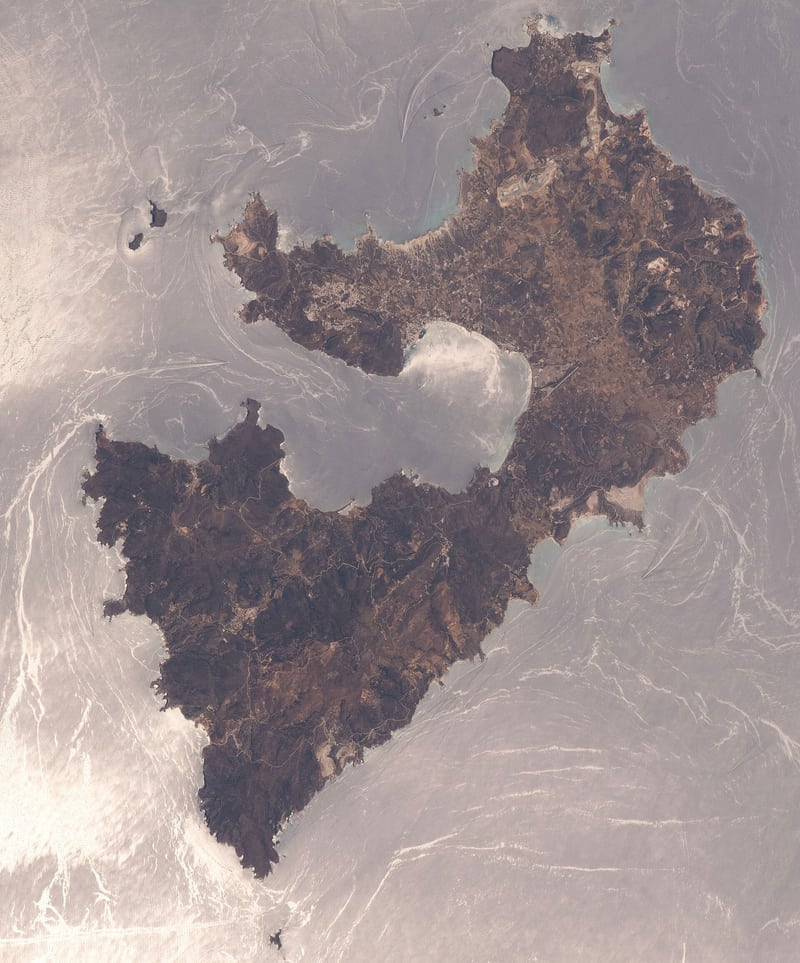
Milos measures about 23 kilometres from east to west and 13 kilometres from north to south, so the distances of a rent a car Milos trip stay short. Plaka, the chief town, stands high above the harbour, and the road from the harbour town of Adamantas gains height all the way up. Zefyria lies in the centre of east Milos, and Pollonia lies in the north-eastern part. The island is compact, with clear paved links between its main places and a short drive between any two of them.
Kapros is visible from the main road leading to Pollonia, and the beach is easily accessible by car and public transport. Pollonia is easily accessible by car as well. On the south coast, the paved road to Provatas carries a frequent bus service, and buses also serve the beach at Achivadolimni. These routes keep a rent a car Milos plan simple on the east and the south of the island, because the surface stays paved and the direction is easy to read from one village to the next.
The dirt tracks form the second layer of a rent a car Milos route. Milos holds the largest dirt-road network in the Cyclades, and the tracks lead to coastal sites, chapels and mines. Parts of the routes are very difficult. Three off-road routes are named for the island: Empourios to Cape Vani and the old mines, Plaka to the lonely beach of Trachilas, turning off just before Firopotamos, and the road to the top of Profitis Elias, which looks out over the sea toward Kleftiko.
The tracks differ in difficulty. A relatively easy dirt road leads to Tsigrado, where a steep path covered with sand continues on foot, and the nearby beach of Fyriplaka supplies the essentials. A dirt road of about 12 kilometres leads to Agios Ioannis, and only the first of its three beach sections is accessible by car. Agkathia is described as quite inaccessible because of the dirt road that leads there. A rent a car Milos driver therefore checks each dirt route before leaving the paved road.
- Plateau: Plaka stands at an altitude of 220 metres above sea level, overlooking the gulf.
- Centre: Zefyria lies 5.5 kilometres from Adamas and 9 kilometres from Plaka.
- Provatas: A rent a car Milos route reaches Provatas by a paved road with good signage.
- Shore track: The main dirt road south of Cape Vani reaches the shallow sea at Rivari.
- Patrikia: A dirt road leads to Patrikia, and the last stretch is covered on foot.
For a rent a car Milos driver, the island reads as paved links between the harbour, the plateau and the east, with dirt tracks that run out toward the coast and the mines. The map of Milos shows how those routes sit around the gulf, with Mount Profitis Elias, at 748 metres, as the high ground of the west. That picture helps in choosing where a track is worth taking and where the paved road is the better choice.

What does rent a car Milos mean for narrow lanes, wind, dust and island rules?
A rent a car Milos driver meets narrow village lanes, strong Aegean wind and dust on dry tracks. Greek rules on alcohol, seat belts and helmet safety apply on the island as they do on the mainland, and every unpaved turn asks for extra care.
Village lanes set the first limit on a rent a car Milos trip. Plaka is perched on top of a large rock above the gulf, and no cars can enter the village because of the narrow spaces between walls and buildings. Motorbikes and mopeds are the only usable vehicles there, and car traffic is prohibited. Adamantas also has narrow, quiet streets between white houses. The concrete road down from Tripiti toward the Catacombs stops after 700 metres, and the walk continues among age-old olive trees.
Wind is the second condition. The meltemi, the strong, dry north wind of the Aegean Sea, blows from late spring until mid-September. It peaks in the afternoon and can fall quiet at night, but sometimes it lasts for days without a break. It comes up in clear weather without warning and can blow at force 7 to 8 on the Beaufort scale. On Milos the strong wind that carries salt has eroded the rocks near Cape Vani, and a rent a car Milos driver meets the same wind.
Dust is the third condition. A dirt surface can be extremely muddy and slippery when wet and baked hard when dry, and passing vehicles kick up dust. Dirt roads almost always form a washboard-like surface with ridges, which creates hazardous driving conditions for vehicles that travel too fast to keep traction and control. On the Volcano route the uphill asphalt road turns into a passable dirt road on a soft layer of perlite that looks like sand, so a rent a car Milos driver slows where the surface changes.
The alcohol limits are the clearest rule for every driver. The limit is 0.05% blood alcohol, or 0.25 milligrams per litre of breath, and it falls to 0.02% for motorcycle drivers and for drivers who have held a licence for less than two years. Routine breath tests need no special cause, and the traffic police practise them, especially on weekends and major holidays. Where the roads are narrow and unpaved in places, a rent a car Milos plan keeps the driver of the day free of alcohol.
- Seat belts: Greece is a member of the European Union, whose directive makes seat belts mandatory in all vehicles, so the rule covers every rent a car Milos vehicle.
- Children: The same directive applies seat belts to children as well as adults.
- Alcohol: Above 0.11% blood alcohol the offence is a flagrant misdemeanour with the licence revoked for six months.
- Helmets: A motorcycle helmet cuts the risk of head injury by 69% and the risk of death by 42%.
- Risk: Powered two-wheeler riders made up 32% of traffic deaths in Greece in 2016.
Riders face one more detail, because dust and wind in the face and eyes cause discomfort or injury, and goggles or a face shield add protection. For a rent a car Milos trip on four wheels, the same habits apply: cars stay outside Plaka, afternoon wind is expected, dirt corners are taken slowly and alcohol stays out of the plan. These habits cover the whole island, from the paved roads of the east to the western tracks of Milos.
How does rent a car Milos compare with a scooter or an ATV on the island?
A rent a car Milos plan suits paved roads and the road to the south beaches, a scooter suits the lanes of Plaka, and an ATV is built for rougher ground. Each vehicle needs the matching licence category, and open machines need a helmet.
A car covers the paved roads and the gravel stretches of the south coast. The road to Firiplaka is asphalt for its largest part before a gravel drive, and the beach is also reached by taxi, bus or boat. Tsigrado lies at the end of a relatively easy dirt road, and a steep path covered with sand leads down from the top of the hill to the water. A rent a car Milos plan fits this coast, where the road ends and the path to the sand begins.
A scooter is a motorcycle with a step-through frame, a seat and a platform for the rider’s feet. Modern scooters use a transmission that shifts without a clutch, and a storage compartment can sit under the seat. Their wheels are smaller than those of a conventional motorcycle, and they are more convenient to park and store than a car. Plaka admits motorbikes and mopeds, so a scooter enters lanes that stay closed to a hired car, a limit that every rent a car Milos choice shares.
An all-terrain vehicle, called a quad when it has four wheels, runs on low-pressure tyres and has a seat that the rider straddles, with handlebars like a motorcycle. It is designed for a wider variety of terrain than ordinary vehicles, and the extra wheels add stability at slow speeds. Dirt roads on Milos lead to coastal sites, chapels and mines, and in places the routes are very difficult. A rent a car Milos plan keeps the car on the paved network and leaves the hardest tracks to such machines.
Helmets matter on every open machine. A full-face helmet covers the whole head and the chin, and an off-road helmet adds an elongated chin bar and visor for use with goggles. A loose chin strap greatly reduces the protection. The recommended ATV kit also holds protective eyewear, gloves and riding boots, and a helmet cuts the risk of death by 42 per cent. Lateral rollovers can occur on steep inclines. A rent a car Milos plan puts a closed cabin where an ATV or a scooter puts this kit.
- Licence card: For a rent a car Milos driver, field 9 of the Greek licence lists the categories held.
- Home licence: A list of non-EU countries holds recognition agreements that change, so the home authorities confirm the position.
- Quads abroad: The United Kingdom asks for category B or B1 for a quad, while Germany treats it as a car.
- Passengers: Tandem ATVs carry the driver and one passenger, while the standard definition covers a single operator.
- Paved roads: ATV safety advice warns against paved roads, because an ATV normally has a solid rear axle without a differential.
The choice between a car, a scooter and an ATV follows the surface, the group and the licence. A rent a car Milos plan covers the paved roads and the gravel ends of the south coast, a scooter reaches the lanes of Plaka, and an ATV answers the dirt network. Checking the category on the licence and fitting a helmet before the first ride settles the legal and safety side of each machine, whatever the road.

How does rent a car Milos handle parking in Plaka, Adamas and the villages?
A rent a car Milos plan meets car-free lanes in Plaka, narrow quiet streets in Adamas and parking lots where village roads end, as below Tripiti. At Sarakiniko a path leads to a parking lot and a bus stop, and Provatas has frequent buses.
Car traffic is prohibited in Plaka, the chief town of Milos, because the walls and buildings stand close, so only motorbikes, mopeds and similar machines enter. The village crowns a large rock above the gulf, and the small settlement of Plakes lies between Plaka and Triovasalos at the foot of the Kastro. The page on the village of Plaka covers the sights. A rent a car Milos itinerary therefore treats Plaka as a stop made on foot, with the car left outside the lanes.
The hill villages near Plaka follow a dense pattern. Triovasalos and Pera Triovasalos occupy two neighbouring hills, and both are densely populated and built like an amphitheatre. The shops of Triovasalos stand on a pedestrian street, and its Karodromos is a central point of the island, with banks, public services, cafes and shops. Pera Triovasalos stands at 120 metres, one kilometre from Plaka and three kilometres from Adamas. Where the pedestrian street runs, a rent a car Milos driver continues on foot.
Parking appears where a village road ends. The road from Tripiti to the Catacombs runs down to a plateau lot, and from there a driver leaves the car and walks the alley toward the walls of the ancient city. A dirt road beyond the lot ends in front of the ancient theatre, and a second plateau, 100 metres before that road leaves the Catacombs road, serves the marked path of 850 metres down to ancient Milos. A rent a car Milos plan uses these lots for the archaeological stops.
Adamas is the main port and the largest tourist centre of Milos, built in the north of the gulf with white houses, small courtyards and narrow quiet streets. The main road to Plaka leaves the port toward the north and climbs to the plateau. Taxis stand at the port and at the airport, which lies four kilometres away, and no bus service links the airport with the port. A rent a car Milos arrival at Adamas begins among narrow streets and ends on the main road north.
- Sarakiniko: A path from the coast leads south to a parking lot and the bus stop for the return.
- Pollonia: Buses stop at the beach, and the village is easily accessible by car and transport.
- Provatas: A rent a car Milos driver finds a paved, well-signed road from Adamas to this organised beach, and buses run frequently.
- Kapros: The beach is visible from the main road to Pollonia and easily accessible by car and transport.
- Achivadolimni: The beach has organised camping and is accessible by bus.
Parking on Milos follows the shape of each place. Plaka stays closed to cars, Triovasalos keeps its shops on a pedestrian street, and the roads below Tripiti end in lots. A rent a car Milos plan uses Adamas as the base and the bus stops of beaches such as Sarakiniko and Pollonia as a second way to arrive. Reading each stop in this order avoids a drive into lanes that were built for walkers.
Which day drives suit a rent a car Milos plan?
A rent a car Milos plan suits three day drives: the north coast with Sarakiniko, Mandrakia and Firopotamos, the south coast with Paleochori, Provatas and Tsigrado, and the villages above the gulf, where Plaka bans cars inside the settlement.
Sarakiniko lies on the north shore of Milos, and a rent a car Milos route reaches it by road. Waves driven by north winds erode the greyish-white volcanic rock, and the surface resembles a moonscape. Pirates sheltered in the caves along this coast and gave the place its name, while ship bollards remain carved into the rock. A small natural harbour sits between the rocks. The sandy beach covers only a small part of the site, and the eastern side holds dry plants and rocky ground.
Mandrakia and Firopotamos are fishing settlements on the same north coast. Mandrakia keeps a small harbour lined with boathouses called syrmata, painted in bright colours, and the church of Zoodochos Pigi rises above them. A quiet beach of dark grey pebbles and tamarisk trees lies in front of the houses. Firopotamos sits in a small bay with a small organised beach of sand that suits swimming and fishing, and the church of Agios Nikolaos stands beside an abandoned loading ladder at its edge.
The south coast changes the setting. Paleochori lies on the south-western coast, where rocks in red, pink, yellow and white-grey surround coarse sand and small pebbles, and warm waters gush near the shore. Active fumaroles with temperatures up to 100 degrees Celsius also occur at Paleochori. Provatas has golden red sand coloured by iron oxides and very shallow water, with sunbeds, umbrellas and taverns. Tsigrado is a cove of white sand and emerald water between tall rocks, without organised facilities, and the nearby beach of Fyriplaka supplies the essentials.
The villages form the third drive. Plaka stands at 220 metres with a view over the gulf, and its narrow stone-paved lanes carry shops, restaurants and cafes. Tripiti has the catacombs, the Roman theatre and restored windmills. Klima keeps the fishing houses beside the site of ancient Milos, where the Aphrodite of Milos was found. Zefyria, the former capital, is an inland village of agricultural character, while Triovasalos and Pera Triovasalos occupy two neighbouring hills and hold the banks, public services and daily shops of the island.
- Sarakiniko: The beach lies about five kilometres from Plaka and is accessible by car and by bus.
- Mandrakia: The village lies four kilometres north of Adamantas and about nine kilometres from Plaka.
- Firopotamos: The bay lies three kilometres north of Plaka.
- Paleochori: The beach lies thirteen kilometres from Plaka and fourteen kilometres from Adamantas.
- Tsigrado: A relatively easy dirt road ends above a steep, sandy path that leads down to the cove.
Each drive keeps its own character on the map. A rent a car Milos traveller can pair the north coast with the harbour at Adamantas, the south coast with the paved and dirt roads that lead down to the sea, and the villages with the hills above the gulf, so that each stop keeps a clear place in the day. The beaches of Milos page lists the shores behind these stops, from the north coast to the south.

Which rent a car Milos questions matter on the day drives?
A rent a car Milos plan raises questions about road access, beach setting and village layout. The answers below follow Sarakiniko, Mandrakia, Firopotamos, Paleochori, Provatas, Tsigrado, Plaka and the villages around the gulf of Milos, each with its own road type and setting.
Can rent a car Milos reach Sarakiniko directly?
A rent a car Milos route reaches Sarakiniko directly, because the beach on the north shore is easy to approach by car and by bus. It lies about five kilometres from Plaka. The white volcanic rock forms a moonscape, and the sandy beach measures only ten metres and has no organised facilities.
Does rent a car Milos pass Mandrakia on the north coast?
A drive along the north coast reaches Mandrakia, four kilometres north of Adamantas. The fishing village has a small harbour with painted boathouses, rooms for rent and a restaurant. Its quiet beach of almost 150 metres has fine dark grey pebbles and tamarisk trees. The 2021 census counted thirteen residents in the settlement.
Is Firopotamos part of a rent a car Milos north coast drive?
Firopotamos lies three kilometres north of Plaka, in a small bay with a sandy beach and a beach bar. Boathouses around the creek hold boats in winter and serve as summer homes. The church of Agios Nikolaos stands beyond the fishing houses, next to an abandoned loading ladder. The 2021 census counted two residents.
What does rent a car Milos find at Paleochori?
A rent a car Milos drive to Paleochori ends on the south-western coast, thirteen kilometres from Plaka and fourteen from Adamantas. The beach is almost two kilometres long. Red, pink, yellow and white-grey rocks surround coarse sand and pebbles, and warm waters gush near the shore. The settlement has rooms for rent and places to eat.
Does rent a car Milos reach Provatas by paved road?
Provatas has a paved road with good signage. The beach is made of three small coves separated by rocks, with golden red sand coloured by iron oxides and very shallow water. Sunbeds and umbrellas organise the shore, and taverns, rooms to let and a hotel stand nearby. The settlement had thirty-three permanent residents at the 2021 census.
Can rent a car Milos drive to Tsigrado?
A rent a car Milos route reaches the hill above Tsigrado by a relatively easy dirt road. A steep path covered with sand leads down to white sand and emerald water between tall rocks. The beach is not organised, and the nearby beach of Fyriplaka supplies the essentials, so the cove works as a short stop after that beach.
Can rent a car Milos enter the village of Plaka?
A rent a car Milos vehicle cannot enter Plaka, because car traffic is banned inside the settlement and the spaces between walls and buildings are narrow. Motorbikes and mopeds are the only usable vehicles. The village stands at 220 metres above the gulf, and a Venetian castle from the thirteenth century crowns its highest point.
Which villages near the gulf suit rent a car Milos stops?
Tripiti, Klima and Zefyria suit stops near the gulf. Tripiti lies five kilometres north-west of Adamantas, beside the catacombs and the Roman theatre. Klima lies six kilometres from the port, where fishing houses stand near ancient Milos. Zefyria, five kilometres south-east of Adamantas, was the capital of the island until the title moved to Plaka.