Rent a car in Piraeus and Athens with the experts
RAC SA offers discounted car rentals in Piraeus. Rent your car at Piraeus port or Athens International Airport, and our more than 15 years of experience in rental services guarantee your satisfaction. Enter your desired pickup and return dates and click View rates.
RAC SA offers discounted car rentals in Piraeus. Rent your car at Piraeus port or Athens International Airport, and our more than 15 years of experience in rental services guarantee your satisfaction. Enter your desired pickup and return dates and click View rates.
Travellers who plan an island journey can begin with Milos travel information and a clear mainland transport plan. Piraeus is the sea port of Athens, while Athens International Airport stands in Spata, Attica. A hire vehicle joins these two places through the roads of Attica before the ferry crossing to Milos, and each stage keeps its own tasks.
The mainland part of an island journey has its own geography. Port gates, airport roads, motorway junctions and city streets place different tasks in sequence. A rental vehicle gives travellers a way to move between them, and it can also leave the ferry at Adamantas before continuing across the roads, villages and coast of Milos.
How does rent a car Piraeus work at a glance?
A rent a car Piraeus plan links a mainland pickup with the ferry route to Milos. Vehicles are collected at Piraeus port or Athens International Airport, then used for the Attica road stage before the sea crossing ends at Adamantas.
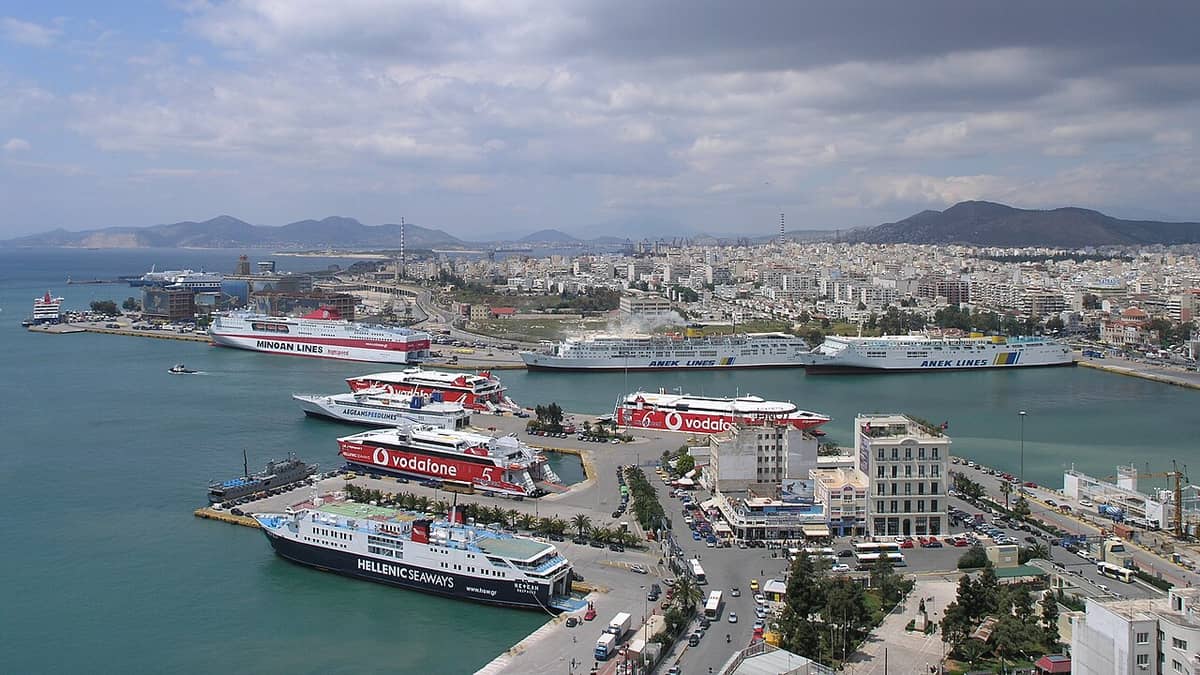
A rent a car Piraeus arrangement begins with a choice between the port and the airport. Piraeus sits within the Athens urban area on the Saronic Gulf, while Athens International Airport is in Spata, Attica. The two locations serve different parts of a mainland arrival. A pickup at the port places the vehicle beside ferry activity. An airport pickup places it beside the road network that reaches the wider Athens area and its coastal roads.
RAC SA rents cars at Piraeus port and Athens International Airport, and its rental work covers more than 15 years of experience. Those two locations make the plan itself central rather than an afterthought. A traveller arriving by air can collect a vehicle before entering the motorway system of Attica. A traveller already near the harbour can collect a vehicle close to the ferry departure area and prepare for the boarding of the vehicle at the port.
The port and the airport form two practical starting points for a journey that has both a road stage and a sea stage. A rent a car Piraeus pickup does not replace the ferry, because the ferry carries the vehicle to Adamantas. The car is useful for the route through Attica, for the chosen port area, and for the island road network once the crossing ends. The island stage begins at Adamantas, where the main road climbs toward the plateau.
Planning works best when the road stage, the port stage and the island stage stay separate in the mind. Attiki Odos connects the airport with the metropolitan road system, while Piraeus is the chief sea port of Athens. On Milos, the road from Adamantas reaches Plaka, Pollonia and the southern coast. The same journey therefore joins airport or port access, ferry boarding, harbour arrival and local island travel without treating these places as one single location.
- Pickup point: Piraeus port and Athens International Airport are named rental locations.
- Mainland setting: A rent a car Piraeus pickup lies within the Athens urban area.
- Airport setting: Athens International Airport stands in Spata, Attica.
- Island arrival: Adamantas is the harbour town of Milos.
- Experience: The rental work covers more than 15 years.
A rent a car Piraeus plan is clearest when each handover has a place: collection on the mainland, boarding at the port, and road departure after arrival in Adamantas. That sequence keeps expectations practical. Piraeus is a working port, Attiki Odos is a toll motorway system, and Milos has paved roads and dirt tracks. Each stage calls for attention to place names, road signs and the vehicle used.

What does rent a car Piraeus reveal about the port of Piraeus?
A rent a car Piraeus pickup stands beside the largest port in Greece and the chief sea port of Athens. The Port of Piraeus lies on the Saronic Gulf and serves as a major passenger gateway for the Aegean islands.
The Port of Piraeus is the chief sea port of Athens and the largest port in Greece. Its position on the Saronic Gulf places it on the western coast of the Aegean Sea. That setting explains why the port serves as a starting point for ferry movement toward the islands. A rent a car Piraeus collection belongs to a broad transport landscape rather than a small harbour, with passenger areas, vehicle traffic and separate gates forming the port environment.
Piraeus is a port city within the Athens urban area and lies eight kilometres south-west of Athens city centre. The port reaches back to ancient Athens, when it was developed as the city’s new harbour, and the Long Walls once fortified the route from the settlement to the port. Today the passenger section handles ferry traffic mainly toward the Aegean islands. That relationship matters for Milos travel, because the sea route starts at a mainland port.
The passenger station of the port occupies the historical part of the harbour and serves traffic mainly to the Aegean islands. Twelve gates are assigned by use and destination, with gates E1 to E10 for coastal shipping and gates E11 and E12 for cruise traffic. Three covered passenger waiting stations and an internal bus route are also part of the passenger setting. These details show why a traveller treats the port as an organised network of distinct areas.
A rent a car Piraeus plan therefore needs a clear separation between the city, the road approach and the ferry area. The port extends beyond the historic harbour and the modern municipality, and it includes areas around Drapetsona, Keratsini and Perama. The passenger section holds one defined part of that wider port area. Knowing the departure gate before road travel begins keeps the mainland journey focused on the ferry stage rather than on the whole port complex.
- Port role: Piraeus is the chief sea port of Athens.
- National rank: The port is the largest in Greece.
- Waterfront: The Port of Piraeus stands on the Saronic Gulf.
- Island traffic: Passenger ferries serve mainly the Aegean islands.
- Port gates: A rent a car Piraeus arrival uses gates assigned by destination.
The scale of Piraeus gives the vehicle stage a clear purpose. The port is the mainland gateway where road access meets the island network. A rental car supports the journey to the correct port area, the ferry provides the sea stage, and Adamantas provides the island arrival. Keeping those roles separate helps travellers read the route from Athens, through Piraeus, and on toward Milos.
How does rent a car Piraeus connect the airport with the port?
A rent a car Piraeus route from Athens International Airport uses the motorway network of Attica. The airport is accessible by the Attiki Odos toll highway, and the A6 motorway forms part of the outer beltway system between Elefsina and the airport.
A rent a car Piraeus road plan starts at Athens International Airport, which lies between Markopoulo, Koropi, Spata and Loutsa. The airport serves Athens and the region of Attica and is accessible by the Attiki Odos toll highway from central and northern Athens. Its road connections also include Varis-Koropiou Avenue from the west, Laurio Avenue from the south, and Spata-Loutsa Avenue from the east. These routes place the airport inside a broad Attica road setting.
Attiki Odos is a toll motorway system that forms the outer beltways of the Greater Athens metropolitan area. Its total motorway length is 70 kilometres. The A6 runs from Elefsina to Athens International Airport, while the A64 runs from Koropi to the airport. A rent a car Piraeus journey uses this network as a framework for leaving the airport area and approaching the Athens side of the mainland by road, rather than as a description of every turn.
The system includes the A62, the Ymittos Ring, between Katechaki Avenue and Pallini; the A621 between Agia Paraskevi and Doukissis Plakentias; and the A65, the Aigaleo Ring, between Skaramagas and Ano Liosia. These links show how the network spreads across Attica. The airport occupies the eastern side, while Piraeus lies beside the Saronic Gulf in the south-western part of Greater Athens. Construction of the A6 began in 1996, and part of it opened in 2001 with the airport.
Road planning benefits when the airport and the port are read as separate anchor points joined through metropolitan infrastructure. A rent a car Piraeus pickup at the airport begins in Spata, while the ferry departure lies in a port city inside the urban area of Athens. Motorway signs, junction directions and the road category shown on a map each help to establish the route. The character of the route then changes near Piraeus, where city streets and port access replace the airport approach.
- Airport town: Athens International Airport stands in Spata, Attica.
- Airport access: Attiki Odos reaches the airport from central and northern Athens.
- Main line: The A6 runs from Elefsina to the airport.
- Airport branch: The A64 runs from Koropi to the airport.
- Network role: A rent a car Piraeus route uses the Attica outer beltways.
The road stage from airport to port is an Attica journey and not an island route. Its landmarks are airport access, motorway names, junction signs and the change from metropolitan roads to the Piraeus waterfront. The ferry marks the next transport mode once the road stage ends. This division lets travellers prepare documents, luggage and vehicle arrangements for the correct stage, then reach the port with the road plan already settled.
What does rent a car Piraeus mean for driving in Greece?
A rent a car Piraeus driver in Greece travels on the right-hand side of the road. Road signs follow European conventions, and information signs use the Greek alphabet together with Latin characters for place names, while danger, order and information signs each keep their own shape.
Greece uses right-hand traffic, and the traffic code switched traffic officially to the right in 1926. This is the first practical point for a visitor who takes a vehicle from an airport or a port. The position of lanes, turns, junctions and parking areas follows that system. A rent a car Piraeus driver meets city traffic, motorway sections and port approaches in the same national traffic direction. Attention to the road side before leaving a collection point sets the rhythm of the mainland journey.
Road signs in Greece follow European conventions for shape and colour. Danger signs are triangular with a red border. Mandatory instructions are almost all circular, with white on blue, while prohibitions are black on white with a red border. Information signs are rectangular. Signs that carry temporary regulations have a bright orange background. This visual system gives an immediate layer of meaning even when a destination name is unfamiliar or appears in a different alphabet.
Greek standard ELOT-743/87 covers the conversion of the Greek alphabet into Latin characters for information signs. A rent a car Piraeus route therefore benefits when a map spelling matches the Latin-character form shown on a sign. The Greek spelling keeps its value on local signs, but the Latin form supports recognition of names such as Piraeus, Athens, Elefsina, Koropi and Spata. Reading road signs is therefore a task of matching two alphabets as well as of following shapes and colours.
Greek driving licences are required for every type of motorised vehicle, and the licence is proof of permission to operate a vehicle category. The system has separate categories for cars, mopeds and motorcycles. Drivers from outside the European Union hold an International Driving Permit, except where a mutual recognition agreement applies. A traveller needs to settle the licence position before any collection, because the document must cover the vehicle that is actually driven on Greek roads.
- Traffic side: Greece uses right-hand traffic.
- Warning signs: Danger signs are triangular with red borders.
- Mandatory signs: Mandatory instructions are mainly white on blue circles.
- Information signs: Information signs are rectangular and use pictograms.
- Place names: A rent a car Piraeus route matches Greek and Latin spellings.
A rent a car Piraeus driver gains confidence by separating the meaning of a sign from the spelling of a place name. Shape and colour state the sign category first, while the Greek and Latin forms identify the named place. This method works on Attiki Odos, on city approaches and on island roads after the ferry. Licence category carries equal weight.
How does rent a car Piraeus compare a car with a moto?
A rent a car Piraeus decision differs from moto rental because cars, mopeds and motorcycles each require the correct licence category. Greece requires a driving licence for every motorised vehicle, with separate categories and age thresholds for cars and two-wheel machines.
A rent a car Piraeus choice begins with the intended road surface, the passenger group and the luggage, and it then turns to licence eligibility. Category B covers cars with a maximum gross weight of 3,500 kilograms and up to eight passengers apart from the driver, and the minimum age for that category is 18. This category differs from a two-wheel licence, and it does not describe any moped, scooter or motorcycle class that appears on Greek roads.
Greek categories identify two-wheel vehicles by engine capacity and power. The minimum age is 16 for mopeds and low-power motorcycles up to 50cc. Category A1 covers vehicles up to 125cc from the age of 18. Category A2 covers motorcycles and scooters up to 35 kW or 400cc from the age of 20. Category A covers unlimited power motorcycles from the age of 24, or from the age of 22 for a holder who has held an A2 licence for two years.
These distinctions make vehicle selection a document check as well as a matter of style. A moped, a scooter and a motorcycle are all motorised vehicles, so each calls for the relevant entitlement. On Milos, paved roads join Adamantas with the plateau villages, the east and Pollonia, while the west holds a large dirt-road network. A rent a car Piraeus traveller needs to connect the vehicle category, the stated licence and the road type before deciding which form of transport fits the plan.
Helmet use adds a protective element to two-wheel travel. Motorcycle helmets reduce injuries and fatalities in motorcycle accidents, and European countries apply the United Nations ECE 22.06 standard for them. Greek roads include motorway, urban and island settings with very different traffic conditions. A rider and any passenger need a helmet intended for motorcycle use as well as the correct category of licence. A car avoids the two-wheel balance and helmet questions but brings different demands for space and parking.
- Car class: Category B covers cars up to 3,500 kilograms.
- Moped class: Low-power mopeds up to 50cc start at the age of 16.
- A1 licence: A1 covers vehicles up to 125cc from the age of 18.
- A2 licence: A2 covers scooters up to 35 kW or 400cc.
- Helmet role: A rent a car Piraeus plan for two wheels includes a helmet.
The car-or-moto choice is strongest when it begins with the legal category, the road surface and the practical needs of the group. A rent a car Piraeus plan for a vehicle ferry also needs to match the booked vehicle to the relevant travel stage. On Milos, paved roads reach the principal settlements, while dirt tracks have a different character and need a careful choice.
Where can rent a car Piraeus support a day drive to Cape Sounion?
A rent a car Piraeus day drive can follow the Attica coast to Cape Sounion, the southernmost point of the peninsula. Cape Sounion is known for the Temple of Poseidon, whose remains stand on a headland surrounded by the Aegean Sea.
A rent a car Piraeus itinerary can include the Attica coast before the ferry stage. Cape Sounion is the promontory at the southernmost tip of the Attica peninsula and forms part of the municipality of Lavreotiki in East Attica. It lies 69.5 kilometres south-east of Athens and eight kilometres south of Lavrio. These positions set the cape apart from Piraeus and show the different sides of the Attica peninsula that mainland roads reach on a day drive.
The Temple of Poseidon makes Cape Sounion one of the major monuments of the Golden Age of Athens. Its remains stand on the headland with the Aegean Sea on three sides. The temple was built around 440 BC, after an earlier temple on the same site was destroyed in 480 BC. A coastal visit therefore joins a road journey to a place whose position has long been tied to sea routes and to the southern edge of Attica.
Sounion also holds archaeological evidence that reaches back to 700 BC. The site was fortified in 413 BCE during the Peloponnesian War, with the purpose of protecting the passage of grain ships to Athens. The earliest literary reference to Sounion appears in the Odyssey, where the helmsman of a Spartan king dies while rounding the cape. A rent a car Piraeus traveller on mainland roads therefore meets ancient history on the coast as well as modern port activity.
A day drive needs to stay distinct from the ferry plan. The Cape Sounion route lies on the Attica peninsula, while the ferry route begins at Piraeus and ends at Milos. The airport also has road access from Laurio Avenue, which places the southern Attica road system near the wider network. Reading the day drive as a separate mainland excursion keeps the port departure and the island arrival free from unnecessary assumptions about the route.
- Cape setting: Cape Sounion is the southernmost promontory of Attica.
- Municipality: The cape belongs to Lavreotiki in East Attica.
- Monument: The Temple of Poseidon stands on the headland.
- Sea setting: The Aegean Sea surrounds the headland on three sides.
- Nearby town: A rent a car Piraeus day drive reaches Lavrio, eight kilometres north.
A rent a car Piraeus day drive has value when it respects the map. Piraeus sits beside the Saronic Gulf, Cape Sounion marks the southern edge of Attica, the airport stands in Spata, and the ferry route leads beyond the mainland to Milos. The car supports movement on land, while the temple and the coast give the mainland stage a focus before island travel begins.


How does rent a car Piraeus continue on the ferry to Milos?
A rent a car Piraeus journey continues by sea from the mainland port to Adamantas, the harbour town of Milos. Adamantas is the main port of the island, and it is the place where vehicle travel returns from the water to island roads.
After the road approach, a rent a car Piraeus journey changes to a sea crossing. Piraeus is the port of Athens, and the ferry route to Milos runs through the western Cyclades, with boats that call at Kythnos, Serifos and Sifnos before Milos. The crossing ends at Adamantas, the main port of the island. This step links the mainland vehicle stage to an island setting where the road network of Milos begins beside the harbour.
Adamantas is the harbour town of Milos and the cultural and commercial centre of the island. It had a population of 1,268 at the 2021 census, and the settlement was founded by Cretan refugees in 1841. It stands below the plateau where Plaka, the chief town, and Kastro rise above the harbour. That arrangement helps to explain why the first road movements after ferry arrival lead away from the waterfront toward the higher villages of the plateau.
The main port is part of a wider island geography. Milos lies at the south-western end of the Cyclades and has a horseshoe form around a large gulf. Its natural harbour is the hollow of the principal crater. A rent a car Piraeus vehicle reaches this harbour landscape after the sea stage and then returns to roads that lead toward villages, coastlines and the north-east. The ferry arrival is therefore a passage from a port complex to a volcanic island.
Vehicle boarding and island departure are different moments in the same journey. The ferry carries the vehicle across the Aegean, while Adamantas provides the point at which driving resumes. The port gives access to the main road toward Plaka, and paved routes also reach the east and Pollonia. Ferry travel does not erase the earlier road plan; it interrupts that plan and then returns it to a smaller network with different surfaces, village layouts and coastal choices.
- Mainland departure: The Milos ferry route begins at Piraeus.
- Island arrival: Adamantas is the main port of Milos.
- Harbour town: Adamantas is the commercial centre of the island.
- Island group: Milos lies at the south-western end of the Cyclades.
- Road return: A rent a car Piraeus vehicle meets the road to Plaka at the port.
A rent a car Piraeus ferry stage works best when it is treated as a vehicle transfer between two road networks. The first network is the mainland system around Athens, the airport and Piraeus. The second is Milos, where Adamantas is the port anchor and Plaka, Pollonia and the south become later destinations. The ferry joins those systems physically, while their roads stay distinct.
How does rent a car Piraeus travel continue across Milos?
A rent a car Piraeus journey continues on Milos after the ferry, with paved roads that lead from Adamantas toward Plaka, the east and Pollonia, and with dirt tracks that open the southern and western parts of the island.
Adamantas is the road starting point after the ferry. The main road to Plaka leaves the port to the north and continues north-west toward Tripiti, and Plaka is the chief town of Milos on the plateau above the harbour. A rent a car Piraeus vehicle therefore moves from sea level to the central villages soon after arrival. The route gives a simple first orientation: port below, plateau above, and northern settlements beyond the main road.
The north-east network reaches Pollonia, the second harbour of Milos. Pollonia stands at the north-eastern tip of the island, almost 10 kilometres from Adamantas and 14 kilometres from Plaka. An asphalt road runs south and south-east from Pollonia toward Voudia. These paved connections make the north-east a named road destination after ferry arrival. The village has a sandy main beach, and a small boat link joins Pollonia with Kimolos across the nearby channel of water.
The south also has paved access from Adamantas. Provatas lies seven kilometres from the port on a paved road, while Papikinou lies one kilometre east of Adamantas. A coastal road leaves the port to the east and passes the old salt works of Alykes just before the airport. A rent a car Piraeus route across Milos can therefore begin with short stated links from the harbour and then expand toward the south and the east through the paved part of the network.
The west has another road character. No village stands in the western half of the island, and the dirt-road network there is the largest in the Cyclades. From Achivadolimni, the main road meets the monastery of Agia Marina, and crossroads beyond it lead toward Agkathia and Ammoudaraki. Dirt roads need to be read as a separate part of the island network rather than as extensions of the paved routes from Adamantas to Plaka, Pollonia or Provatas.
- Plateau road: The main road runs north from Adamantas to Plaka.
- North-east road: Pollonia lies almost 10 kilometres from Adamantas.
- South route: Provatas lies seven kilometres from Adamantas on paved road.
- Eastern coast: Papikinou lies one kilometre east of Adamantas.
- Western tracks: A rent a car Piraeus vehicle meets dirt roads in the west.
For a rent a car Piraeus traveller, Milos is not one continuous road type. Adamantas, Plaka and Pollonia are joined by paved routes, the south has its own coastal roads, and the west turns toward dirt tracks and land without villages. The Milos road map places these routes within the horseshoe form of the island. Island details also sit on the Milos transport page and the Adamantas page.

Which rent a car Piraeus questions matter before the journey?
A rent a car Piraeus plan raises questions about collection, mainland roads, the ferry transfer, licence categories and island routes. Each answer below gives the airport, Piraeus, Cape Sounion and Milos their own separate place in the journey.
Where does rent a car Piraeus collection take place?
A rent a car Piraeus collection takes place at Piraeus port or at Athens International Airport, because both places are named as rental locations. The choice depends on the point at which the mainland journey begins. Piraeus places collection beside ferry activity, while the airport places collection in Spata beside Attiki Odos and other Attica road connections.
Can rent a car Piraeus begin at Athens International Airport?
A rent a car Piraeus journey can begin at Athens International Airport, which is named as a rental location. The airport stands in Spata, Attica, and Attiki Odos provides road access from central and northern Athens. From there, the route uses the metropolitan road network before it reaches Piraeus, the chief sea port of Athens on the Saronic Gulf.
Does rent a car Piraeus involve driving on the left?
A rent a car Piraeus journey takes place on the right, because Greece uses right-hand traffic. This affects lane position, turns and approaches at junctions, city streets and port areas. Danger signs are triangular with red borders, mandatory instructions are mainly circular, and information signs are rectangular. Names on information signs appear in Greek and Latin characters.
Which licence fits rent a car Piraeus and a scooter?
A rent a car Piraeus journey needs the licence category that matches the vehicle. Category B covers cars, A1 covers vehicles up to 125cc, and A2 covers scooters and motorcycles up to 35 kW or 400cc. Greece requires a licence for every motorised vehicle, and drivers from outside the European Union hold an International Driving Permit.
Can rent a car Piraeus include a Cape Sounion drive?
A rent a car Piraeus plan can include a mainland drive to Cape Sounion before the ferry stage. Cape Sounion lies at the southernmost tip of the Attica peninsula, 69.5 kilometres south-east of Athens, and the Temple of Poseidon stands on its headland, surrounded on three sides by the Aegean Sea. The site stays separate from the port departure.
How does rent a car Piraeus continue after the ferry?
A rent a car Piraeus journey continues at Adamantas after the sea crossing, because Adamantas is the main port of Milos. The main road from the port runs north toward Plaka and north-west toward Tripiti, and paved roads reach the east and Pollonia. The vehicle returns from the ferry to an island network with different surfaces.
Can rent a car Piraeus reach Pollonia on Milos?
A rent a car Piraeus journey can continue from Adamantas to Pollonia on the paved island network. Pollonia lies almost 10 kilometres from Adamantas and 14 kilometres from Plaka. It stands at the north-eastern tip of Milos and forms the second harbour of the island. From Pollonia, an asphalt road heads south and south-east toward Voudia.
What road type follows rent a car Piraeus on western Milos?
A rent a car Piraeus journey meets a different road setting in western Milos. The western half has no village and holds the largest dirt-road network in the Cyclades. Paved routes connect Adamantas with Plaka, the east, Pollonia and the south, while western tracks branch from the main road near Achivadolimni and reach Agkathia and Ammoudaraki.