Sweets in Triovasalos, Milos: see our Sweets in Milos section for the island.
This page covers sweets in Triovasalos, the sweets of a working hill village beside Plaka on the island of Milos. The village stands among the banks, coffee houses and bakeries of the commercial core of the island. Two sections follow: the first places a sweet inside a visit, and the second turns to the sesame bread ring and the rusk.
Sesame rings and rusks leave the village oven in a clear order: the ring fresh in the morning, and the rusk dried hard to keep for a long time. The closing questions answer six points about sweets in Triovasalos, from the name of the ring to the way the rusk is baked twice, and from the seeds to the Italian cousin.
What are sweets in Triovasalos at a glance?
Sweets in Triovasalos are the sweets of a working hill village beside Plaka. Bakeries, coffee houses and shops serve residents and visitors alike, so a sweet fits between errands, with a coffee, and in the honey served on the pies of Milos.
Triovasalos and Pera Triovasalos occupy two neighbouring hills close to Plaka, and together they form the commercial and daily core of Milos. Banks, public services, coffee houses, shops and small businesses fill the pair, and both villages keep the traditional Cycladic character of the island. Sweets in Triovasalos therefore belong to a village of daily work, where the shops stand along a pedestrian street and the bakeries of Pera Triovasalos serve residents and visitors alike.
Milos cooking is closely linked to nature and to the self-sufficiency of its inhabitants, and the knowledge behind it passes from one generation to the next. The sweets follow the same rule. Koufeta, small almond sweets under icing sugar, watermelon pie, pasteli, xerotigana and loukoumades, which the island calls kourtalides, rest on almonds, watermelon, sesame, honey and dough. The island table feeds the sweets in Triovasalos, and the village oven adds the bread rings and rusks of the next section.
A sweet fits a visit at four points. Coffee houses stand beside the banks and public services of the village centre, so a coffee and a small sweet fill the pause between errands. The sesame ring is eaten mostly in the morning, and the hot pie with honey belongs at the table. The rusk is baked twice until it is hard, so it keeps for a long time and travels on with the visitor to the rest of the island.
- Position: Triovasalos and Pera Triovasalos stand on two neighbouring hills close to Plaka.
- Core: The two villages form the commercial and daily core of Milos.
- Character: Both villages keep the traditional Cycladic character of the island.
- Pie: The small fried pie of Milos, the pitaraki, is served hot with honey.
- Honey: Small units on the island produce thyme honey and herbs, among them oregano and sage.
At a glance, sweets in Triovasalos are the sweets of a working village: a coffee between errands, honey on a hot pie and the bakes of the village oven. The page on sweets across Milos sets the island list out in full. The next section follows the sesame ring and the rusk from the oven to the table, one bake at a time.

Which sesame rings and rusks belong to sweets in Triovasalos?
Sweets in Triovasalos include two bakes of the village oven: koulouri, the sesame bread ring known in Byzantine Greek as kollikion, and paximadi, the twice-baked rusk that dries hard and keeps for a long time. Cinnamon, cloves and orange zest can flavour the rusk.
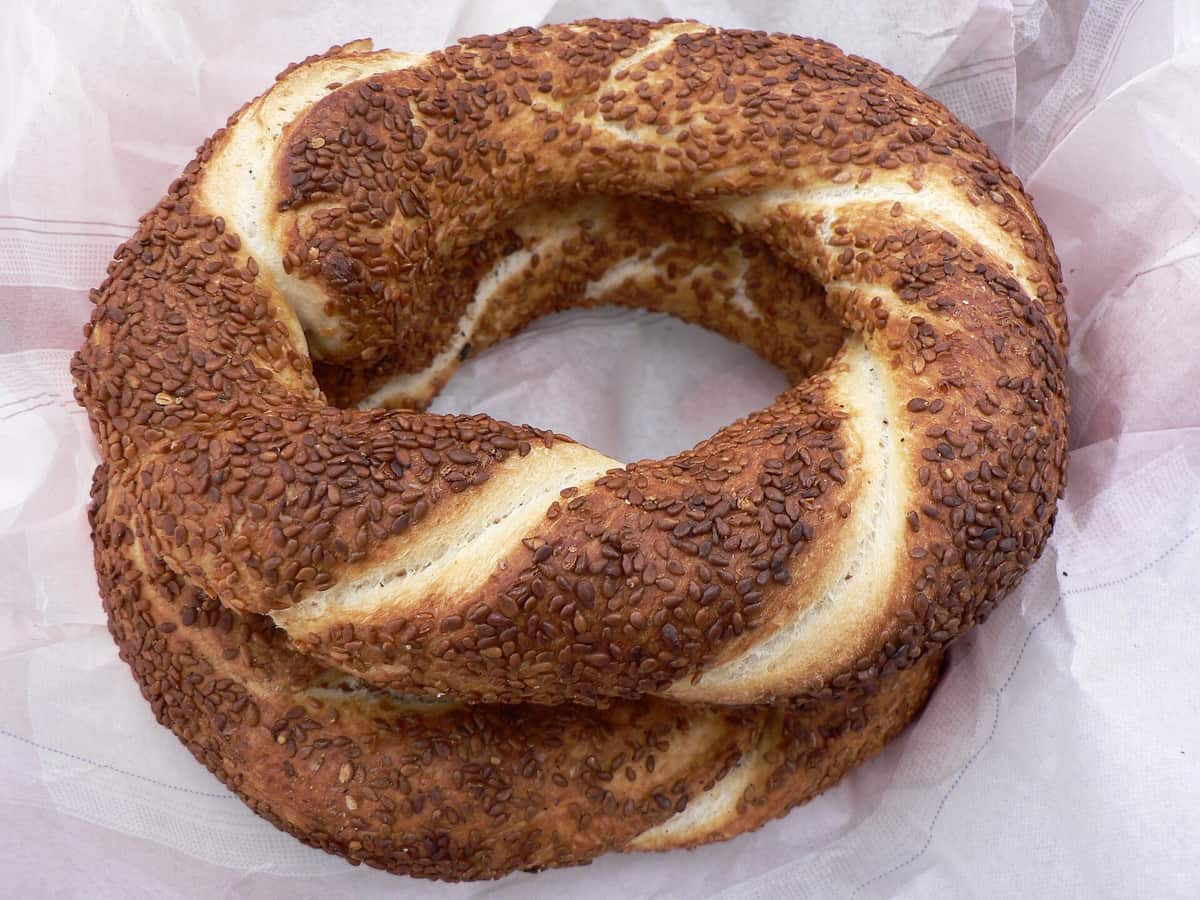
The ring has a long history under a Byzantine name. Byzantine authors call it boukellon or kollikion and describe a ring-shaped bread that was popular among the army. The kollikion is first mentioned in the ninth century as a small ring of bread sold in Constantinople. Bakers in Istanbul have produced the ring since 1525, and the city counted seventy ring bakeries in the 1630s. The modern Greek koulouri carries that history into the bakery today, and the sweets in Triovasalos begin with this plain ring of dough and seeds.
In Greece the koulouri is a wheel of bread coated in sesame. Street sellers, called koulourtzides or koulourades, sell it, and people eat it mostly in the morning. The size varies: the plain ring has a small diameter, the large ring is wider and thicker, and the double ring braids two cylinders of dough together. The crust is either dry, crisp and well baked, or soft, and each form has its own place among the sweets in Triovasalos.
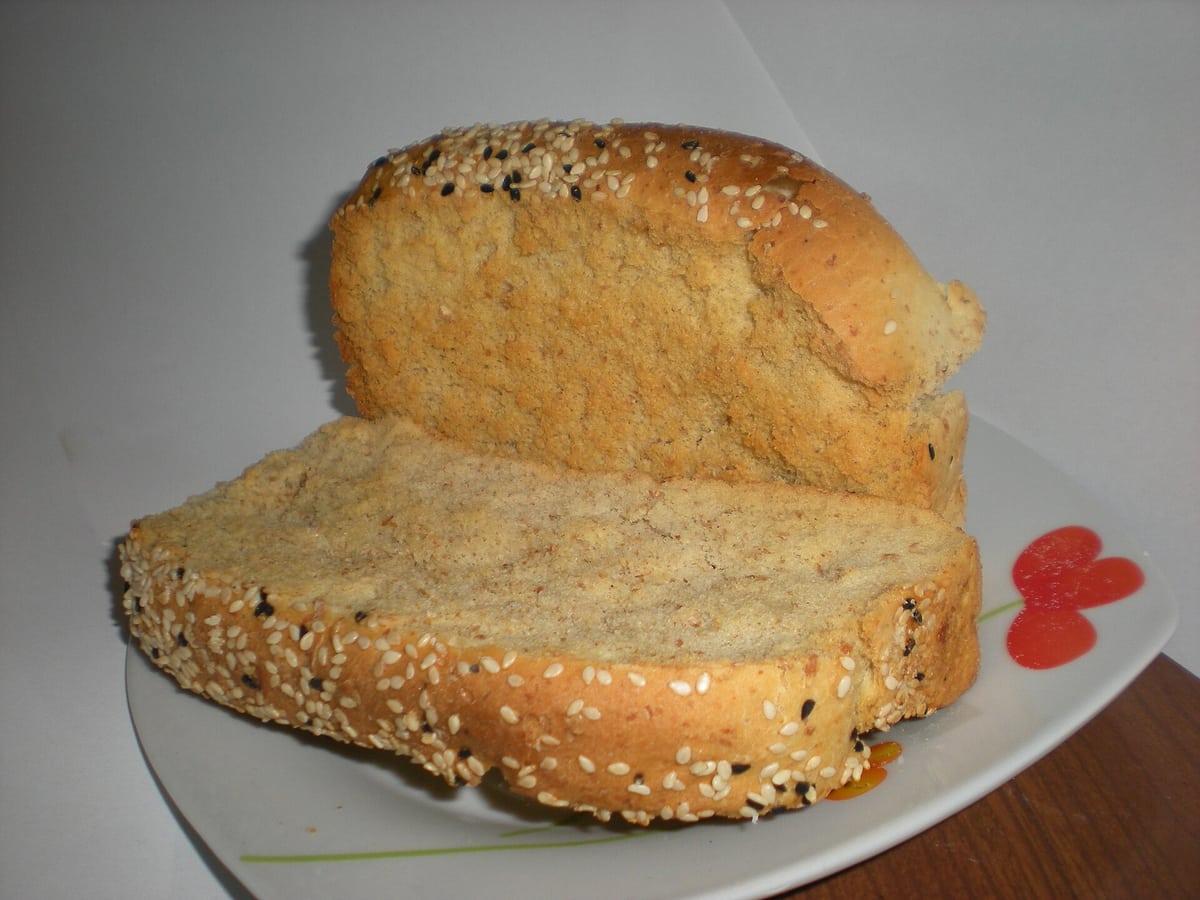
Paximadi is bread baked twice so that it loses its moisture completely. The result is hard and keeps for a long time. Paximathia is prepared with whole wheat, chickpea or barley flour, and eggs, vegetable oil, cinnamon, cloves and orange zest can join the dough. Today bakers leave the loaves overnight in an oven that is switched off, and the leftover heat dries them without making them brittle enough to crumble. Bakeries across Greece sell paximathia, so the rusk belongs to the trade of any village oven.
- Eptazymo: A paximadi made with chickpeas carries the name eptazymo.
- Cretan ring: In Crete a ring-shaped paximadi called koulouri is served dried, with olive oil, oregano and grated tomato.
- Farmers: Farmers ate paximathia in the fields after soaking it in water and olive oil.
- Cake rusk: Other cultures make the rusk from cake instead of bread, and this version is sometimes called cake rusk.
- Marmalade: Paximathia is served as a breakfast food with marmalade or cheese in Greece.
The ring and the rusk are the two bakes that tie the village oven to the Greek table: one fresh, soft or crisp, in the morning, the other dried hard and kept. Sweets in Triovasalos also have a savoury twin, the pies and breads on the page about food in Triovasalos. The questions below take each bake in turn.
What do travellers ask about sweets in Triovasalos?
Sweets in Triovasalos raise six questions about the sesame ring and the rusk: the names, the seeds, the freshness, the twice-baked method, the Italian cousin and the origin of the word. The six answers below explain each point in turn.
What names does the sesame ring carry among sweets in Triovasalos?
Other names for the ring rest on the Byzantine Greek kollikion, the ancient Greek kollyra and the modern Greek koulouri, and in Latin the ring is arculata. The Turkish name, simit, comes from the Arabic samid, meaning white bread or fine flour. English speakers call the ring a Turkish bagel, rosca or koulouri.
Which seeds and syrup finish the ring among sweets in Triovasalos?
Sesame seeds form the usual crust of the ring, and poppy, flax or sunflower seeds appear less commonly. Simit is dipped in a syrup of water and molasses, while similar rings in Poland and Russia are poached briefly in boiling water before baking, in the manner of bagels. The size, crunch and chewiness of the ring vary slightly by region.
Why do fresh rings taste best among sweets in Triovasalos?
The ring has a large surface, so it loses freshness faster than a loaf of bread, and fresh rings taste especially good. The ring is easy to eat, and street sellers sell it. Thessaloniki has won great fame for its rings, as it has for its bougatsa pastries, and the city gives its name to the koulouria of Thessaloniki.
How is the rusk baked twice for sweets in Triovasalos?
Traditional bakers baked the loaves in outdoor ovens about every ten to fifteen days. They then sliced the bread thickly into wedges and returned it to the ovens to dry, and the drying preserved it. The rusk was a staple food of Crete, and the twice-baked method gave Greek farmers a bread that lasted.
Which Italian biscuit resembles the rusk among sweets in Triovasalos?
Biscotti are Italian almond biscuits from Prato in Tuscany, baked twice into an oblong shape that is dry and crunchy. The name comes from the Medieval Latin biscoctus, meaning twice-cooked. The biscuits can be dipped in a drink, traditionally Vin Santo, and Greek paximathia are described as similar to biscotti.
Where does the name paximadi come from among sweets in Triovasalos?
The name paximathia comes from the Greek term paximadion. The term possibly derives from a first-century Greek author of a comprehensive cookbook. The word first appears in a physician’s recipe for laxative biscuits, so the name began with a biscuit. Farmers, the Byzantine military and thrifty priests traditionally ate the rusk.