
A Milos wine tasting takes visitors into the vineyards and a cellar of the island of Milos. There they taste local wine, served with small bites. The grapes grow on volcanic ground, and local wines reflect that soil. This page explains the tasting and the land behind it.
Wine sits beside the other island drinks. The page on coffee and drinks in Milos covers those in full. The first section below defines a Milos wine tasting. The second section looks at the soil, sun and wind that shape the vines. Both sections close with a short list of key points.
What is a Milos wine tasting at a glance?
A Milos wine tasting is a visit to vineyards and a cellar on the island. Visitors taste local wine with small bites. The grapes grow on volcanic ground. A tasting links each glass to the land it came from.
A vineyard is a field of grape vines. A cellar is a room where wine is made and stored. At a Milos wine tasting, both places come together in one visit. Visitors meet the vines and the wine they produce, and see how the two connect.
Milos is an island of volcanic origin. It lies in the Aegean Sea, north of the Sea of Crete. It is the farthest island to the south-west in the Cyclades. So the wine at a Milos wine tasting comes from land that volcanoes shaped.
On Milos, the main crops are grapes, cotton and barley. Olive and cypress trees grow across the island too. Even so, the island is too dry for a thick cover of plants. A Milos wine tasting starts from the vine crop and the land that carries it.
Winemaking on the island has seen a revival in recent years. Local winemakers make wines that reflect the island’s volcanic soil. A Milos wine tasting puts these wines in the glass. So the soil is part of what visitors taste.
About 220 islands make up the Cyclades, a group in the Aegean Sea. Wine is one of their farm products, with fruit, wheat, olive oil and tobacco. Milos and Santorini are the two volcanic islands among them.
- Place: Vineyards and a cellar on the island make up the visit.
- Drink: Local wine, made from grapes grown on Milos, is poured.
- Food: Small bites come with the wine, so each glass has food beside it.
- Land: The island is volcanic, and its wines reflect the soil.
- Crop: Grapes are one of three main crops on the island, with cotton and barley.
A Milos wine tasting is a short lesson in land, crop and glass. The island is volcanic, grapes are a main crop, and winemaking has revived. The next section follows the vines into the ground. It shows how soil, sun and wind shape them.

How does volcanic soil shape the vines behind a Milos wine tasting?
A Milos wine tasting shows how volcanic soil, warm dry summers and wind shape a vine. The soil in the Cyclades is not very fertile, and the climate is dry and mild. Growers protect the vines, for example by training them low to the ground.
Soil is the ground that holds the roots of a vine. Volcanic soil forms from rock a volcano threw out, such as pumice and tuff. Lava flows make soil too. Perlite, a light and powdery volcanic soil type, is mined on Milos. Volcanic rock covers the largest part of the island.
Roots anchor the vine, take in water and store food. Soil sets how fast water drains and which minerals reach them. Drainage matters more than any other soil trait for vine growth. Good soil holds enough water but never leaves the roots soaked.
The soil of the Cyclades is not very fertile, apart from Naxos. Santorini is the second volcanic island in the group. Its vineyard soils are very poor and made of volcanic ash and rocks. Its growing season has low rainfall. Old vines there push roots deep into the subsoil for moisture.
Warmth and sunshine are the key factors in ripening. Hot, sunny climates ripen grapes faster, with more sugar and less acid. The climate on Milos is Mediterranean. Winters are mild and rainy, while summers are warm to hot and dry. A Milos wine tasting pours the result of that sun and soil.
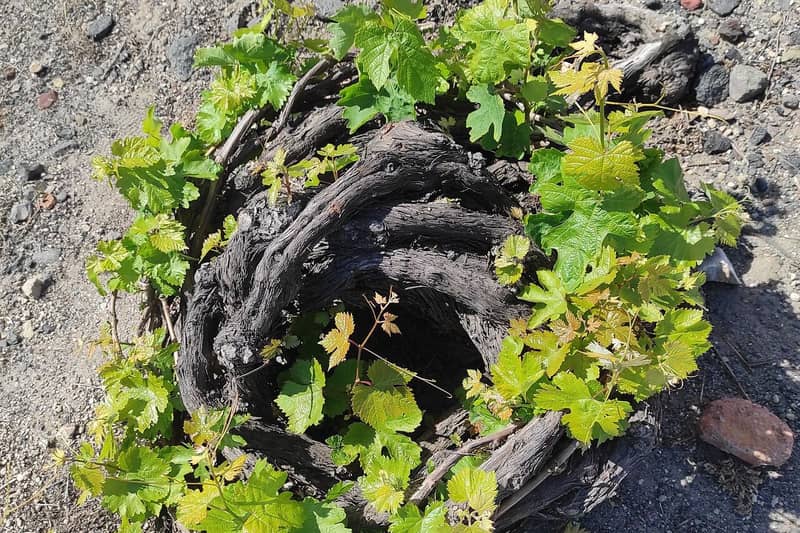
Wind is the third force. A vine in flower is very open to harm from strong wind and hail. On Santorini, sea wind can damage vines unless growers train them low to the ground. They weave each vine into a basket, with the grapes inside the ring.
- Rock: Rocks on Milos include tuff, trachyte and obsidian, all of volcanic origin.
- Warmth: Soil can store heat and pass it back up to the vine, which affects ripening.
- Night moisture: Porous subsoil on Santorini holds air humidity and gives it back to the vines at night.
- Pest: Santorini’s volcanic soil has none of the clay that the parasite phylloxera needs.
- Leaves: On a basket-trained vine, the leaves shield the grapes from harsh wind and sunlight.
Soil, sun and wind all leave a mark on the grape. A Milos wine tasting lets visitors taste that mark in the glass. Growers on Santorini show how vines can be shaped to meet these three forces. Later sections cover the grape types and the steps of a tasting.
Which grapes of the Cyclades matter for a Milos wine tasting?
A Milos wine tasting is easier to follow after meeting the main grapes of the Cyclades. Assyrtiko, Athiri and Aidani are white grapes. Mandilaria is red. Monemvasia also grows in the islands. Each grape brings its own taste, from lemon to flowers to deep colour.
Assyrtiko is a white grape from Santorini. It grows on other Aegean islands, such as Paros. The soil there is dry and rich in volcanic ash. The grape keeps its fresh, sharp bite even when very ripe. Milos is volcanic too, so Assyrtiko is a useful name at a Milos wine tasting.
Athiri is a white grape from the Aegean islands. It ripens early. Its wine is known for a lemon note, easy to spot at a Milos wine tasting. Pickers watch the date, because the acid in the grapes drops once ripeness is passed. Winemakers elsewhere in Greece blend it with Assyrtiko.
Aidani is a white grape too. It grows mainly on Santorini, but other Aegean isles have it as well. Its aroma is floral. Winemakers blend it with grapes such as Athiri to make dry wines. The name is also spelled Aidini.
Mandilaria is a red grape grown across the Greek islands. It gives wine a deep colour. The wine is rich in tannins, the dry, puckery feel that red wine leaves in the mouth. Blending with other grapes softens that feel. A red from this grape adds contrast to the whites at a Milos wine tasting.
Monemvasia is named after a port town in southern Greece. The word Malvasia comes from the Italian name of that town. The grape grows mainly in the Cyclades, including on Paros. It is the only white grape in Greece that goes into white, red and sweet wines.
- Assyrtiko: It tastes of citrus and stone, with a sharp, fresh edge.
- Athiri: It gives a lemon note and a lower acid level.
- Aidani: It adds a floral aroma to dry blends.
- Mandilaria: It brings deep colour and firm tannins.
- Monemvasia: It is a flexible grape for white, red and sweet wines.
These five names give a first map of the island grapes. Three whites lead the list, and Mandilaria brings the red. A Milos wine tasting makes more sense once the names are familiar. The next section turns from the grapes to the glass and the steps of a tasting.
How does a Milos wine tasting work, step by step?
A Milos wine tasting follows five small steps. The taster looks at the colour, swirls the glass, smells, sips, then notices the taste that lingers. The wines go from light to strong. Bread or plain water between glasses clears the mouth.
First, the taster looks at the colour. A white background shows the colour best. The glass is held at a slant. Colour gives clues about the grape and about whether the wine rested in wood. A Milos wine tasting starts with this look.
Next comes the swirl. The taster turns the glass in a gentle circle. This lets air reach the wine and frees more of its aroma. Sparkling wine is swirled lightly, so the bubbles stay. Sweet wines are denser, so they leave thick streaks, called legs, on the glass.
Then the taster smells the wine. Smell drives flavour, so this step matters as much as the sip. The sip comes next, held in the mouth for a moment. What stays on the tongue after the swallow is called the finish. The same steps repeat with each new glass at a Milos wine tasting.
The wines are poured from light to strong. The taster can guess the order from colour and smell. Deeper colour and a stronger nose point to a heavier wine. A heavy wine tasted first hides the taste of a light one. So a light white comes before a deep red at a Milos wine tasting.
Between wines, the taster clears the mouth. A palate-cleanser is a bite or a sip that clears old taste from the tongue. Bread is a traditional choice. Plain water does the same job. After that, the next wine tastes clean and true.
- Glass: A glass that is wide at the bottom and narrow at the top holds the aroma.
- Flight: A flight is a set of wines poured side by side for comparison.
- Blind: A blind tasting hides the label, so the name cannot sway the taster.
- Notes: A tasting note is a short written record of aroma, taste and balance.
- Chill: A cooler wine shows more acidity, and a warmer wine shows more aroma.
A Milos wine tasting is a calm routine of looking, smelling and sipping. Each step adds one clue about the wine. The order and the pauses matter more than any special skill. A plain glass, a little patience and the five steps are enough to begin.
What is served alongside a Milos wine tasting?
A Milos wine tasting pairs the glass with small plates of local cheese, olives and bread. Island products such as capers, tomato paste and thyme honey add more flavours. Small plates keep the wine in focus and rest the mouth between sips.
Cheese is the classic partner for wine. Two island cheeses show the range: spicy arseniko and fresh, mildly tangy xino tyri. Soft fresh cheese suits dry whites, light reds and rosés. Hard, aged cheese softens the dry grip of tannins in a red. Cheese bridges the white and red glasses at a Milos wine tasting.
Olives and bread come next. Greek cooking rests on three old staples: wheat, olive oil and wine. Bread, olives and a glass of wine repeat that trio at a Milos wine tasting. Olive trees grow across Milos. A sourdough loaf called fouskoma is baked there in a wood-fired oven.
Other island products add small, strong flavours. The tomato paste of Milos comes from local tomatoes and is sometimes served with a little olive oil. Pitarakia are small fried pies with a cheese or herb filling, and honey goes with them hot. Small producers also make herbs, such as thyme, oregano and sage.
Small plates suit a Milos wine tasting for a simple reason. Long ago, people paired local dishes with local wines, without a rulebook. The main idea that stayed is weight. Light wines go with light bites, and strong wines go with rich ones. Acid in a white cuts through salty or oily food.
- Cheese: Soft cheese goes with whites and rosés, and hard cheese goes with reds.
- Olives: The fruit is widely eaten in Greece, and its oil adds taste to the cooking.
- Bread: Wheat bread is found everywhere in Greece, and barley is used for rusks.
- Capers: Hand-picked and sun-dried, then kept in salt or vinegar, they add a sharp note.
- Honey: Thyme honey, made on the island, adds a sweet touch beside cheese.
A full meal after a Milos wine tasting is a separate plan. Readers who want one can find food in Plaka on its own page. The main town of the island is Plaka. Small plates stay the right size for the glass. They support the wine and never crowd it.
Where does the story of a Milos wine tasting begin?
A Milos wine tasting joins one of the oldest wine stories in the world. Greek vineyards are thousands of years old. Vine growing spread across the Aegean in ancient times. Milos itself has revived its own wine making in recent years.
The roots of a Milos wine tasting reach back to Greek wine about 6,500 years old. At first, each family or village made wine only for its own use. Later, trade in wine grew, and shipments crossed the whole Mediterranean.
Greek settlers planted vines in Italy, Sicily, southern France and Spain. Under the Roman Empire, Greek wine held a high name in Italy. In ancient Greece itself, sweet and fragrant wine was the common style, though drier wines were also made.
Crete holds one of the earliest known wine presses, found at Palekastro. The Mycenaeans, an early Greek people, are believed to have spread vines from Crete across the Aegean. Their written tablets list vineyards and wine merchants, and refer to Dionysus, the god of wine.
The Cyclades are the island group that includes Milos and Santorini. Island trade moved wine from Santorini, wood from Folegandros, wheat from Sikinos and salt from Milos. Milos also sent its millstones all the way to France, which shows how far island goods travelled.
Grapes are among the main crops of Milos, and wine making there has found new life lately. Local makers shape wines that carry the mark of the volcanic ground. A Milos wine tasting therefore joins a very old Greek habit to a young local revival.
- Soil study: Theophrastus matched vines to vineyard soils in the 4th century BC.
- Jar stamps: Archaeologists found millions of jar pieces stamped by cities and Aegean islands.
- Calendar: The ancient Greek calendar followed the winemaker’s year.
- Sweet fame: Santorini wine won a name across Europe in the Middle Ages.
- Cyclades today: Wine still leaves islands such as Andros, Naxos and Santorini.
At a Milos wine tasting, that long story arrives in the glass, from ancient vines to new wines. The newest chapter belongs to the local winemakers working on the island today. Readers who want the wider past of the island can turn to the history of Milos.
What do the words on the bottle mean at a Milos wine tasting?
A Milos wine tasting becomes simpler when the Greek bottle label is clear. PDO and PGI are protected place names for wine regions. Dry, medium and sweet describe the sugar in the glass. Retsina is a Greek wine flavoured with pine resin.
A wine label is a short message about the bottle and what is in it. At a Milos wine tasting, the place name is the first thing to read. In the EU, a quality wine must name its region, and the rest is table wine.
At a Milos wine tasting, PDO on a label means protected designation of origin, written ΠΟΠ in Greek. The rules fix the growing zone, the grape mix, the winemaking methods and the lowest alcohol level. Every stage of production must happen inside the named area, from the vineyard to the finished wine.
PGI means protected geographical indication, written ΠΓΕ in Greek. It also names a place, and a quality or a good name must trace back to that area. The rule is looser: only one stage of production must happen inside the named area.
Sweetness words matter at a Milos wine tasting because they describe the sugar left in the wine. A dry wine holds 4 grams of sugar per litre or less. A sweet wine holds at least 45 grams per litre, and medium or semi-sweet wines sit between.
On a Greek label, dry, semi-sweet and sweet read ξηρός, ημίγλυκος and γλυκός. Greek law also sorts place-named wines into two groups, ΟΠΑΠ and ΟΠΕ. Below them, local wines and table wines cover larger areas and a wide range of styles.
- ΟΠΑΠ: Name of origin of superior quality, which covers dry wines.
- ΟΠΕ: Controlled name of origin, which covers sweet wines.
- Colour words: Red, white and rosé appear as ερυθρά, λευκά and ροζέ.
- Ρετσίνα: Retsina is white or rosé wine with added pine resin, made for at least 2,000 years.
- Vinsanto: A protected name for sweet Santorini wine, printed in Latin letters on the label.
At a Milos wine tasting, the label works like a small map of the bottle. The place name shows the origin, and the sugar word shows how sweet the wine will taste. The style word, such as retsina, shows what the maker added to the wine.
Which wine styles does a Milos wine tasting cover?
A Milos wine tasting rests on four basic styles of wine. They are white, rosé, red and sweet. Time on the grape skins sets the colour of the first three. Sun-dried grapes make sweet island wines, such as Vinsanto.
Colour in wine comes from the grape skins, and each style handles the skins differently. The longer the juice touches the skins, the deeper the colour. This one idea explains white, rosé and red at any Milos wine tasting, whatever the grape.
White wine at a Milos wine tasting starts from the juice alone. The juice ferments without the skins, so it gains no strong colour and no bitter tannin. Red grapes and white grapes can both make white wine, as long as the skins stay out.
Rosé starts with red grapes, just like red wine. The juice touches the skins for a short time, so the wine turns pink, not deep red. Rosé is possibly the oldest wine style, as skin contact is the simplest way to make it.
Red wine ferments together with the skins, seeds and stems in the tank. The skins give the wine its deep colour, which grows deeper with longer contact. Tannin comes from the skins too and adds a bitter note to the taste.
Sweet Vinsanto gets its sugar from the sun, not from added sugar. After harvest, the grapes dry in the sun, which removes water and raises the sugar. The dried grapes are then crushed and fermented, in the style called passito.
- Straw wine: Grapes dried off the vine concentrate their juice before pressing.
- Old roots: Hesiod and Homer already describe drying grapes on mats before pressing.
- Island fame: The Aegean islands were known for sun-dried wines in ancient times.
- Taste: Vinsanto ranges from golden-orange to dark amber, with dried apricot and golden raisin flavours.
- Balance: High acid in the grapes balances the sugar in Vinsanto.
At a Milos wine tasting, the same four styles come from two simple choices. One choice is how long the juice stays in contact with the skins. The other is whether the grapes dry in the sun before they are pressed.
How can a Milos wine tasting fit into a day on an island tour?
A Milos wine tasting fits into an island tour as a slow stop between the sights. A day can go from a village to a viewpoint, a tasting and a beach. The tasting adds a taste of the land to the views.
A Milos island tour already links villages, viewpoints and beaches by road. That page covers those stops in depth. A Milos wine tasting adds a stop of a different kind. It is about taste, not about stone and sea views.
A tasting suits the middle of the day. The morning can go to a village walk and the late afternoon to a beach. In between, a Milos wine tasting breaks up the road time. The group sits down, slows down and talks about what it has seen.
Milos summers run warm to hot, and they are dry. July’s average daytime high is 28.1 degrees Celsius, and almost no rain falls. A seated tasting gives a pause from the sun and the road. Shade and cold water matter at a Milos wine tasting in that heat.
Milos is built on volcanic ground. Wines from local makers mirror that soil. After a day on that ground, the glass shows it in a new form. Winemaking on Milos has also revived in recent years.
Tours differ, so the place of the tasting in the day differs too. A tour leader can say when the tasting comes and what comes before it. A swim fits better before a Milos wine tasting than after it.
- Village: A short walk before the tasting sets a slow pace.
- Viewpoint: A look over the land afterwards shows where the vines stand.
- Beach: A swim fits before the tasting, not after it.
- Shade: A seated stop gives relief from the sun.
- Order: The tour leader says where the tasting sits in the day.
A Milos wine tasting is a quiet stop that gives an island tour a second flavour. The sights show how the island looks. The glass shows what its soil can grow. Together they make a fuller picture of Milos than a day of views alone.

How do the seasons and the harvest shape a Milos wine tasting?
A Milos wine tasting follows the vine year. The harvest is a key step in making the wine. The Greek word for the grape harvest is trygos. In the northern half of the world, grapes are picked between August and October, earlier in warm places.
Trygos names the work of picking grapes, either to eat or to make wine. Wine grapes are picked at a chosen moment, so the date matters. Warm places reach that date first, because heat ripens the grapes faster. A Milos wine tasting shows the result of that choice.
The winemaker picks when the grapes are ripe. Ripeness is judged by sugar, acid and tannin, a compound found in the grape skins. Early winemakers simply tasted the grapes to check. Modern ones still taste them. They also read the sugar level with a tool called a refractometer.
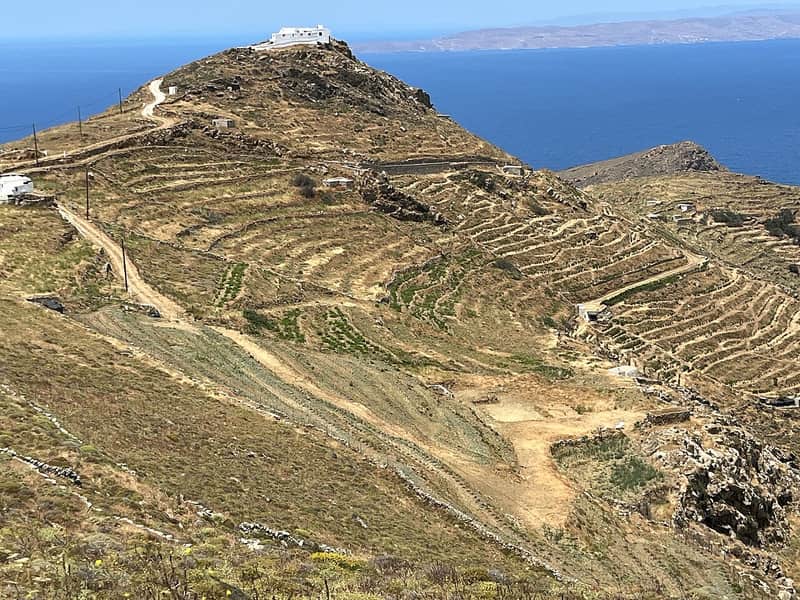
Weather can move the picking dates. Heat, rain, hail and frost can all harm the grapes. Hand picking lets a worker choose only healthy bunches and handle them gently. On steep ground, a machine can hardly run between the vines.
In spring the island is mild, and a little rain still falls. Summer is hot and dry, and the island draws its visitors then. The vines ripen their grapes in that dry heat. At the height of summer, a Milos wine tasting meets the hottest and driest weather of the year.
Autumn brings the picking and the first rain. A visit between August and October can fall in the harvest weeks. By October the air cools and the rain returns. A Milos wine tasting then sits close to the work in the vineyards.
- April: The daytime high averages 18.4 degrees Celsius.
- June: The daytime high averages 27.1 degrees, with 3.3 millimetres of rain.
- August: The daytime high averages 27.6 degrees, with 1.4 millimetres of rain.
- September: The daytime high averages 25.2 degrees, with 5.8 millimetres of rain.
- October: The daytime high averages 21.3 degrees, with 42.9 millimetres of rain.
The seasons shape a Milos wine tasting in simple ways. Spring is mild, summer is hot and dry, and autumn brings the picking and the first rain. The wine in the glass always traces back to a harvest. That harvest fell in late summer or early autumn.
How can a visitor enjoy a Milos wine tasting responsibly and get back safely?
A Milos wine tasting stays responsible with small pours, water between the wines, and a safe ride back. Spitting out the wine is fine, and skipping the wine is fine too. Nobody who has drunk alcohol gets behind the wheel afterwards.
A tasting is built on small pours. The aim is to sample and compare the wines, not to finish them. A Milos wine tasting follows the same idea. A visitor can try each wine and keep a clear head.
Spitting the wine out is normal. Professional tasters sip a sample and spit it into a spittoon, a pot made for spitting into. This way they avoid getting drunk. At a winery it is not rude to spit, even in front of the winemaker.
Water belongs next to the glass. Experts advise drinking water or a soft drink between alcoholic drinks. It keeps the body hydrated and slows the pace of drinking. In summer heat, water between pours matters even more at a Milos wine tasting.
Alcohol dulls judgement and muscle control. A small rise in blood alcohol raises the risk of a crash. Alcohol also fools the brain into thinking the body has recovered faster than it has. So the rule is simple: nobody drives after drinking, even after a small tasting.
The easiest way back is a tour that brings its own vehicle and driver. Then nobody at the table has to drive. A person who does not drink can still join the group and enjoy the setting. Passing on the wine is a normal choice.
- Glass: A tasting glass holds about 215 millilitres but takes only 50.
- Spit bowl: It is polite to ask where to spit before the first sip.
- Water: Water or a soft drink between wines keeps the body hydrated.
- Ride: A tour with its own vehicle and driver settles who drives.
- Driver: A designated driver is chosen first and stays off alcohol.
A responsible tasting rests on three habits: small pours, water and a driver who has not drunk. With those in place, a Milos wine tasting stays relaxed. The ride back is as calm as the stop itself. Nobody gives up the pleasure of the wine, and nobody takes a risk.
How do bottles from a Milos wine tasting travel home safely?
A Milos wine tasting can end with a bottle to carry home. Glass is heavy and wine dislikes heat, so each bottle needs padding, shade and a cool spot. The airline and the home country set their own rules, so travellers read both first.
A standard wine bottle holds 750 millilitres, which is three quarters of a litre. The glass makes up 40 percent of the weight of a full bottle. A box bought after a Milos wine tasting therefore adds real weight to a suitcase or a backpack.
Wine bottles close with a cork or with a screw cap, and screw caps are becoming popular. On a corked bottle, a foil sleeve covers the top, protects the cork and catches drips. For the trip, soft clothes or bubble wrap cover the neck, the shoulders and the base.
Heat and light are the two dangers for wine on the move. Wine kept above 25 degrees Celsius for long periods can spoil, and light alters its flavour. Bottles therefore stay out of the sun, out of a closed car and off hot shelves.
On the trip, bottles stand upright in a padded box that keeps them from shifting. At home, a corked bottle lies on its side, so the wine keeps the cork moist. A bottle with a screw cap has no cork to dry out.
- Wrap: Soft clothes or bubble wrap cover the neck, the shoulders and the base.
- Pad: Bottles sit in the middle of the bag, away from hard edges.
- Cool: Shade and a cool place protect wine from heat above 25 degrees Celsius.
- Upright: Bottles stand upright on the trip, and corked ones lie on their side at home.
- Rules: The airline and the home country set their own limits for alcohol.
Every airline and every country sets its own rules for bottles and alcohol. A traveller reads both sets of rules before packing, and again before buying more bottles. The host or the shop can say how the bottles are best wrapped for the trip home.
How does a traveller choose and book a Milos wine tasting?
A Milos wine tasting comes on its own or inside a tour. It runs as a small group or a private party, with or without transport. Travellers weigh these choices first, then read the tour description for what is included.
A tasting on its own centres on one cellar, one table and one host. A tasting inside a tour is one stop on a longer day with other places. The page about activities in Milos shows what else can share that day with a Milos wine tasting.
A small group suits travellers who like company and a set programme of stops. A private visit suits families or friends who want their own pace and their own questions. A small, intimate visit with the owner as host can include a walk through the vineyard.
A tour with transport brings a driver, a vehicle and a meeting point. A tour without transport leaves the road to the traveller, who plans the route to the cellar. This choice also decides how the tasting fits into the rest of the day.
A clear tour description states the format, the group size and the spoken language of the visit. It says what is tasted, what is served alongside and whether transport is included. A vague description leaves these points open, so a short question to the organiser fixes them.
- Format: The description says if the tasting stands alone or sits inside a tour.
- Group: It states if the visit is for a small group or a private party.
- Transport: It says if a driver and a meeting point are included.
- Language: It names the language of the host.
- Inclusions: It lists the wines and the food that come with the visit.
A Milos wine tasting works best when its format matches the plan for the day. Format, group, transport, language and inclusions are the five points to read. A traveller who checks them before the visit meets no surprise at the cellar door.

Which questions do visitors bring to a Milos wine tasting?
A Milos wine tasting raises practical questions about age, drinks, children, allergies, clothes, photos, rain and beach plans. Each answer below covers one point. The host sets the house rules, so a short message to the host settles every doubt.
Which minimum age applies to a Milos wine tasting?
Laws on drinking age vary between countries, and each host sets a house rule for tastings. No single age applies to every tasting on the island. The host of the visit gives the exact rule for that day. A traveller with teenagers asks the host before the day, not at the door.
Can a non-drinker join a Milos wine tasting?
A non-drinker can join the visit for the vines, the cellar, the table and the talk. Spitting out wine at a winery is not considered rude, and visitors ask the host where to spit. A traveller who drinks no alcohol asks the host before the day what else is served.
Are children welcome at a Milos wine tasting?
The host decides if children join the visit at all. The vines and the cellar show how wine is made, and that part suits curious children. The tasting itself is for adults above the legal drinking age. Parents ask the host about children before the day, not at the cellar door.
What happens with food allergies at a Milos wine tasting?
A tasting can come with a full meal, not only a sip of wine. A traveller with an allergy tells the host before the visit, not at the table. The message names each food that must stay off the plate, with the reason. A clear message gives the host time to plan the table.
What do visitors wear to a Milos wine tasting?
A wine cellar is built to keep wine cool and dark, so a thin layer is handy there. Summers in Milos are warm to hot and dry, so a hat and sun cream help outside. Flat, closed shoes suit the uneven ground of a vineyard at a Milos wine tasting.
Are photos allowed in the cellar at a Milos wine tasting?
Photos in the cellar are a question for the host. A cellar is dark on purpose, because light changes the flavour and aroma of wine. Pictures taken there look dim, so outdoor spots give brighter photos. Visitors ask before they raise a camera, and ask again before photographing the host or other guests.
What happens to a Milos wine tasting on a rainy day?
Summers in Milos are dry, and the rain falls in the mild winters. The cellar part of a Milos wine tasting is indoors, so rain matters little there. The walk between the vines changes, and the host explains how the plan shifts. Beach and boat plans change far more in rain than a cellar visit does.
Does a Milos wine tasting fit into a beach day?
A beach morning and a Milos wine tasting in the afternoon make a workable plan. The cool cellar gives a break from the heat. Travellers pack a dry change of clothes and plenty of water. A Milos sunset cruise fits another day, since an evening on the sea has its own plan.